Translator’s Note: The discussed Chinese archaeological finds discovered around the West Coast of North America (and elsewhere within that country) date to between 3,300 and 2000 “Before Present” (BP). This time-era sweeps through the Shang, the Yin, the Zhou, the Qin and the Han Dynasties. In theory, all of these Dynasties could have contributed to this migration to the Americas at different times. However, what has been discovered so far, tends to date from the middle to latter Shang Dynasty – that is to say between 1300-1046 BCE. The people described as “Yin” in this article are believed to be migrating citizens of the latter Shang Dynasty.
The Shang Dynasty emerged from the earlier Xia (夏) Dynasty. The first Shang leaders migrated Southward Shandong (across the Yellow River) into what is now Henan around 1600 BCE. As the Central Plains was always flooding during this time period – the Shang rulers routinely moved their capitals in an attempt to find a more stable environment for their people live in. The Shang capital was established first at a place known as “Bo” (now Shangqiu in Henan) – but was moved on many occasions afterwards (around thirteen times in total) before finally settling in a place known as “Yin” (located to the North-West of Anyang – Henan province) around 1300 BCE. This was due to the wise actions of the 17th King of Shang – “Pan Geng” (盘庚) [reigned c. 1300-1277 BCE) – who correctly led his people to better lands.
This was the last capital of the Shang Dynasty and the most stable – existing for 254-years (1300-1046 BCE). This fact led to the “Yin” name being used (out of respect) when referring to the entire history of the Shang Dynasty. It would seem that the Shang (and Yin) people certainly understood the nature of water – having had to move around to avoid its destructive tendencies for hundreds of years. Perhaps the subjects of Pan Geng were encouraged to leave their homeland entirely – and travel by ship to previously unknown parts.
The traditional dating for the Shang Dynasty (found within older Chinese language texts) is 1783-1122 BCE. Modern research has realigned this time period to between 1600-1046 BCE. The Shang Dynasty possessed 30 Kings over-all – with 18 earlier Kings representing “Shang” – and 11 later Kings representing “Shang-Yin”. The “Sacrifical Names” (祭名 – Zi Ming) of the ruling Shang and Yin Kings are as follows:
- Tian Yi (天乙)
- Wai Bing (外丙)
- Zhong Ren (仲壬)
- Tai Jia (太甲)
- Wo Ding (沃丁)
- Tai Gang (太庚)
- Xiao Jia (小甲)
- Yong Ji (雍己)
- Tai Wu (太戊)
- Zhong Ding (仲丁)
- Wai Ren (外壬)
- He Dan Jia (河亶甲)
- Zu Yi (祖乙)
- Zu Xin (祖辛)
- Wo Jia (沃甲)
- Zu Ding (祖丁)
- Nan Gang (南庚)
- Yang Jia (阳甲)
- Pan Geng [盘庚] (Shang Becomes “Yin”)
- Xiao Xin (小辛)
- Xiao Yi (小乙)
- Wu Ding (武丁)
- Zu Geng (祖庚)
- Zu Jia (祖甲)
- Lin Xin (廪辛)
- Geng Ding
- Wu Yi (武乙)
- Tai Ding (太丁)
- Di Yi (帝乙)
- Di Xin (帝辛)
The surname of the Shang ruling family was ‘子’ (zi3).
Chinese language texts state that there were three other qualified men who attempted to ascend to the Shang throne – but failed in their attempts. The first such attempt happened between the 1st (Crowned) King Tian Yi (天乙) and the 2nd (Crowned) Shang King Wai Bing (外丙) – this man was called “Tai Ding” (太丁). The other two men were named “Zu Ji” (祖己) – also called “Xiao Yi” (孝已) – and “Zu Wu” (祖戊) – and both of their unsuccessful attempts occurred between the “22nd” (Crowned) Shang King – Zu Jia (祖甲) and the “23rd” (Crowned) Shang King – Lin Xin (廪辛). As Tai Ding, Zu Ji and Zu Wu were all entitled to rule – Chinese language texts treat their names with a certain degree of respect so that they are included in the list of Shang Kings. There are “30” official (Crowned) Shang and Yin Kings – and “3” further “Uncrowned” men – who failed in their attempts. One of these men, if he had ascended the throne – would have ruled the Shang prior to its transition into the “Yin”. The other two men would have ruled during the Yin. The text below mentions that the Shang people who sailed to the West Coast of North America may have been Subjects of the 20th Shang-Yin King – Wu Ding (武丁). ACW (12.3.2024)
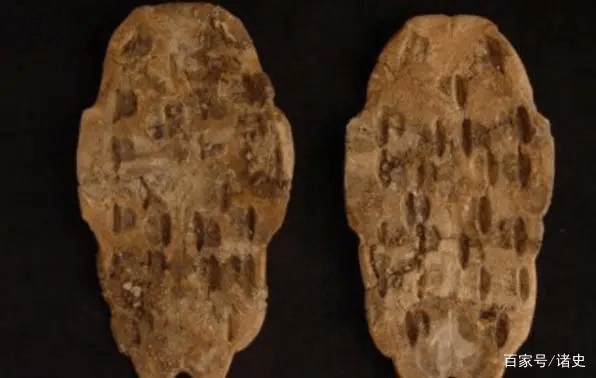
A stone anchor from the Shang (商) Dynasty (1600-1046 BCE) was discovered in the United States. The archaeological discovery is puzzling: Could the Yin (殷) people of the Shang Dynasty really have sailed eastward to the Americas? Many archaeological discoveries in the Americas – such as jade tablets engraved with oracle bone inscriptions, bronze human heads that look similar to Chinese people, numerous other jade objects – and the sudden rise of the Olmec culture 2900 years ago, all support the idea that the Yin people may well have migrated eastward.
If this journey occurred, perhaps it involved the Yin people moving eastward after King Wu (武) conquered Zhou (纣), and the 100,000 Shang Army that went on an expedition to conquer the Dongyi (东夷) – or “Eastern Barbarians” – did not disappear mysteriously, but rather migrated to the American Continent, perhaps becaming or contributing to – the identity of the Indian people.
As for the Yin people’s eastward journey to America – many scholars assume such a journey could only be made through the Bering Strait rather than crossing the vast Pacific Ocean (eastward) by ship. After all, around 1000 BCE, it would have been virtually unimaginable to cross the Pacific using the rudimentary shipbuilding technology that the Shang Dynasty possessed. However, a stone anchor – possibly from a Shang Dynasty ship – was discovered off the coast of the United States. This archaeological discovery is puzzling. Could the Yin people really have sailed eastward to the Americas?
Since 1973, Americans have been discovering many strange artificial stone products in the shallow waters off the coast of California, in the United States. The total number is as high as eleven, with a number of these objects being “cylindrical” shaped, designed like an “equilateral triangle”, or “circular with an empty middle”! American scholar Moriarty pointed out – in his analysis of the stones – that these objects did not come from the Americas. “There is no doubt that this is an early stone anchor from Asia.” Based on the calculation of the manganese accumulation rate on the stones of one millimetre per thousand years, “since today It is about 2000-3000 years old.”
The rock the stone anchor is constructed from does not exist anywhere throughout the Pacific coast of North America, but is the same as the limestone produced in the coast off South China. The eleven large stones discovered in California are comprised of five stone anchors (and accessories) left behind by ancient Chinese navigation ships.
Combining the evidence unearthed from Olmec sites in America (which appear to possess strong Yin and Shang cultural influences), as well as the rock quality and date of the stone anchor – many scholars in China and abroad speculate that this is a stone anchor of a Shang Dynasty ship, witnessing the great historical event of the Yin people’s eastward journey. For example, Chinese scholar Fang Zhongfu (房仲甫) wrote the article “The Chinese were the first to arrive in America” (中国人最先到达美洲 – Zhong Guo Ren Zui Xian Dao Da Mei Zhou) based on this! (In fact, regardless of whether these stone anchors were used by this group of Yin people – they prove that the Chinese were able to come to America by ship 2000-3000 years ago).
The question is: Logically speaking, it is impossible for the Yin people to reach the Americas by boat? Judging from the stone anchor, the Yin people did come to the Americas by boat. How did the Yin people sail across the vast Pacific Ocean? Let’s start with “Tear Bamboo” [涕竹 – Ti Zhu] (also called “Baiye” [百叶] or “One Hundred Leaf” Bamboo), which is native to Fujian and Guangdong. In the spiritual text known as the “Gods and Spirits Classic – South Wilderness Classic” (神异经南荒经 – Shen Yi Jing – Nan Huang Jing) – it states:
“There exists a type of weeping bamboo in the Southern wilderness. It is hundreds of feet long and three feet to six feet in circumference. It measures eight or nine inches thick. It can be used as a boat. It is very beautiful to behold and can be used as a medicine (when ingested) to cure sores and scabies.”
Other historical books also state “cut two sections – and then cut these in half to form a boat.” In 1922, Ouyang Geng (欧阳庚), the First Minister of the Republic of China to Chile, unexpectedly discovered this type of bamboo growing Chile. He asked his Indigenous staff about it, and the answer he got was shocking: their ancestor – King Hou Xi (侯喜) – transplanted it to this country around three thousand years ago. This plant is considered an ancestral medicinal cure for treating trauma. Could it be that the Yin people used Tear Bamboo boats to cross eastward through the Pacific? In the Spanish archives, there are some mysterious records of the Maya’s origins, such as the “Sacred Road on the Sea”, “came from the Kingdom of the Divine Sky in a bamboo boat and passed through the floating bridge islands of the sky three thousand years ago”, etc.
However, the Tear Bamboo can be made into a boat by “cutting two sections and splitting those in half.” Such a boat must be extremely crude. How could it sail to America? In fact, crossing from China to the Americas does not necessarily require huge ships. The key is to find the right ocean currents and possess good navigation experience to deal with emergencies. In 1852, Chinese-American – George Hugh – took a small boat and drifted along the Kuroshio current to California. It is said that some people have also conducted experiments involving rafting from the Sea of Japan to Central America.
As long as they bring enough dry food and fresh water and rely on rainfall for supplies, they can reach the Americas. Therefore, the reasonable explanation for the Yin people’s eastward journey is that they first entered the Sea of Japan, relied on the Kuroshio Current and the North Pacific Current, and then were driven by the ocean currents to finally reach the west coast of North America.
It is worth noting that the Yin people had rich navigation experience and abilities. “Zhang Fa” (长发) – who praises the ancestors of the Yin people in the “Poem Classic – Shang Ode” (诗经·商颂 – Shi Jing – Shang Song) – stating “The land is inhabited by fierce and strongly united people who are known to have connections overseas”. This demonstrates that during the eleventh generation of the Shang Dynasty – the Yin people had already made connections overseas. American scholars have discovered oracle bone inscriptions on rock carvings dating back 3,300 years in the Southern States (300 years earlier than the Yin people’s eastward journey) – which may support this statement.
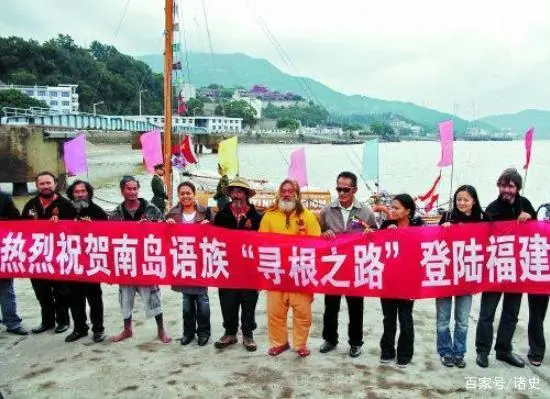
More importantly, a group of people from the Polynesian Islands proved that canoes can also cross the Pacific Ocean! In 2010, Yi Liya (易立亚), the Diplomatic Adviser to the former Polynesian President, planned this operation in order to prove that their ancestors came from the South-eastern coast of China: without using any modern tools, they used a canoe, relied on the wind and ocean currents, and relied on the sea. Catching food and collecting fresh water began this journey of thousands of miles.
Finally, after four months and nearly 30,000 kilometres of sailing, Yi Liya and his party finally arrived in Fujian. Obviously, judging from the example of Yi Liya, with the ancient navigation technology, the Yin people were fully capable of sailing to the American continent. According to DNA testing, Polynesian Islands people are very close to American Indians. Perhaps when the Yin people travelled eastward to America, some of them were scattered to the Polynesian Islands or other places in the Pacific. The discovery of oracle bone inscriptions and stone anchors in many places in the United States also shows that the Yin people arrived at different places in America when they crossed eastward.
In fact, no archaeological evidence has been found for the theory that the Yin people passed through the Bering Strait. From eastern China to the Bering Strait, the actions of hundreds of thousands of people will definitely leave many ruins. And after arriving in Alaska, why did the Yin people have to go south to Mexico? It doesn’t make sense at all. Therefore, the Yin people could only cross the vast Pacific Ocean by boat. The Yin people mentioned above have “strong relationships with each other, and have connections overseas.” Perhaps the Shang people had already been to the Americas – and that was why the Yin people later made their eastward journey. Otherwise, it would have been impossible for hundreds of thousands of people to go to a completely unknown place. It can be seen that the description of the geography of the Americas in the “Mountain Sea Classic” (山海经 – Shan Hai Jing) is probably that the ancient Chinese actually measured the American continent using their feet
Chinese Languae Text:
美国发现商朝石锚,考古发现令人不解:殷人真能航海东渡美洲?
诸史
2019-10-07 07:30
美洲诸多考古发现,比如刻有甲骨文的玉圭、与中国人相貌相似的青铜人头像、众多的玉器,以及2900年前奥尔梅克文化突然兴起等等,都在支持“殷人东渡”的观点。所谓殷人东渡,即武王伐纣之后,远征东夷的十万商朝大军并非神秘消失,而是来到了美洲大陆,成为如今印第安人一支。
对于殷人东渡美洲,更多学者倾向于通过白令海峡走到美洲,而非乘坐船只穿越茫茫太平洋。毕竟,在公元前1000年左右,以商朝的造船技术,想要穿越太平洋,实在难以想象。然而,美国海岸却发现了商朝船用石锚,这一考古发现令人不解:难道殷人真能航海东渡美洲?
1973年以来,在美国加州海岸的浅海地区,美国人先后发现多起奇怪的人工石制品,总数高达十一块,形状包括“圆柱形”、“正三角形”、“中间有空的圆形”等。
美国学者莫里亚蒂针对石块分析指出,这些石块并非来自美洲,“毫无疑问,这是一个来自亚洲的早期石锚”,根据石块上锰积聚率千年一毫米计算,“距今约有2000-3000年历史”。
石锚岩质不存在于北美太平洋沿岸,而与南中国海岸地区所产灰岩一样……加州发现的11块大石头,是中国古代航海船只遗留下的五只石锚和附具。
结合美洲奥尔梅克遗址出土物证(浓重的殷商文化),以及石锚岩质和距今时间,中外不少学者推测认为,这就是商朝石锚,见证了殷人东渡这一伟大历史事件,比如中国学者房仲甫就据此写了《中国人最先到达美洲》一文!(其实,不管这些石锚是不是这一批殷人使用,却证明了距今2000-3000年,中国人有能力乘船来到美洲)
那么问题来了:从逻辑上说,殷人不可能乘船到达美洲;但从石锚看,殷人却乘船来到了美洲。殷人到底如何航海穿越广阔的太平洋?
这事要从原产于闽粤一带的“涕竹”(又叫百叶竹)说起。《神异经南荒经》中记载,“南方荒中有涕竹,长数百丈,围三丈六尺,厚八九寸,可以为船。其齊甚美,食之可以止疮疠”,其他史书也有记载“截其二节剖为两半即可成舟”。
1922年,民国驻智利第一任公使欧阳庚,在智利意外的发现涕竹,就问印第安仆人,得到的回答却令人震惊:涕竹,是他们祖先侯喜王在三千年前移植于此,祖传治疗外伤的药材。
难道殷人东渡使用的是涕竹之船?在西班牙的档案馆里,有一些玛雅人对自己来源的神秘记载,比如“海上神路”、“三千年前由天国乘涕竹舟经天之浮桥诸岛而来”等。
然而,涕竹之船是“截其二节剖为两半即可成舟”,这样的船只必然简陋无比,如何能够远航美洲?
其实,从中国东渡美洲,未必一定需要庞大的船只,关键是找准洋流,以及具备丰富的航海经验,应对一些突发状况。1852年,美籍华人乔治休就是乘坐小船,沿着黑潮,一路漂流到了加利福尼亚。据说,也曾有人做过以木筏从日本海漂流到中美洲的试验,只要带足干粮淡水,依靠降雨补给是完全可以到达美洲。
因此,殷人东渡的合理解释是:先进入日本海,借助黑潮、北太平洋海流,然后在洋流推动之下,最终到达北美洲的西海岸。
值得注意的是,殷人有着丰富航海经验和能力。《诗经·商颂》中歌颂殷人先祖的《长发》中记载,“相土烈烈,海外有截”,说明在商朝第十一代时期,商朝人就已经征服海外了。美国学者在南部地区发现距今3300甲骨文岩刻(比殷人东渡早300年),或许就佐证了这一句话。
更为重要的是,波利尼西亚群岛的一群人,证实了独木舟也能穿越太平洋!
2010年,波利尼西亚前总统的外交顾问易立亚,为了证实他们祖先来自中国东南沿海一带,于是策划了这一次行动:不借助任何现代工具,就用一只独木舟,靠风力和洋流,靠大海捕捞食物和收集淡水,开始了这一次数万里的航行。
最终,历经4个月,航行近3万公里,易立亚一行最终抵达福建。
显然,就易立亚的例子来看,以古人的航海技术条件,殷人完全有能力远航到美洲大陆。
根据DNA检测,波利尼西亚群岛人种与美洲印第安人非常亲近。或许,殷人东渡美洲时,一部分失散到了波利尼西亚群岛,或太平洋上的其他地方。而美国多地发现甲骨文和石锚,也说明殷人东渡到达美洲地点不一。
其实,殷人通过白令海峡之说,目前没有发现任何考古证据。从中国东部到白令海峡,数十万人的行动,肯定会留下很多遗迹,而且到达阿拉斯加之后,为何殷人一定要南下到墨西哥?根本解释不通。因此,殷人东渡只能是乘船穿越辽阔的太平洋。
上文提到的殷人“相土烈烈,海外有截”,或许殷人早就去过美洲,所以才有后来的殷人东渡,否则数十万人不可能去一个完全不知道的地方。可见,《山海经》中疑似对美洲地理的描述,也很可能是上古中国人真用脚丈量过美洲大陆。
 SANGHA KOMMUNE (SSR)