British Army Guard Drill demonstrates the discipline of mind, body and environment, albeit in a military format that was once used on the battlefield probably around 250-years ago. I suspect it might have its origin in Cromwell’s ‘New Model Army’ of the 1640s – where soldiers wielding very long ‘pikes’ were required to move around the battlefield in good order and engage the enemy whilst retaining their ranked formation. As the challenge shifted (and the enemy presented a new danger – such as infantry giving-way to cavalry, etc) the ranked formation would have to be ‘adjusted’ to represent the ‘new’ reality.
As presentation was (and remains) ‘everything’ in prpfessional military establishments (especially during formal ‘Parades’ and official ‘Guard’ duty) – obviously a distinctive ‘military’ bearing is required that is ‘combative’ (and ‘intimidating’) whilst the individual soldier remains a) firmly under self-control, and b) firmly under the authoritative control of superior (‘Non-Commissioned’ and ‘Commissioned’) Officers! As the military is legally endowed with the right to ‘take-life’ – it is important that this ‘external’ (and ‘internal’) authority-structure and discipline remains intact and functioning correctly in time of peace and in time of war – regardless of the time-period the Armed Forces are operating within.


Although the outer mode of warfare alters and changes according to the technology given to soldiers to fight the battles of each generation – the inner and outer modes of military discipline (involving mind and body control, timing, organisation and self-management) remain exactly the same despite the change of content. Indeed, although British Army drill from 250-years ago might not have any direct usefulness on the modern battlefield (other than in bayonet-fighting – a very real possibility in any age) – the mastery of this complex set of skills does demonstrate the very high standard of commitment, intelligence and diligence required by the average British soldier – and the high standards expected of each member of the British Armed Forces above and beyond their continuous ability to be ‘battle-ready’.
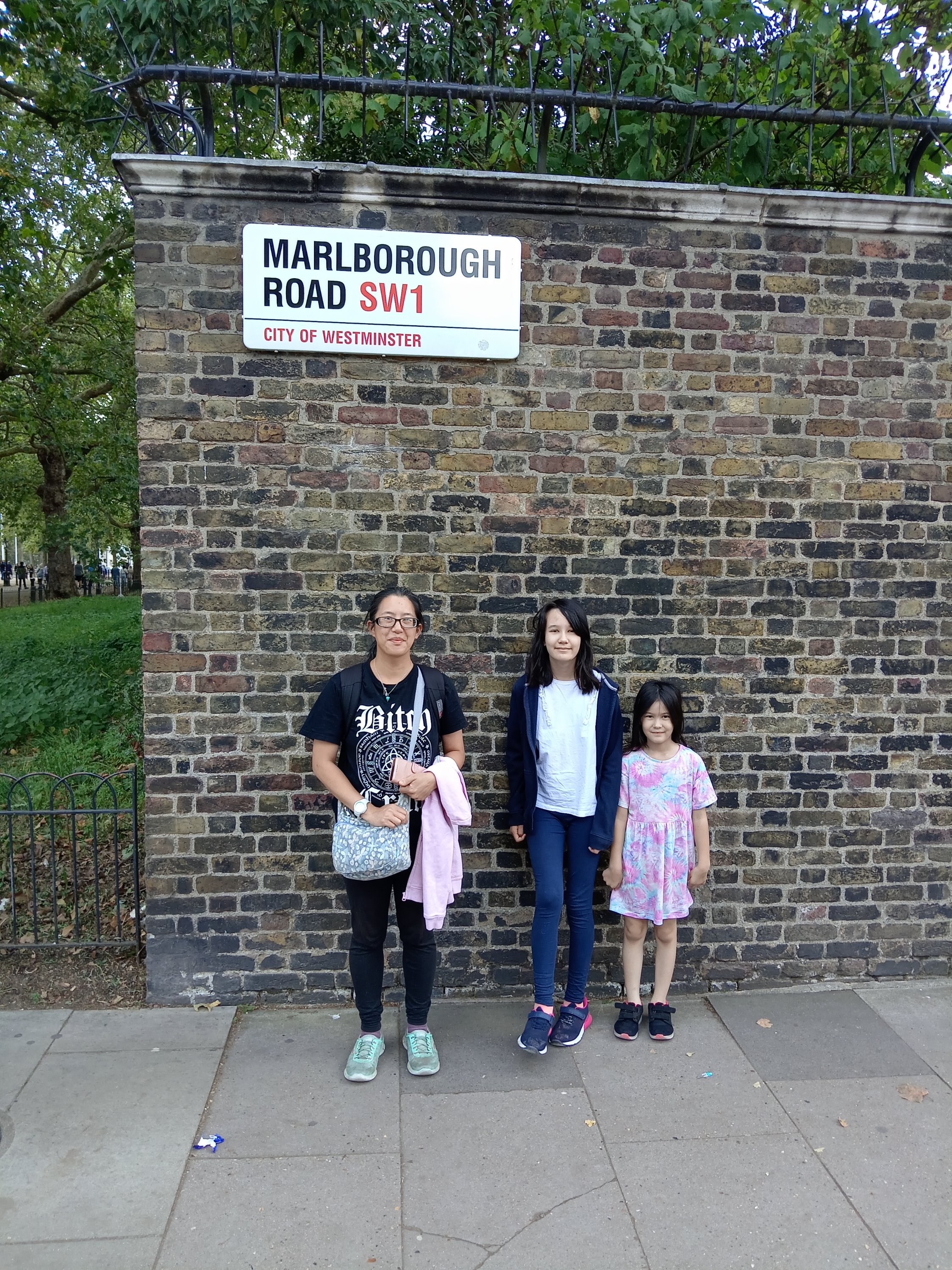
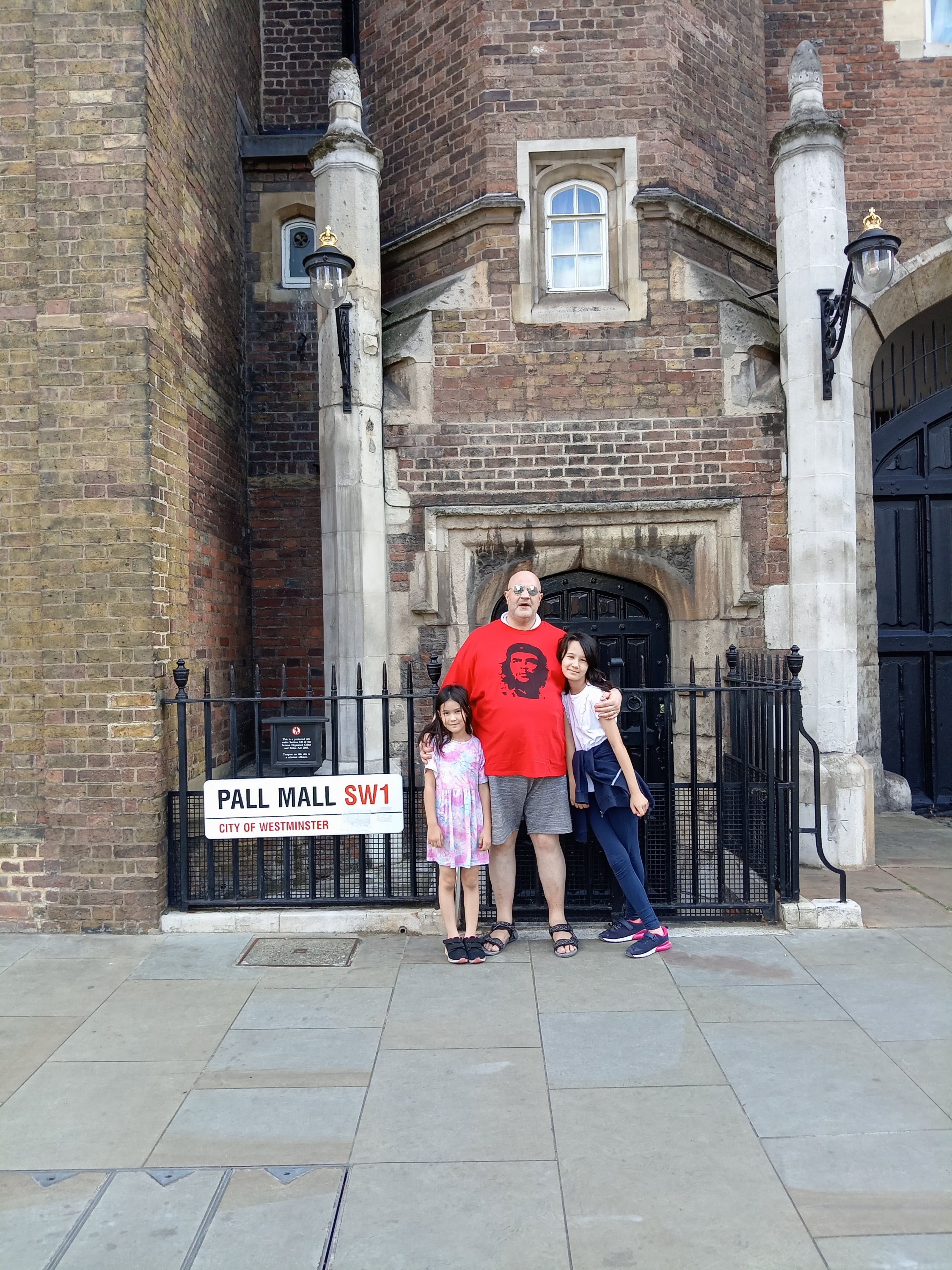

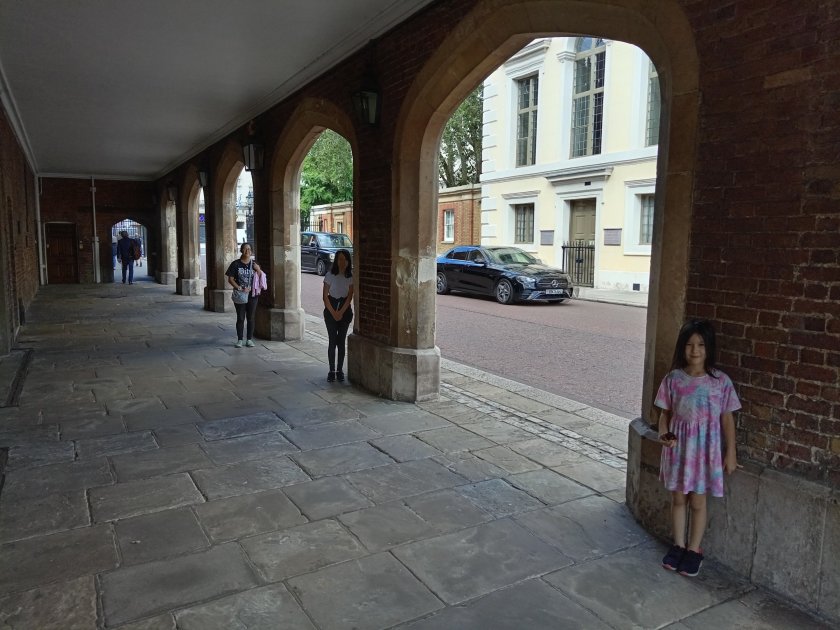
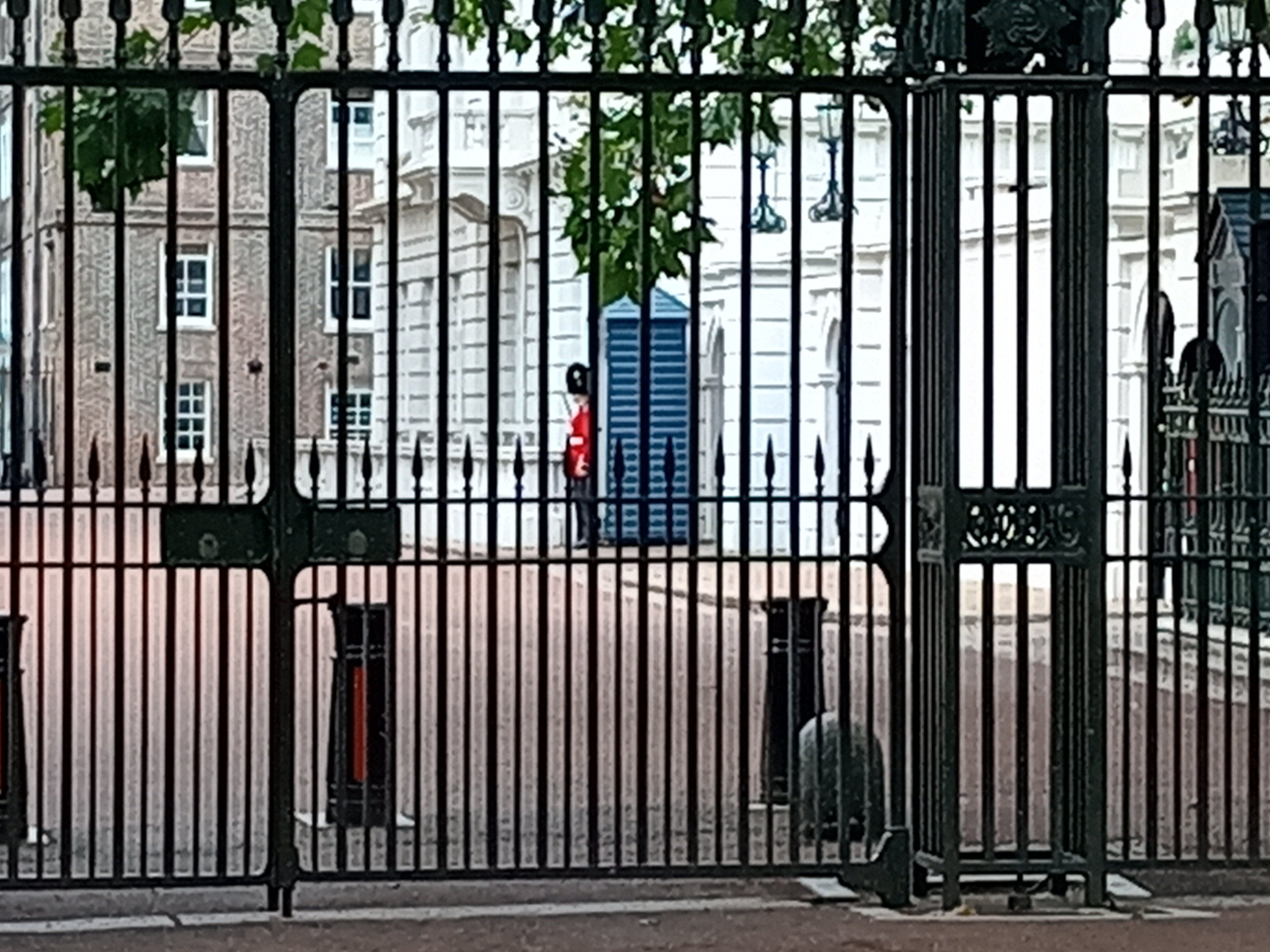
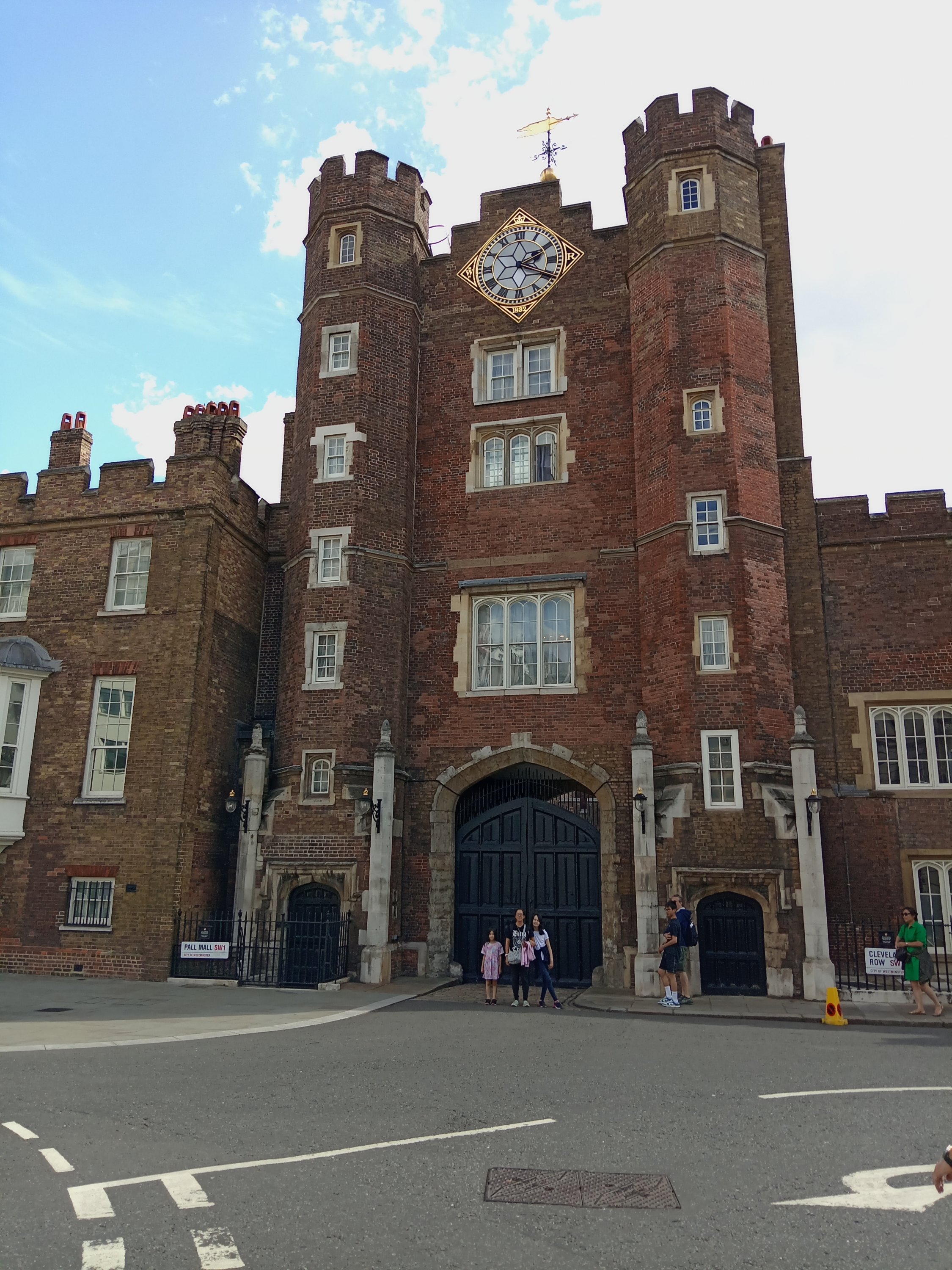
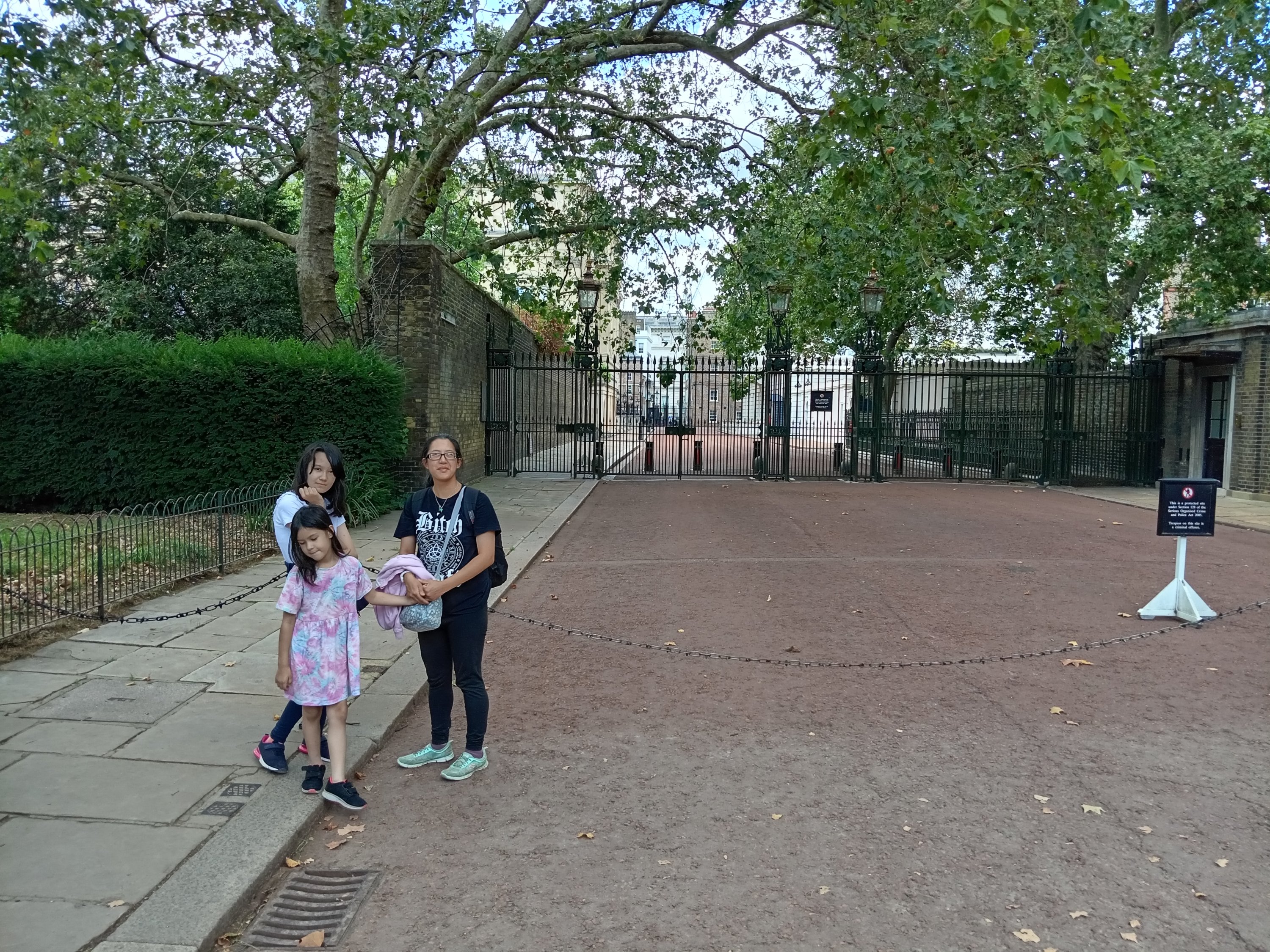
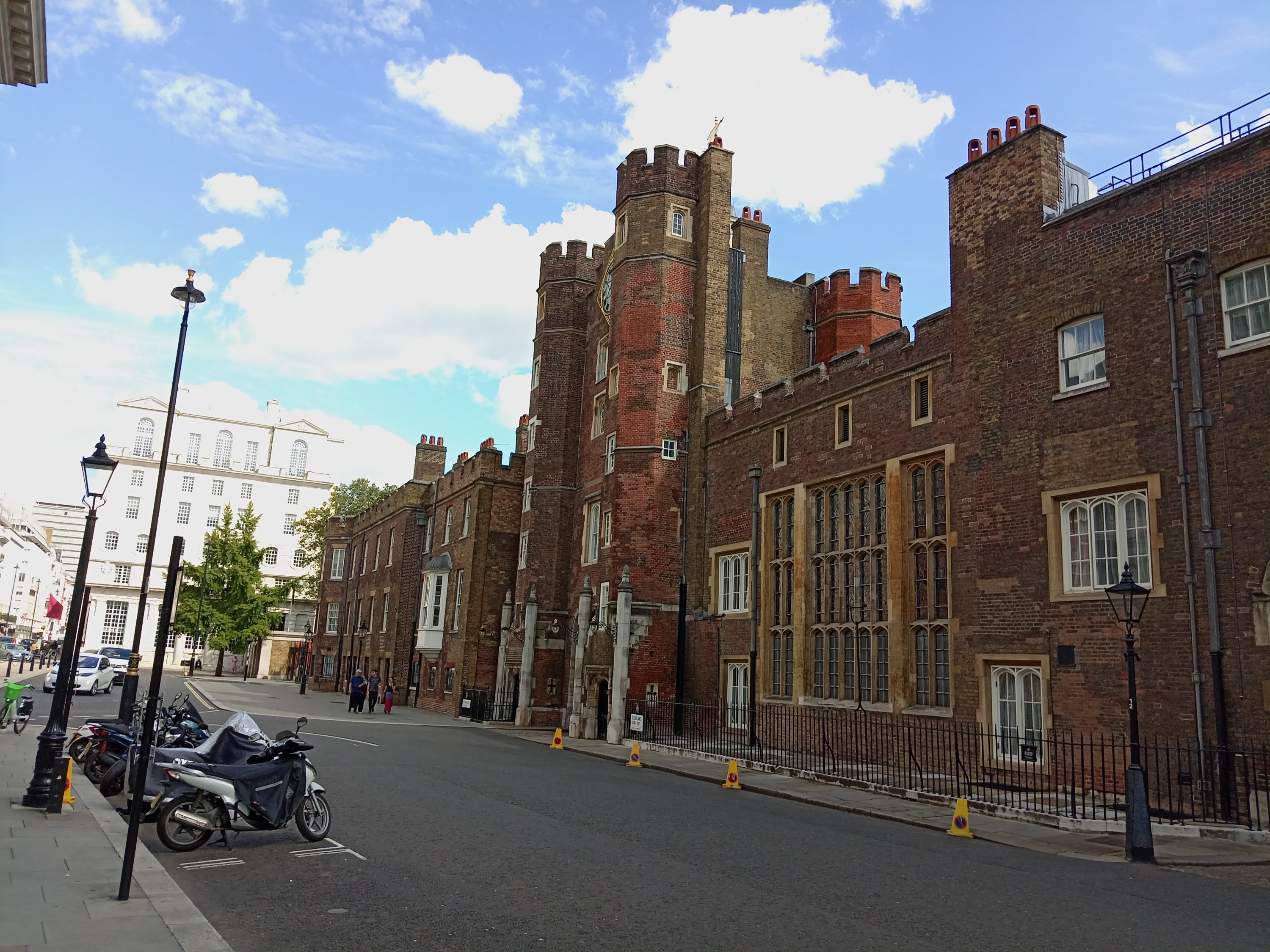
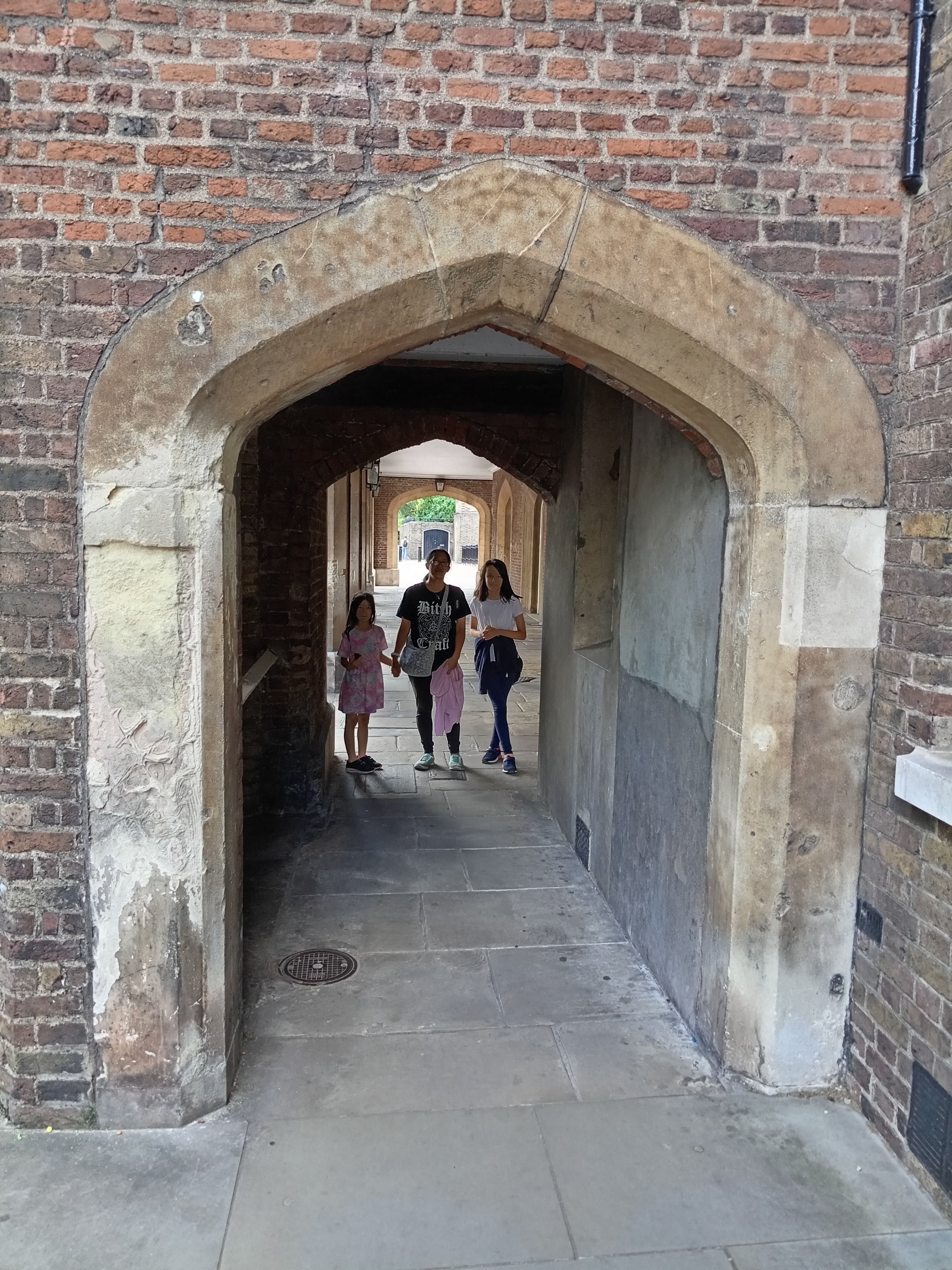
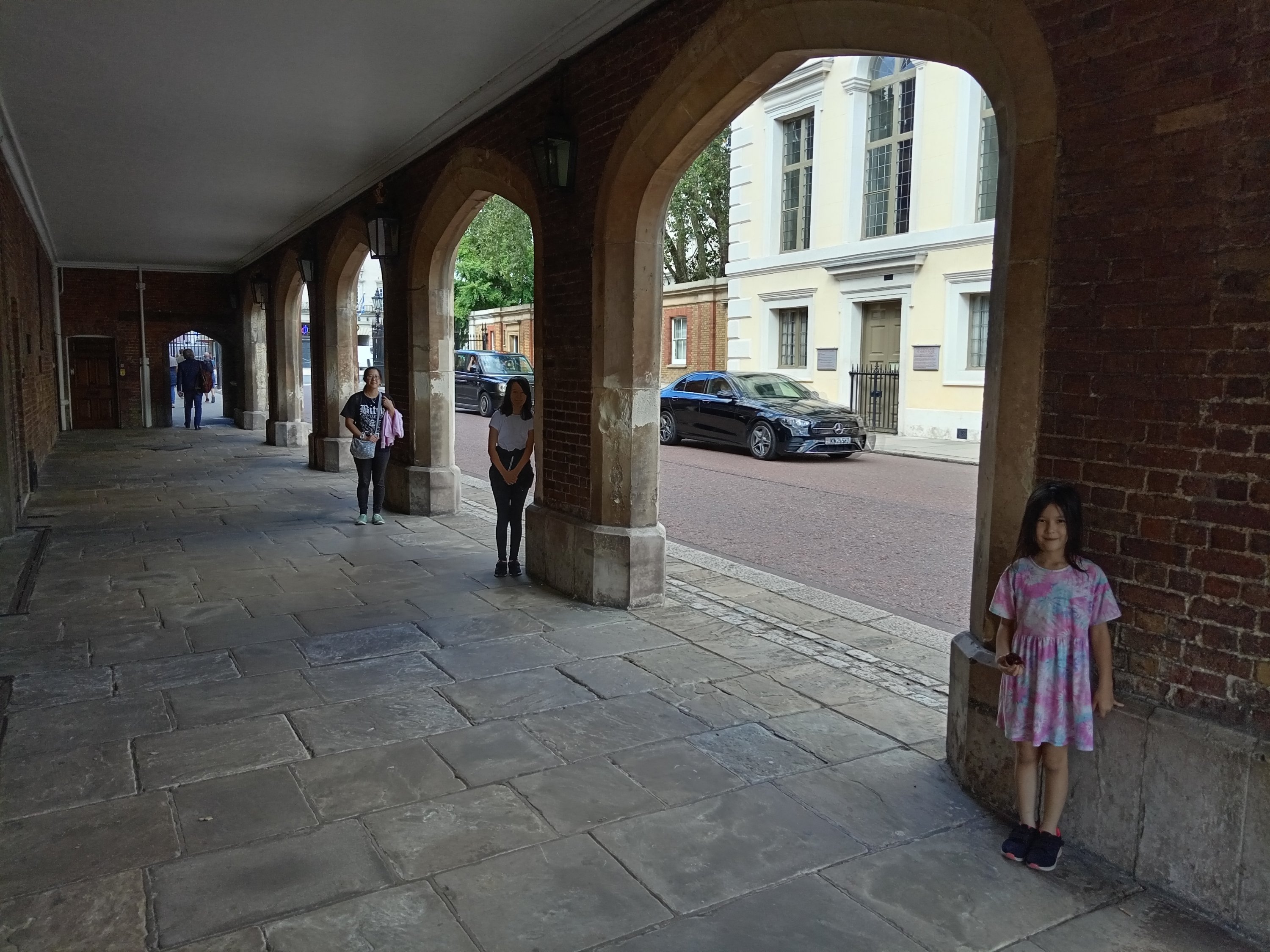
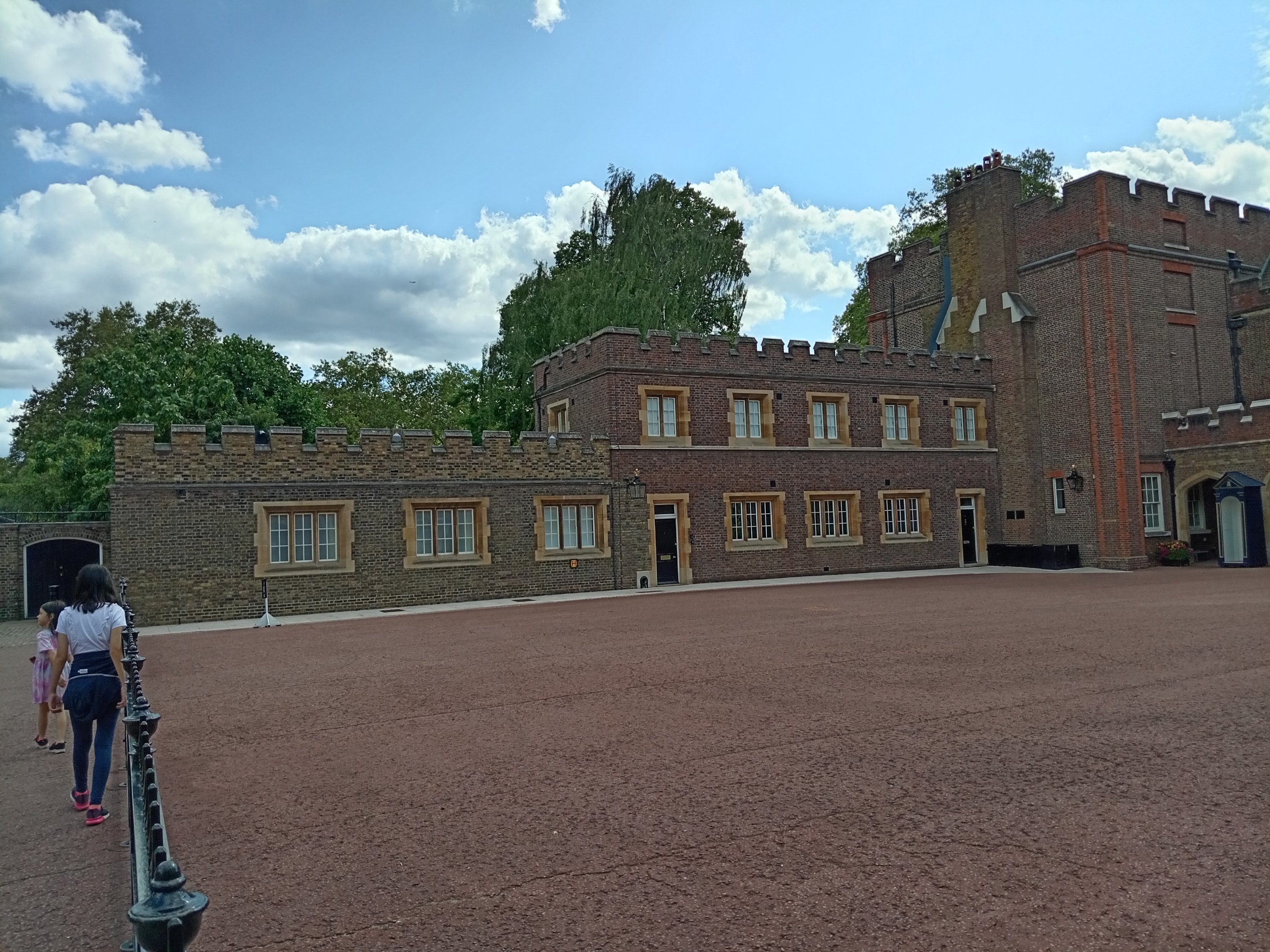
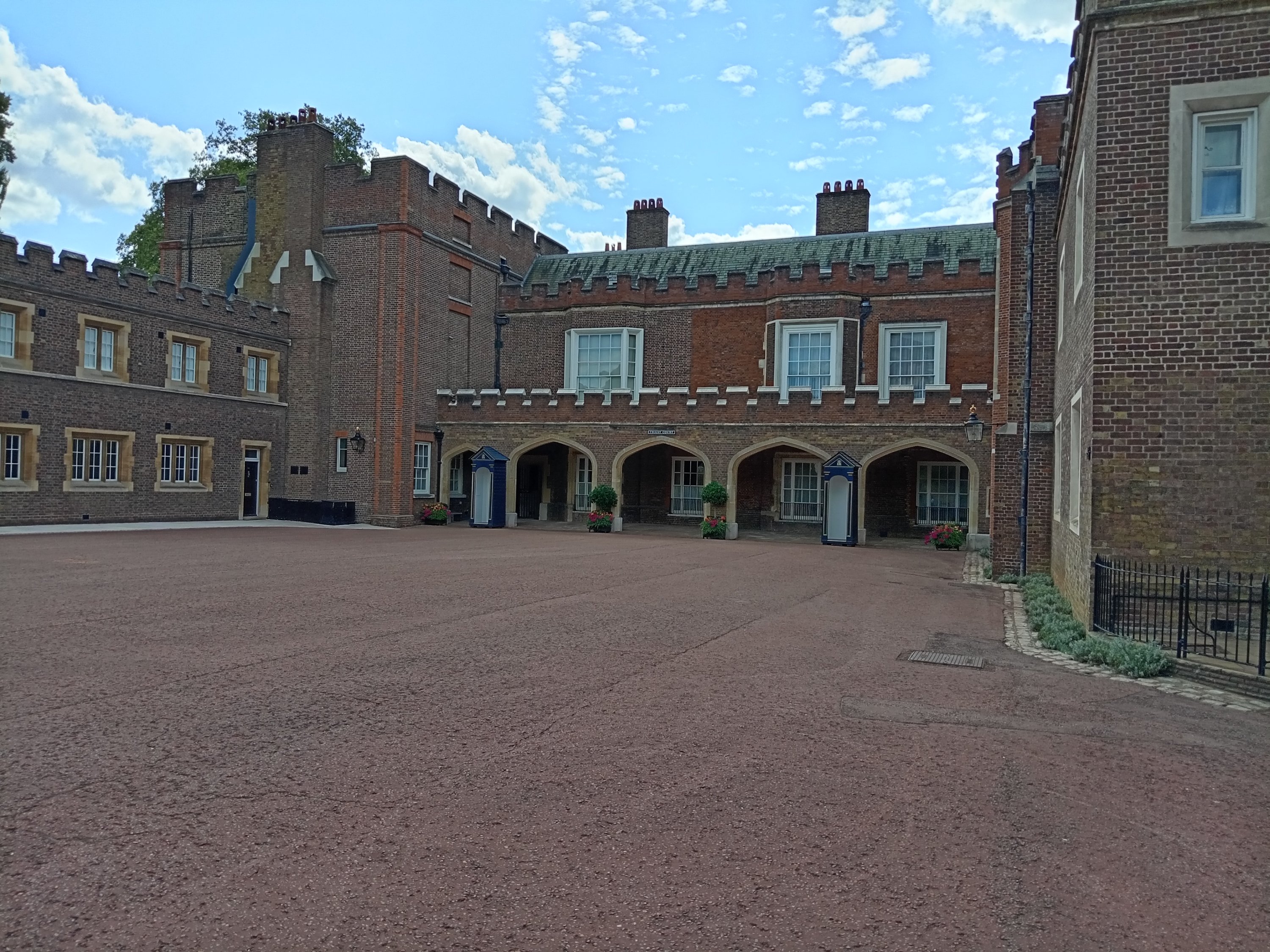
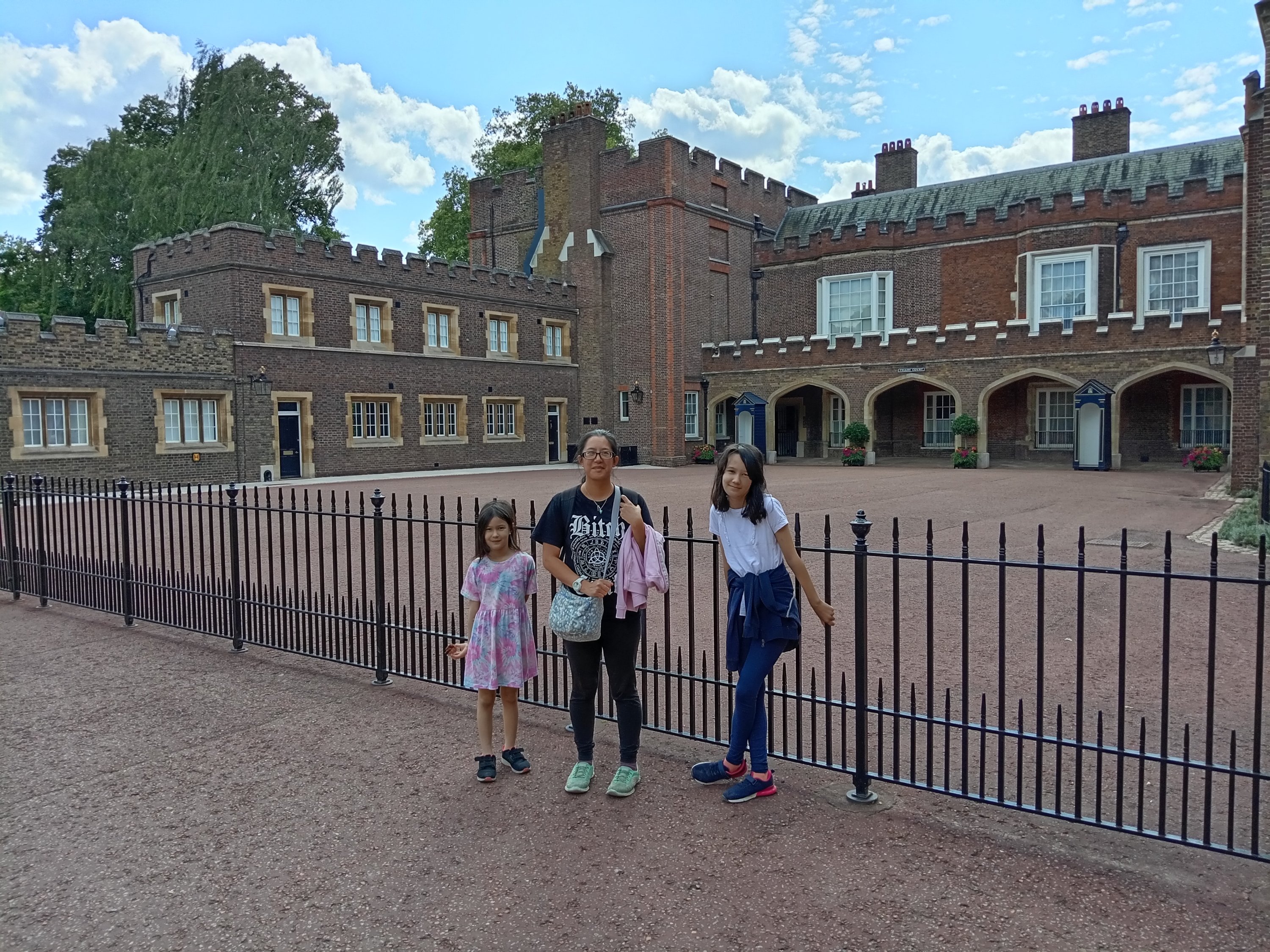
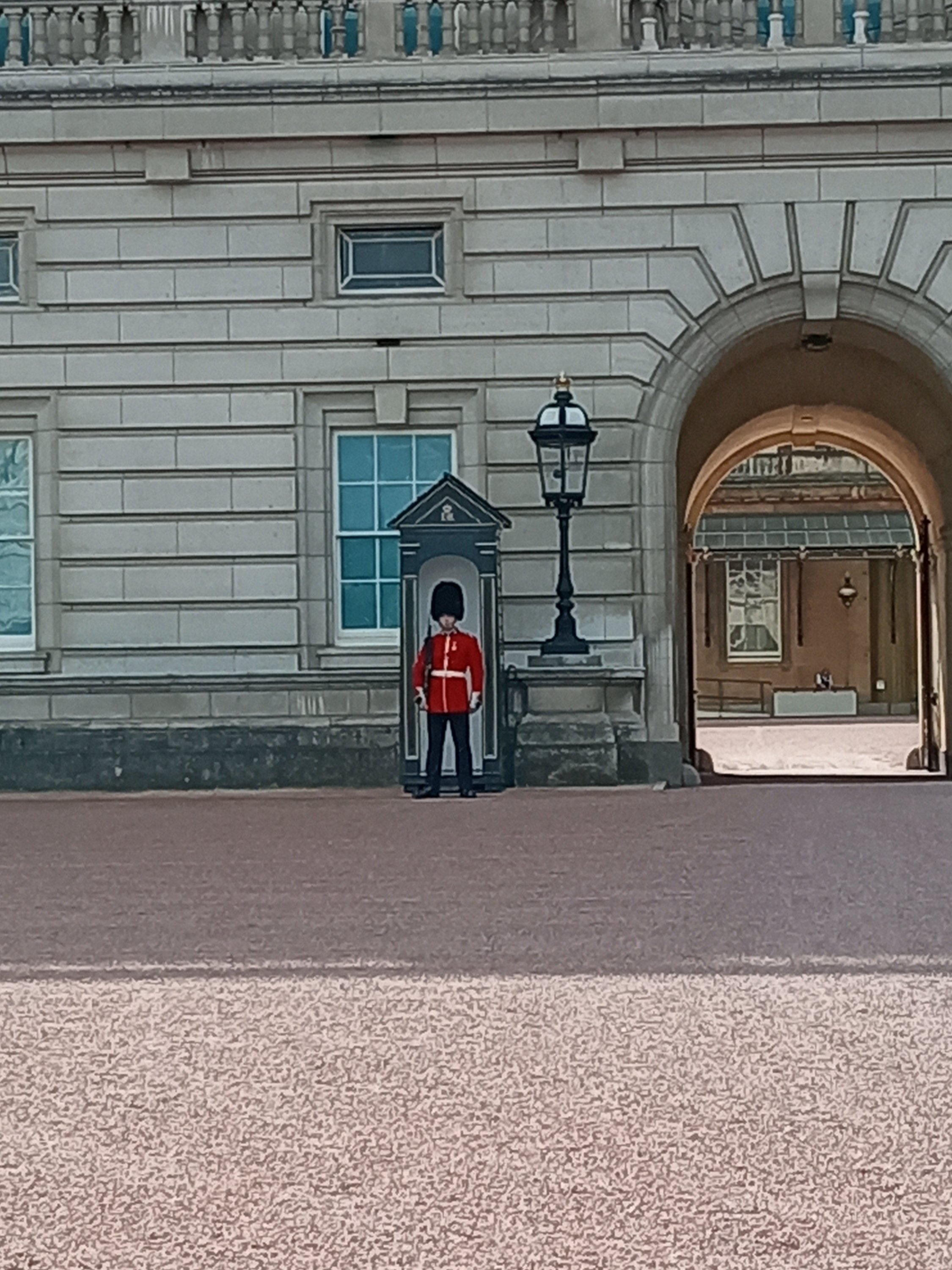
We had to head South-West from Trafalgar Square around 0.6 miles toward Buckingham Palace. Our intention was to show the children – Mei-An and Kai-Lin – how the soldiers carry-out their duties in an orderly and well-organised manner. Although the frontline ‘Guards’ had been drawn back away from the crowds decades ago at Buckingham Palace – I knew that the general public could still get reasonable close at the nearby St James Palace – but on the day of our visit – the soldiers were not to be seen in their usual places! Indeed, most were absent except for the side-gate which is used for the main entrance (pictured above) – but even here – the soldiers had been pulled-back behind the metal fence and away from the public.

 SANGHA KOMMUNE (SSR)