The anti-greed philosophy of the Buddha has been usurped in the West – so that Buddhism becomes ‘pro-greed’ by those who practice the Dharma as

Proletariat Blogging in the Heart of (UK) Predatory Capitalism! Exploring the Interface between Matter and Perception, Chinese Buddhism, Daoism, Hakka Ethnography, and All Aspects of Radical Politics, History, Psychology and Philosophy – 全世界无产者联合起来!
The anti-greed philosophy of the Buddha has been usurped in the West – so that Buddhism becomes ‘pro-greed’ by those who practice the Dharma as
Dear Gillian The Destruction of Pagan Temples Thank you for this interesting article (linked above). I was reading Karl Kautsky’s (1908) ‘Foundations of Christianity’ as
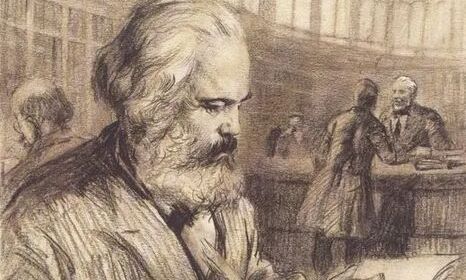
Marx encountered Buddhism through the work of his close friend Karl Koppen – an early European expert upon Early Buddhism and Tibetan Buddhism.

Most lay-people, however, practice Buddhism whilst being married, having children and holding-down a job. Even so, and despite all the extra entanglements and barriers of commitment, the Buddha still stated that lay-people, if devoted to their practice, can still realise enlightenment, even though it is not an easy task. A male lay-follower of the Buddha is referred to as an ‘Upasaka’, and a female practitioner as an ‘Upasika’. These two terms refer to ‘lay’ practitioners that sit near to the Buddha (or his monastics) and ‘listen’ carefully (and with respect) to the Dhamma instruction being explained. These ‘lay’ practitioners then go back to their homes and carefully recall (and record) the Dhamma lesson which they put into their daily practice. However, the crux of this article is about two other categories of ‘lay’ person explained by the Buddha in his Suttas, but which are not often mentioned within Western discourse. This means that the Buddha actually explained ‘six’ (6) categories of human-beings in his Suttas – with four referring to his followers – and two to ‘non-believers’. Who are these ‘non-believers’, and why did the Buddha bother to explain their presence?
‘Fundamentally, history is just the development of practical activity of man in time. So, Marx argues: “As soon as this active life-process is described, history ceases to be a collection of dead facts as it is with the empiricists (themselves still abstract), or an imagined activity of imagined subjects, as with idealists.” On the premise of this, historical materialism establishes the scientific idea of historical necessity.’

Dear Gillian Buddhist and Greek philosophy (preferring logic and reason) stems from around 6th to 5th to centuries BCE. Although philosophers attempted to understand the

