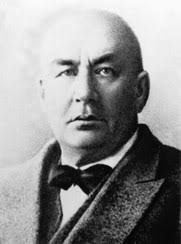
Sitting on a Stone

. This paradox is premised upon the understanding of the existence of ‘form’ in emptiness. However, none of this is possible without the cultivation of profound wisdom, compassion, and loving kindness, all of which is required if the mind is to turn around at its deepest level and regain a correct and true conscious awareness. The further paradox is that emptiness is not ‘nothing’, and that consciousness cannot exist without an object.

Soviet Buddhist scholar Theodore Stcherbatsky!

Buddhism: Hinayana and Mahayana Notions of Emptiness! (10.12.2014)

Through the work of Nagarjuna, the Mahayana movement developed the interpretation that physical matter is ‘empty’ of any substantiality. This is due to Nagarjuna applying his tetra lemma (catuskoti) formula to the assessment of the ‘Chain of Dependent Origination’ (Pratītyasamutpāda), and logically proving that just as the true enlightened state has no-self associated with it; then it is also equally true that physical matter has no substantiality associated with it. Everything is dependent upon everything else, conditioned by everything else, and contingent upon everything else.

The Patriarch’s Ch’an Can Not Be Bought

Daoxin stared at this young Dharma-vessel. Later the boy became his student and eventually inherited the Dharma and became the Fifth Ch’an Patriarch – Hongren. Hongren would eventually choose an illiterate man for his successor, who would become the Sixth Patriarch of Ch’an – Hiuneng. This is a significant statement to humanity, because Hongren had many students who were affluent and well educated.

Charles Luk (1898-1978) Ch’an Buddhist Scholar.

‘In the mean time Charles Luk was training in the Tibetan Buddhist (Vajrayana) lineages of Kagyu and Gelug under one teacher – the Tulku of Xikang – namely the Venerable Hutuktu, who was of Mongolian ethnic origin. Xikang is of course Xikangsheng (西康省) which is sometimes written as ‘Sikang’, and translates as ‘Western Abundance Province’. Now no longer in existence, it was once a province of easternTibet(Kham) controlled by the forces of the Republic of China. Today, part of this former province is in eastern Tibet, whilst the other part is in the western Sichuan province. This area, although comprised of a Tibetan majority, is known for its small Mongol ethnic grouping. During this time, Charles Luk was initiated into the secretive technique known as Phowa – or the method of the transference of consciousness at the point of death, to a Buddhafield (i.e. rebirth) of one’s choice. His other great Buddhist teacher was Ch’an master Xu Yun (1840-1959) – from whom he inherited the dharma of the enlightened lay-person which is believed to go back to Vimalakirti – an enlightened contemporary of the Buddha.’

Master Xu Yun (1840-1959) – Present Awareness.

‘Buddhism was tolerated however, despite some historical ups and downs, but leaving home to become a monk has always been a difficult affair. It still was in 1858 when master Xu Yun decided to leave home and pursue the Buddhist monastic path. As his father was a government official, Xu Yun was expected to follow in his footsteps, get married and produce a son to keep the family name of Xiao going. Even though he had expressed spiritual inclinations to his father, his father would not give permission for him to leave. Instead his father arranged for a Daoist teacher to come to the family home and teach Xu Yun internal and external qigong – or ‘energy work’.’

1 12 13 14 15