Instead, the Buddha reiterated that different types consciousness arises out of specific material conditions, and that without the presence of these specific material conditions, the different types of consciousness do not arise. The concept of Buddhist consciousness does not constitute a theistic ‘atma’, or ‘soul’ that stands in opposition to the material world, but is in fact a product of conditions arising out of the material world.
Tag: Walpola Rahula
Bhikkhus and Politics
In ancient days, according to the records of history, the welfare of the nation and the welfare of the religion were regarded as synonymous terms by the laity as well as by the Sangha. The divorce of religion from the nation was an idea introduced into the minds of the Sinhalese by invaders from the West, who belonged to an alien faith. It was a convenient instrument of astute policy to enable them to keep the people in subjugation in order to rule the country as they pleased.
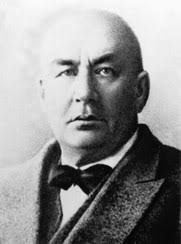
Buddhism: Hinayana and Mahayana Notions of Emptiness! (10.12.2014)
Through the work of Nagarjuna, the Mahayana movement developed the interpretation that physical matter is ‘empty’ of any substantiality. This is due to Nagarjuna applying his tetra lemma (catuskoti) formula to the assessment of the ‘Chain of Dependent Origination’ (Pratītyasamutpāda), and logically proving that just as the true enlightened state has no-self associated with it; then it is also equally true that physical matter has no substantiality associated with it. Everything is dependent upon everything else, conditioned by everything else, and contingent upon everything else.
 SANGHA KOMMUNE (SSR)