Dear Gillian Thank you for forwarding this link. Every so often, I come across various supposedly Pro-China sites in the West, but I seldom feel
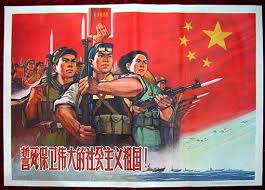
Proletariat Blogging in the Heart of (UK) Predatory Capitalism! Exploring the Interface between Matter and Perception, Chinese Buddhism, Daoism, Hakka Ethnography, and All Aspects of Radical Politics, History, Psychology and Philosophy – 全世界无产者联合起来!
Dear Gillian Thank you for forwarding this link. Every so often, I come across various supposedly Pro-China sites in the West, but I seldom feel
Master Zhao Ming Wang’s (赵明旺) Poem (24.9.2019) Ordinary people, Ordinary thing. 普通的人普通的事, True love, Starts with a single drop… 真爱从点滴做起。 Qianfeng Hermitage (千峰草堂) – Beijing MASTER ZHAO MING

RATIONALISING ‘天’ (TIAN1) IN MODERN CHINA The lecturer is correct about the Chinese ideogram ‘天’ (Tian1) but it is not as simple as he suggests.

The Daoist teachings, although taught through the reforms of Old Master Zhao Bichen, remain independent and unchanged. I would point out, however, that Mainland China is a Communist country and that Master Zhao Ming Wang is proud of the accomplishments of the Communist Part of China (CPC). The Qianfeng School teaches anyone irrespective of where they are from or regardless of any political views held. This system of interaction is dependent upon virtue and respect. Obviously, if these attributes are lacking, no positive exchange can take place. In the above very kind note, Master Zhao Ming Wang thanks me for my life-long practice and support of the Qianfeng School, and for my ongoing translation work.
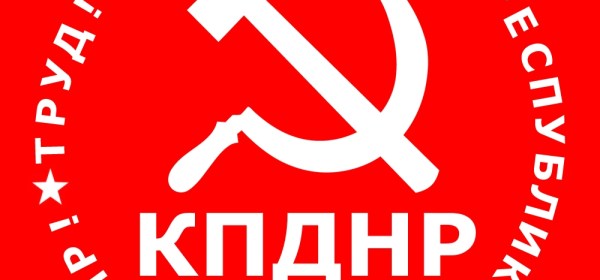
Earlier this year, my family joined a YCL protest outside the Ukrainian Embassy in London, campaigning against the banning of the Communist Party of the
Obviously not, as many times such a teacher must accept a simple life premised upon living in a state of voluntary poverty. In such an existence, it is cultural knowledge and the ability to ‘see’ what others cannot see that is the common currency.
 SANGHA KOMMUNE (SSR)