As a consequence, it is obvious that capitalists in their unenlightened form are certainly not ‘Marxists’, and that the destructive socio-economic force of modern capitalism is driven by a predatory greed that is self-sustaining and transforming in equal measure.
Tag: transformation
Dharmakaya, Mind Ground, and Void
Nagarjuna – who read virtually all the known Buddhist sutras of his time, deduced that the Buddha was teaching from this philosophical position – which by necessity – has no position.
China as Developmental Archetype for Humanity
Life continues in the obvious (everyday) manner relating to Chinese culture, and there is no real understanding of the deeper psycho-spiritual energy that is in operation. This is as it should be, as the entire transformation process avoids the trap of ego-awareness and the psychological structures that operate through materialist paradigms, seeking personal aggrandisement and power.
Training Through Change
‘The human body is subject to the unstoppable change of aging. This is a forgone conclusion that no known agency can prevent. As time goes by the body changes, this is an important and crucial point that must be acknowledged as martial arts mastery is based entirely upon the aging process.’
The Mahayana Transformation
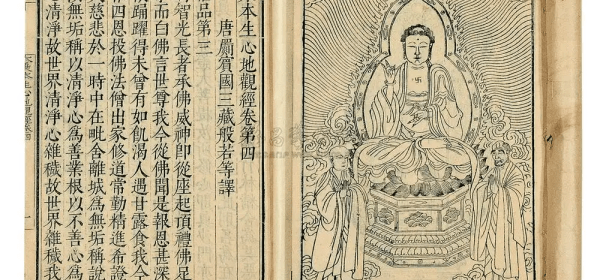
‘Collectively, the schools of early Buddhism are often historically referred to as ‘Hinayana’ so as to distinguish them from the emergence of the Mahayana. Whereas the Mahayana becomes historically recognisable around the 1st century CE in India, the Hinayana schools are seen to decline around four centuries later – in the 5th century CE. This demonstrates that both types of Buddhism coexisted for hundreds of years (inIndia) and there are records of monasteries containing monks who adhered to either tradition – living and practicing side by side. The emergence of the Mahayana created the conditions for earlier Buddhism to be viewed as ‘narrow’ and in some way ‘incomplete’. As the Mahayana interpretation represents a substantial expansion and elaboration of the teachings contained within earlier Buddhism, this sets the agenda for the historical interpretation of history with regard to what may be described as the ‘perceived’ developmental history of Buddhism as a distinct academic entity.’
Buddhism Through The Capitalist Filter.
‘For many, modern living carries the necessity for mutual exploitation of one another either within, or in the case of crime, outside a moderating legal system. Profit has to exist for the system to function, and with this profit, there must be inequality. The Buddha lived in a society that privileged his caste and his social rank – his father was a chief or king (raja). Social inequality was as prominent in ancientIndiaas it is today across the world. As a spiritual statement, the Buddha gave up his life of luxury, his wife and his child. He turned his back on a life of sensual pleasure and headed into the wilderness to rid his mind of attachment.’
 SANGHA KOMMUNE (SSR)