Blogger’s Note: My PhD is in “Spiritual Metaphysics”. Yes – I am supposedly an expert in the assessment of religious teaching and practice – even
Proletariat Blogging in the Heart of (UK) Predatory Capitalism! Exploring the Interface between Matter and Perception, Chinese Buddhism, Daoism, Hakka Ethnography, and All Aspects of Radical Politics, History, Psychology and Philosophy – 全世界无产者联合起来!
Blogger’s Note: My PhD is in “Spiritual Metaphysics”. Yes – I am supposedly an expert in the assessment of religious teaching and practice – even
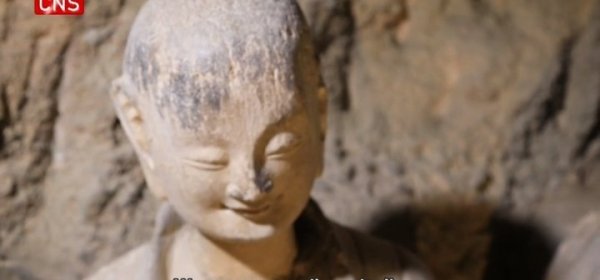
The early Buddhist groups in China mirrored that of the extant Confucian scholiastic system – often forming around married laymen – with disciples taking the surname of the teacher as their ‘Dharma-Name’ and essentially becoming an extension of his family. Grottoes such as that featured below were places where Buddhists could meet, share and practice their understanding of Indian Buddhist philosophy. An understanding of Buddhist monasticism started to arrive and distinguish itself in China from the existing lay-practice around the 5th century CE – the date I believe this ‘smiling’ monk appears to date from. Whereas Buddhist lay-practitioners did not shave their heads (like Daoists and Confucians) – monastic Buddhists (male and female) were required to shave their heads – indicative of their ‘rejecting’ of the desire-laden conventions that define, guide and justify the external world.

Meanwhile, it would seem that the numerous stone temples, wells, tombs, living spaces, walled enclosures and even paved roads (leading into the sea) are a product of the spreading of Polynesian (Oceania) culture throughout the area – with between 100-200 individuals settling on the island after travelling in boats some three to four thousand miles! Competing theories include the idea that these structures were built by exploring Chinese people!

Translator’s Mote: Many documents of immense political value are published on the official web-site of Chinese Embassies from around the world. The following comprehensive document
However, just after our flight touched-down in Cairo, both myself and my partner (who is ethnic Chinese), were taken aside by (Asian) Egyptian immigration officials, and asked why it was that we had a ‘mixed’ marriage!
Original Chinese Language Article: By Progressive Network (Translated by Adrian Chan-Wyles PhD) In China it is common to see people in tattered clothes haunting bridges,
 SANGHA KOMMUNE (SSR)