Then, around 1903-1904 Czar Nicholas II sponsored anti-Semitic riots throughout Russia that saw innocent Jewish people attacked and murdered.
Tag: stalin
USSR: FI Shcherbatskoy (1866-1942) – Expert in Buddhism
The remit of the ISBC was to establish a scientific dialectical history of the development of Buddhism in ancient India, how the teaching spread throughout Asia, how Buddhist culture integrated into previously existing cultures, and how contemporary Buddhism functioned in the modern world.
C0-Op Bank – Lurching to the Right
This is why those groups being attacked by the Co-Op Bank today are inherently linked to Marxist-Leninist movements, and by implication, to Russia.
Christopher Hitchens (1949-2011) – Deconstructing a Trotskyite
His lies about the Soviet Union are many and numerous and would justify a separate study. Suffice to say, Hitchens was a bourgeois Trotskyite who dedicated his life to destroying any genuine working class revolution by reducing all politics to the fetish of the capitalist individual.

Soviet Casualties During the Korean War (1950-1953)
Most of these incursions were carried-out by highly aggressive ROK troops that had been specially trained and indoctrinated against Communism by US Advisor’s.
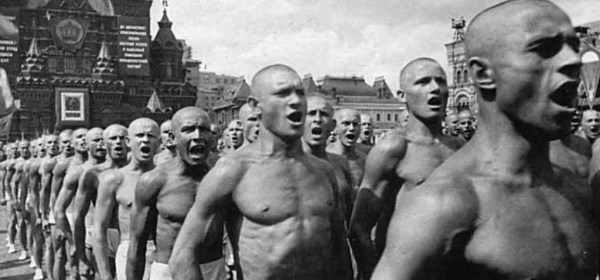
The USSR and Homosexuality Part III (RSFSR Article 154a)
This legislation appears to have been interpreted as a protection against male on male rape, and not an attack upon homosexuality in general. This stance appears to be vindicated by the fact that the Soviet Government (in 1926), invited the German Magnus Hirschfeld – the famous gay emancipator and founder of the World League of Sexual Reform – to witness first-hand the tolerance toward homosexuality in Revolutionary Russia. As a result, during the 1928 Copenhagen Congress of the Institute for the Science of Sexuality, the League stated that the Soviet Union was a model of tolerance for sexual diversity. When Hitler came to power, however, these progressive institutes were attacked and destroyed.
 SANGHA KOMMUNE (SSR)