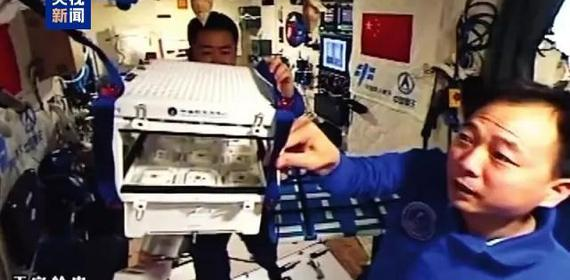
Footage from cameras aboard the spacecraft. (Photo courtesy of CCTV)

China’s “Red Menace” Grows in Space! (24.3.2026)

In September 2022, cosmonauts on the Shenzhou-14 mission became the first Chinese crew to eat vegetables they had grown in orbit. The mission completed full growth cycles for crops, including wheat and dwarf tomatoes. It also achieved the first full life-cycle cultivation of rice in space, from seed to seed.

Subsequent crews have continued to expand the range of crops grown aboard the station, including lettuce varieties and cherry tomatoes. More recently, astronauts have experimented with sweet potatoes, with samples returned to Earth for further study.

Space-based plant cultivation is aimed at supporting long-duration missions by providing food and aiding oxygen and water recycling, while advancing research for deep-space exploration. Microgravity may also alter plant growth cycles, offering insights into plant biology and potential applications on Earth.
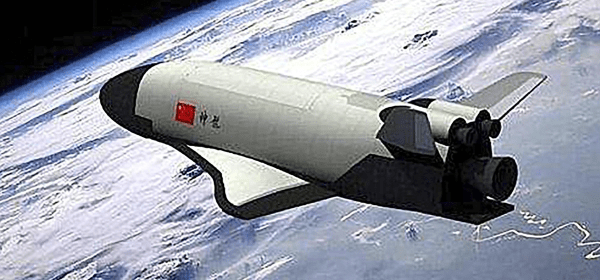

PRC Reusable Space Shuttle!

China: Greater Efficiency Space Shuttle! (13.11.2024)

A model of the spacecraft will be displayed at the 15th China International Aviation and Aerospace Exhibition, which opens on Tuesday in Zhuhai and runs through Sunday.

Currently, China has only one model of cargo spaceship, Tianzhou, which is a product of the China Academy of Space Technology in Beijing. So far, seven Tianzhou vessels have been launched and six of them were used to transport supplies to the Tiangong space station.

Orbiting Earth at a distance of about 400 kilometres, the Chinese space station has three permanent parts — a core module and two science capsules — and is regularly connected to several visiting crew and cargo spaceships.

It has been manned by eight Chinese crews, including the incumbent Shenzhou XIX team. All of the crews’ living and work necessities need to be transported by cargo vessels.