Thai Buddhists must question if their own adherence to practices such as donations to temples and individual monks is leading to the many scandals surrounding the nation's dominant religion. Please credit and share this article with others using this link: https://www.bangkokpost.com/opinion/opinion/3318463/bad-buddhists-beget-bad-buddhists. View our policies at http://goo.gl/9HgTd and http://goo.gl/ou6Ip. © Bangkok Post PCL. All rights reserved.

Thailand: Bad Buddhists Beget Bad Buddhists! (19.11.2026)

Unlike other faiths that have an inherent need to reconcile their higher aspirations with the shortcomings of humanity, Buddhism provides a ready answer for when the fallibility of being mortal becomes an impasse: cast it off and continue introspection.

It would require more than this article to parse the basic teachings of Buddhism from Thailand’s own superstitions and spiritual practices and likely require a level of debate that this writer concedes he would be poorly equipped to join.

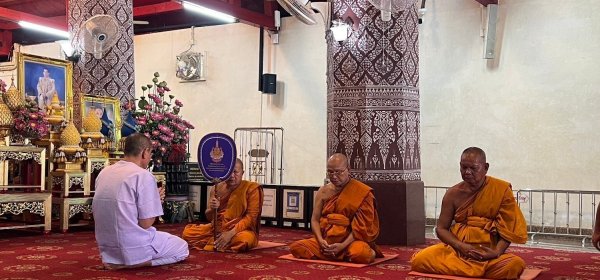
But it can be said with certainty that Thai Buddhists have every ability to repair the state of the religion, if they would allow themselves the discomfort of a communal introspection into which of their practices lead to the scandals of Wat Rai Khing, Wat Phrabat Namphu, Wat Phutthaisawan and so on.
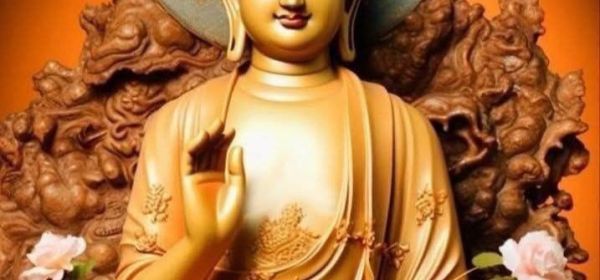
The Buddha's Smile of Unbearable Compassion!

UK: The Buddha’s Path of Simplicity! (15.11.2026)

However, whilst managing his body in this manner, the Buddha applied the science of meditation and stripped the mind of all aspects of greed, hated, and delusion. He uprooted the “asava” (ignorance, delusion, belief in self, and sensuality), and fully perceived the empty nature of the underlying psychic fabric of the mind. A body sustained through its minimal daily requirements was all the Buddha required – as no further karma was created via the operating of the desire mechanism. Desire (burning), by its very nature, is never ending, and can never be realistically fulfilled regardless of what experiences of comfort and material goods are amassed. Desire, by its very nature, always assumes that there is more to be obtained.

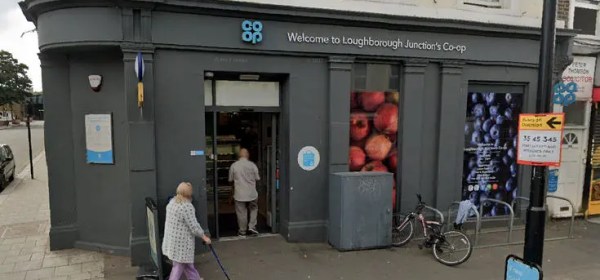
Sustained Shoplifting Closes Co-Op store on Coldharbour Lane in Loughborough Junction

South London: Brixton Buzz Reports Local Supermarket Forced to “Shut-Down” After Sustained Wave of “Shop-Lifting”! (13.11.2026)

The political left blames theiving upon economic deprivation, exclusion, and lack of opportunities – whilst the right blames innate cultural traits and the “presence” of non-White populations in historically “White” areas. Crime tends to be higher in poorer communities of every skin-colour – according to statistics – and is a response to poverty rather than an “innate” cultural habit. Ethnic groups, if economically deprived, tend to be centred in certain (underdeveloped) areas – hence the apparwnt correlation between “ethnicity” and “behaviour”. Crime is in fact just as high in entirely “White” areas of poverty – but the media tends to ignore this reality just in case the government is “forced” to do something about it. As a Buddhist, I believe that the poorer we are – the better we should behave – but when hungry, people are forced into all kinds of anti-social behaviours. Of course, I am not saying UK society is “just” – far from it. I have carried the Red Flag through the streets – risking arrest – in protest of this inequality. Finally, insurance usually prevents retailers sustaining any real financial losses – so these closures must be because the insurance companies refuse to cover the liability due to the extent of the thieving.

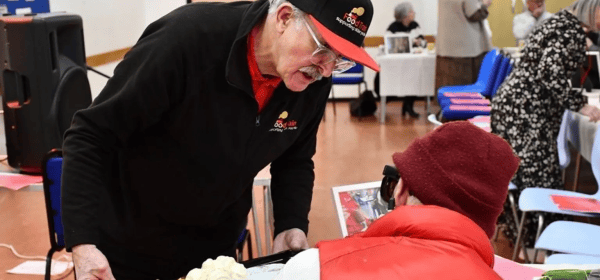
The Food Train charity provides support to older people - including food delivery - across southern Scotland

Scotland: Report Finds “Clear Human Rights Failures” in South Scotland! (8.10.2026)

The report includes a string of case studies which highlight areas of concern, such as the variation of service provision depending on where people live.

Donald worked as landscape gardener before suffering from a stroke and later contracting Lyme disease after being bitten by a tick.

He said a locum neurologist referred him to a specialist clinic in another south of Scotland health board, but he was rejected because he didn’t live in the right area.

“We don’t have a national health service, we’ve got a regional health service,” he said.

“I’m just left in limbo, unable to work and unable to get better, even though I know there’s a solution out there.”

Another section of the report highlighted the plight of one woman trying to find the right health care for her husband.

But she found navigating services for the former soldier to be “impossible”.