Haytor Neidan Self-Cultivation!

Ch’an Dao Blog Article – Neidan As We Get Older! (18.4.2025)

I suspect the ancient Greeks encountered Buddhist monasticism when visiting India (such as Pythagoras), learned the Buddhist method of “looking within”, and then adjusted the technique as a means to “prove” the efficacy of their particular philosophical perspectives (the work of Plotinus may be taken as an example of this endeavour). Later, via the Greeks, a community of Jews (in Qumran) started sitting in meditation to personally attain a “glimpse of Yahweh” – a practice that eventually spread to the reformed Jewish sect of “Christianity” – whose adherents started to meditate whilst sat in the caves found in the Egyptian Desert (this type of Christianity spread to Britain – hundreds of years prior to Catholicism – becoming “Celtic Christianity”).

Mind & Boody Interaction!

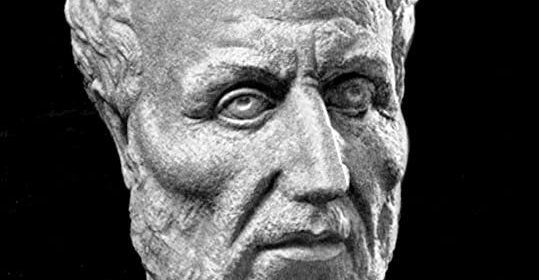
Plotinus: Experiments in “Lightness” Training! (13.7.2024)

The lightness of conscious awareness permeates the (heavy) material body. The (heavy) material body is then as “light” as the conscious awareness that permeates it. The objective, then, is to “break” the habit of gravity which anchors the body firmly to the ground. When this can be achieved, the body will “float” up from the ground to a height preferred by the meditator. This is the logic achieved through disciplining the body and refining the mind. The problem is that gravity is considered natural and unbreakable through the agency of human will. An individual can, if they so wish, step off a cliff entirely detached from a belief in the efficacy of gravity – and yet will still plunge to their death. These are the concerns that spiritual fliers must confront and overcome. The tyranny of matter is a shackle that spiritual seekers must firmly grasp and shatter! 

Plotinus: The Concept of ‘Time’ Reconsidered! (21.9.2022)

The Christians then further added to this confusion (entirely of their own making) by superimposing the Germanic term ‘Soul’ over their misinterpretation of the Greek philosophical term ‘Psyche’! Plotinus (and most genuine Greek philosophers) never used or even knew of the Christian conflation of ‘Psyche-Soul’. Certainly, Plotinus NEVER used the Christian term ‘Soul’, but he did continuously use the Greek philosophical term ‘Psyche’, which refers to the ‘breath of life’, ‘the animating principle of existence’ – or that ‘spark’ which sets in motion all the conditions that grant psychological (thought) and physical (existence)! Plato’s 4th Century BCE text entitled ‘Definitions’ a manual of philosophical terms (translated by DS Hutchinson, 1996) used within his ‘Academy’ School of Philosophical Study – defines the Greek term ‘Psyche’ to mean the following:

a) That which moves itself.

b) The cause of vital processes in living creatures.

I would argue that the Greek term ‘Psyche’ implies so much more than the narrow Christian term ‘Soul’, and even if there are elements of the Greek ‘Psyche’ which overlap with the Christian ‘Soul’ – this in no way validates (or accepts) the Christian doctrine of being true anymore than it invalidates the Greek philosophical message!

1 2 3