Marx rejected the mechanistic view because it suggested nothing could be changed, and he rejected metaphysical view because he recognised the existence and purpose of a human consciousness – even if it is generated from the brain and conditioned by outer circumstances and events.
Tag: matter
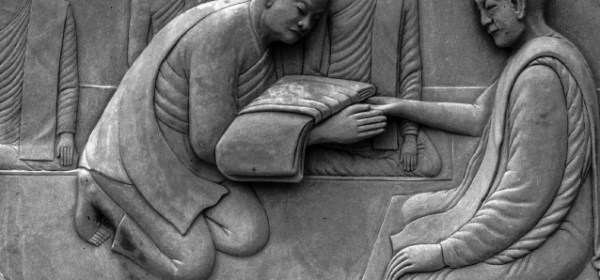
Buddhism: Pali Bhavana and Chinese Ch’an
Chinese transliterations and translations are useful as the early Chinese scholars had to understand the Indian Pali and Sanskrit terms before they could be rendered effectively into the Chinese language. Obviously, some of the early transliteration of Indian Buddhist terms are purely ‘phonetic’ in nature and in themselves do not convey much meaning as ideograms. This represents an initial process of a slow, careful and gradual building-up of knowledge in China about a thoroughly ‘foreign’ Indian philosophy that had to develop an ‘interface’ with existing Chinese culture.
Email: Buddha, Nagarjuna, Plotinus and the World of Matter (6.9.2017)
Dear N Thank you for your very interesting Plotinus quotation and Nagarjuna-related question. The tetralemma of the Indian Buddhist monk Nagarjuna states: 1) All exists.
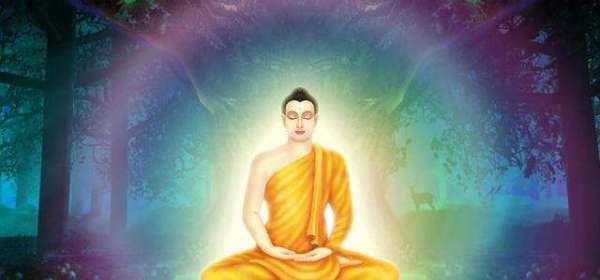
The Connection Between the Perception of Inner and Outer Space
Today, through the use of advanced technology and mathematics we know that this is scientifically correct. This would suggest that Democritus had an experience no less important than the enlightenment of the Buddha, as it radically redefined humanity’s perception of reality and existence, and yet generally speaking, there are no temples containing statues of Democritus, or people applying a meditative method to replicate his mode of thought.

Plotinus and his Assessment and Definition of Matter
Whatever the case, I suspect Plotinus fully understood that the world of matter was primary for biological life, and that through this biological existence, the rarefied state of conscious awareness that Plotinus undoubtedly experienced, could only be realised if the physical body (and the mind it contains) was trained in the right way.
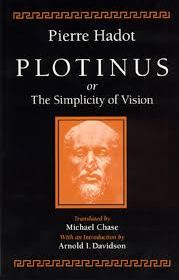
How Plotinus Makes Use of the Material World
Therefore, it must be truthfully stated (as Plotinus does), that a continuously changing beauty exists beyond any concepts of ‘static’ beauty, and that such a beauty with regards to that which lives is ‘beautiful’, but that even that which is ‘dead’ is also ‘beautiful’ when viewed in a certain way. Although Plotinus advocates (for a time) a ruthlessly ‘looking within’, he does not permanently ‘reject’ the physical world he strives to ‘look beyond’.
 SANGHA KOMMUNE (SSR)