The Buddha explains clearly, in every expression of his teaching, that consciousness and physical matter are not two different things, even though they may be
Tag: klesa
The Hua Tou and Pain Management
The sensing of external stimuli from the material world enters the body through the senses-organs. The body often responds with involuntary or unconscious bio-chemical processes
No Idealism in Buddhism
The Buddha explains that the world is experienced through the six senses, which in the Buddhist teachings includes the ‘mind’ as a sense-organ. Whether or not an ‘idealist’ position exists within later Buddhism is a matter of academic dispute.
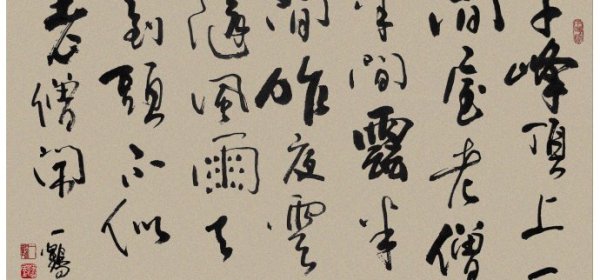
Huanglong Ch’an Poem
In one half an old monk – the other half a cloud.
Buddhism: Hinayana and Mahayana Notions of Emptiness! (10.12.2014)
Through the work of Nagarjuna, the Mahayana movement developed the interpretation that physical matter is ‘empty’ of any substantiality. This is due to Nagarjuna applying his tetra lemma (catuskoti) formula to the assessment of the ‘Chain of Dependent Origination’ (Pratītyasamutpāda), and logically proving that just as the true enlightened state has no-self associated with it; then it is also equally true that physical matter has no substantiality associated with it. Everything is dependent upon everything else, conditioned by everything else, and contingent upon everything else.
 SANGHA KOMMUNE (SSR)