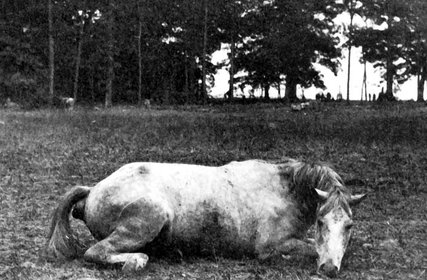
Library of Congress“Dead Horse of Confederate Colonel; both killed at Battle of Antietam,” by Alexander Gardner

CSA: Piles of Thread-Bare Confederates at Antietam [Sharpsburg] – Notes on Their Sacrifice! (31.1.2025)

The Union Army paid the farmer $1 per dead Confederate body and the farmer made $60 out of the deal. He dug a new well in a different place for the cost of $2 – making a wartime profit of $58. No one knows the names of these Confederate soldiers – and if it was not for a report being made by the Union soldiers concerned – no one would know about these men today. Of course, there was great bravery on both sides – but the spin placed on the war by the winners has skewed how the Confederacy is viewed today. These Confederate men (and boys) advanced into the Union fire with the utmost discipline and determination. They believed 100% in their cause – which was for the freedom of their individual countries (termed “States”). At the time, this war was not only about slavery – but has been made ONLY about slavery since 1865. Many believed the federalisation of the United States was a betrayal of the 1776 War of Independence – and nothing short of a great evil!

Dark Knight of the Soul – “Cuddly” Nick Griffin Defines His Disturbing Racism! (16.7.2023)

“You write about learning from ‘peaceful Ulster’, but what about the  30 years of sectarian violence?”

I didn’t say “Ulster was peaceful”, I said that many of the peaceful (i.e. nonviolent) techniques and institutions developed by both communities PARALLEL to the armed struggle would be of great value to our communities in the years to come.

I’m not only talking about the things done in Northern Ireland since 1968, either. The whole of Irish history is full of lessons in how to survive and eventually thrive as a persecuted minority facing relentless and often genocidal violence.

We are very lucky to have such experience so close to home and so easy to learn. No one else anywhere in the white world has such a resource. Use it! If you are serious and want to see it all for yourself in person, get in touch!

USSR: Red Army Cavalry 1938 Model ‘Carbine’ (17.5.2022) 

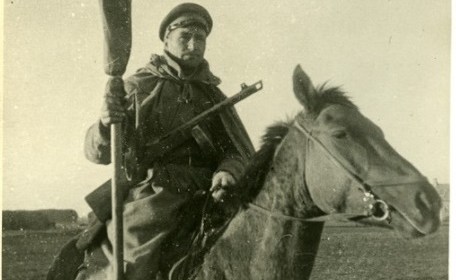
The concept of the ‘carbine’ may well have originated during the late 1500s in France and referred to the weapon these ‘Light’ Cavalrymen used to carry. In this instance, this may well have been a ‘slang’ term used in the French language which referred to mounted archers from Flanders who were considered deadly shots and sure bringers of ‘death’! (The association is unclear but may refer to an assumed connection between the ‘carrion beetle’ and the ‘plague’, etc). Whatever the origin, a ‘carbine’ appears to refer to a ‘short’ and highly effective weapon carried when sat in the saddle and used when riding the horse whether into or out of battle. The 1938 ‘Carbine’ Model measured just 1020 mm (or 3.4 feet) long (minus a bayonet) – and fired a round measuring 7.62 mm! The ‘Carbine’ Model 1938 was sighted to fire up to 1000 meters! The Izhevsk Machine-Manufacturing Plant was the only place equipped for producing this ‘Carbine’ between 1941-1942 – during the height of the ‘Great Patriotic war’ – when the workers of this factory produced over 1,106,510 which were sent immediately for frontline service! 

Red Army Horses (1941-1945) by Timur Muminov [Тимур Муминов] (13.8.2019) 

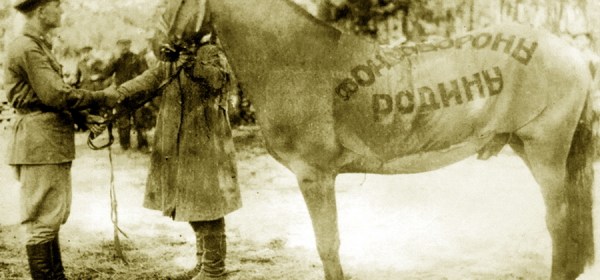
The time of severe trials proved the expediency of organizing a special fund of selected horse stock. In total, about three million horses came from the national economy to the front. Even more of them would be needed if, thanks to a well-organized military Veterinary Service, the vast majority of slightly wounded and sick animals did not return to Service – but were returned to the Home-Front to continue their vital patriotic services. However, more than a million uncomplaining Soviet War-Horse died in the anti-fascist war! Already, by 1942, the USSR was short of horses – with the shortfall being met by purchases from its allies in Mongolia!

USSR: Red Army Cavalry Swords! (12.5.2022) 

It is remarkable to consider that although the Red Army Cavalry were issued were ‘Carbines’ in 1941, this was not before massed men on horses had launched traditional Cavalry charges against the Nazi German Army as it moved into the USSR from June 22nd onwards, in 1941! Indeed, the 6th and 36th Divisions of Red Army Cavalry were literally ‘wiped-out’ as every man and horse was lost when they ‘charged’ at advancing Nazi Germany tanks in West Ukraine at the very beginning of the Great Patriotic War (1941-1945)!

The Use of the Cavalry Lance (‘Pike’) and the Red Army (1924) 

In general, the combination of today’s ‘unusual’ cavalry soldier with this type of horse is very far, unfortunately, from the image that is desirable or associated with a ‘traditional’ cavalryman. Meanwhile, a ‘pike’ (or ‘lance’) is good only in the hands of an excellent rider, sitting on an excellent and well-trodden horse! History sufficiently proves (through a number of examples) that in the absence of these two vital attributes – the pike is only a burden that rushes into battle without finding any effective use for itself!  

1 2