The Buddha clearly taught that ‘rebirth’ only seems to exist in the deluded state, but that in the enlightened state, no such agency exists.
Tag: hinayana
Master Xu Yun: Dull Emptiness is Not Enlightenment
Sitting on a high structure is precarious for an individual, because there is the ever-present danger of ‘falling off’. In such a situation, the practitioner responds by ‘gripping’ ever more tightly to the structure, and will not let go. This is an ‘attachment’ to a lesser state of attainment, an attachment which prevents further progression into the true realms of Ch’an enlightenment.
Buddha Opposed Religious Ignorance
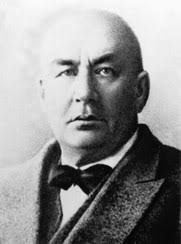
This photograph does not offend me in the same manner as racism, or social inequality. In fact it does not offend me at all. Religious
The Greater Over the Lesser Path
Therefore the teachings on karma and rebirth are applicable to the pre-enlightenment state and are not ultimately ‘real’ as they disappear with the realisation of profound emptiness. It is debatable that the Pali Suttas are ‘Hinayanic’, as all Mahayana thought clearly exists within their construct.
Two Remarkable Aspects of the Buddha’s Teaching
In at least two respects, the teachings of the Buddha were quite remarkable. In the first place, he insisted on the virtue of moderation. He
Buddhism: Hinayana and Mahayana Notions of Emptiness! (10.12.2014)
Through the work of Nagarjuna, the Mahayana movement developed the interpretation that physical matter is ‘empty’ of any substantiality. This is due to Nagarjuna applying his tetra lemma (catuskoti) formula to the assessment of the ‘Chain of Dependent Origination’ (Pratītyasamutpāda), and logically proving that just as the true enlightened state has no-self associated with it; then it is also equally true that physical matter has no substantiality associated with it. Everything is dependent upon everything else, conditioned by everything else, and contingent upon everything else.
 SANGHA KOMMUNE (SSR)