Al Kindi’s willingness to read widely, and learn from wisdom traditions outside of Islamic theology, led to the establishment of logic and reason within the Islamic tradition, whereby another layer of interpretive discourse was developed, through which Islamic theology could be interpreted.
Tag: greek philosophy
The Connection Between the Perception of Inner and Outer Space
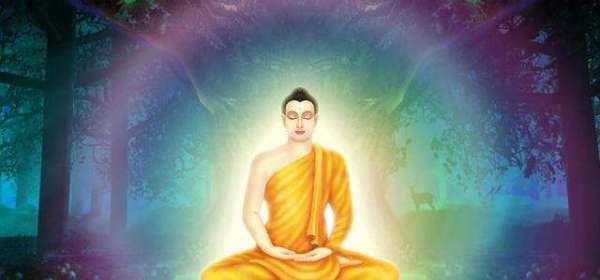
Today, through the use of advanced technology and mathematics we know that this is scientifically correct. This would suggest that Democritus had an experience no less important than the enlightenment of the Buddha, as it radically redefined humanity’s perception of reality and existence, and yet generally speaking, there are no temples containing statues of Democritus, or people applying a meditative method to replicate his mode of thought.

Plotinus and his Assessment and Definition of Matter
Whatever the case, I suspect Plotinus fully understood that the world of matter was primary for biological life, and that through this biological existence, the rarefied state of conscious awareness that Plotinus undoubtedly experienced, could only be realised if the physical body (and the mind it contains) was trained in the right way.

UK: Pytheas [350-285 BCE] – the Greek Explorer who Discovered Britain! (23.1.2016)
In around 304 BCE Pytheas set sail from Massalia with the intention of exploring the seas west of the European landmass. In so doing Pytheas became the first Greek to visit and sail around Britain. He discovered that Ireland lay further west of Britain, and that Norway was to the north of Britain.
The Buddhist Concept of ‘Saddha’ (Conviction) Distorted As (Blind) ‘Faith’!
‘From the assessment of (the Pali) and Sanskrit terms ‘sraddha’, ‘prasada’, and ‘adhimukti’, as used within Buddhist philosophy, (both early and late), together with a cross-referencing of the translation terms used to render these notions into written Chinese, it is clear that these terms can not be interpreted through the lens of a Christian concept of ‘faith’. Buddhist philosophy is an example of the product of pristine ‘logical’ thought that is dependent upon personal experience and spiritual experimentation. The Buddha’s system is simple in essence – over-come greed, hatred and delusion, and suffering will stop – but extraordinarily extensive in presentation. Each expressed idea and concept fits neatly into every other idea and concept. It is precise, exact and constant in its original form, and a simple idea, (the product of a profound enlightenment), requires literally hundreds of sutras to express its totality. Whereas St Augustinedescribes Christian faith as coming before knowledge, the Buddha’s message is exactly the opposite – it is the presence of exact and profound knowledge – that generates a confidence and a therefore a ‘qualified’ belief in it. Although it is true that ‘faith’ In a deity is a Hindu belief, and that the Buddhist terms are also used within Hinduism, nevertheless, the Buddhist usage is of a specific type that alters considerably, the original Hindu meanings, which are dependent upon a belief in a deity, (or divine concept) for salvation.’
 SANGHA KOMMUNE (SSR)