Visiting Charles Darwin's House - Das Kapital

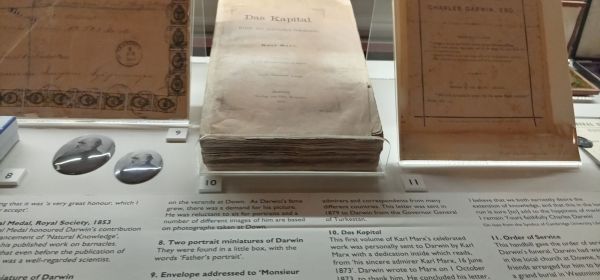
Down House: Meeting Yet Again with Darwin’s Copy of “Das Kapital” By Karl Marx! (8.3.2026)

Darwin (like Marx) believed that “consciousness” was a function of the physical brain in as much as the ability to “think” emerges from the brain – and is the consequence of the functionality of the physical brain. In other word, the ethereal “mind” is a function of the material brain and cannot derive from anywhere else. Wallace had a different opinion. Whilst supporting the idea that the physical body (and brain) had evolved over a long period of time, Wallace was of the opinion that as the physical structures of the brain developed (and become more sophisticated) these structures evolved the ability to “receive” and “sense” consciousness as if it were broadcast (like a radio signal) from an outside source (Wallace never defined this “source” – but many believed his was trying to re-introduce religious thinking into material science – possibly due to the rise of “Spiritualism”). Indeed, perhaps Wallace was influenced by the science of radio-waves when he formulated this idea. Darwin rejected it, (as did Marx) – as they thought it was an attempt to enforce religion via the backdoor. Consciousness, as a special arrangement of matter, developed as a response to environmental conditions and the requirement for the “species” (not individuals) to survive. This might explain why capitalism, and its insistence upon “individualism” – runs counter to human developmental existence and evolutionary science. I suspect that Darwin agreed with Marx on this matter – that this point explains why the correspondance between the two has not yet been fully released.
3-D Map Brain - Socialist Science Triumphs!

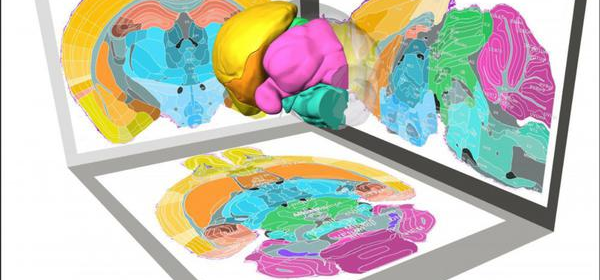
China: Scientists Create Most Detailed 3D Map of Mouse Brain! (6.7.2025)

International experts hailed the work. Doctor Javier de Felipe of Spain’s Cajal Institute called it “a highly significant achievement”, while Australian neuroscientist George Paxinos — whose own mouse atlases are lab staples — praised the “unprecedented” data quality.

The team aims to expand the stereotaxic topographic atlas’ applications, from testing drugs to guiding brain-machine interfaces. Luo also highlighted Hainan province’s unique resources: “With our primate research resources, this work could bridge mouse studies to human brain exploration.”

“While we’ve mapped distant galaxies, the human brain remains one of science’s final frontiers,” Luo said. The stereotaxic topographic atlas now bridges this gap, proving how microscopic breakthroughs – down to a single micron — can illuminate humanity’s most complex organ.

Socialist Science - Ageing Population!

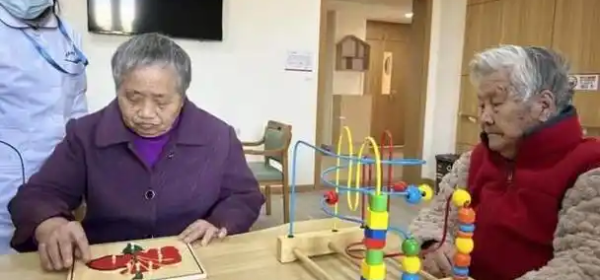
China: Friendly Community Built for Seniors with Cognitive Impairments! (6.1.2025)

It outlines efforts to encourage the setup of memory-related clinics in healthcare institutions and cognitive impairment departments in eligible hospitals, with improved standard for senile dementia diagnosis and treatment.

“Good nursing is crucial for people with Alzheimer’s disease,” said PUMCH doctor Gao Jing, adding that a healthy lifestyle and medication are also important to fight the disease.

To boost the provision of nursing services, the plan also outlines a model integrating home, community and institution-based care for senile dementia, and encourages the construction of caregiving facilities in rural and urban communities.

By 2030, dedicated care units for seniors with dementia will account for 50 percent of elderly care institutions with over 100 beds and adequate services capabilities, and 15 million people will be trained for dementia care, according to the plan.

Exposing Trotsky's Lies

On How Grover Furr Exposes Incorrect Soviet-Era Historical Analysis! (30.1.2024)

The archaeologist, as a trained academic, is applying a logical method of ‘removing’ eras of material obscuration, being careful to correctly observe the origin, construction, constitution, and positioning of said debris. Indeed, amassing this data is crucial for constructing a correct (contextual) historical narrative regarding the age, origin, purpose, and fate of the object being observed. If any of this analysis is false – then this falsehood permeates its way though the entire academic process – leading to incorrect assumptions and interpretations. Indeed, the history of archaeology is strewn with such numerous examples of misread data. The study of historical events is conveyed through many mediums, archaeology, art, culture, texts, film and audio recordings, etc. Some of this data is said to be eye-witness accounts – whilst others tend to be merely opinion at a distance.