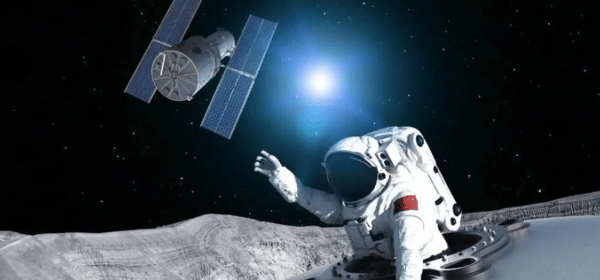
China Manned Space Agency (CMSA)

China: Logos Unveiled for 3 “Socialist” Space Missions in 2025! (20.1.2025)

According to the CMSA, crews for the Shenzhou-20 and Shenzhou-21 missions will consist of three astronauts each. Shenzhou-20 is set to dock with the radial port of the space station’s core module, while Shenzhou-21 will dock with its front port.

The main tasks of the astronauts will include extravehicular activities, cargo outbound deliveries via the station’s cargo airlock module, and the conducting of space science experiments and technology tests.

In the second half of 2025, China plans to launch the Tianzhou-9 cargo spacecraft from the Wenchang Space Launch Site in its southern Hainan Province. This mission will deliver supplies for astronauts, propellants to ensure the space station’s operation, various types of payloads, and more.

China’s manned space station project has entered its application and development stage — with two manned spacecraft missions and one to two cargo missions planned annually.
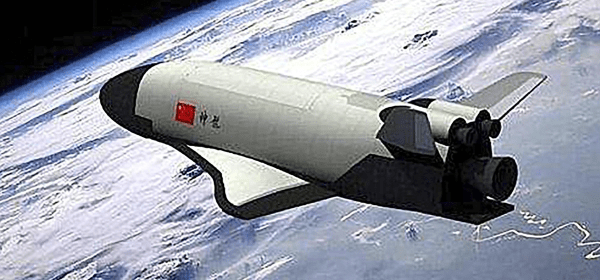
PRC Reusable Space Shuttle!

China: Greater Efficiency Space Shuttle! (13.11.2024)

A model of the spacecraft will be displayed at the 15th China International Aviation and Aerospace Exhibition, which opens on Tuesday in Zhuhai and runs through Sunday.

Currently, China has only one model of cargo spaceship, Tianzhou, which is a product of the China Academy of Space Technology in Beijing. So far, seven Tianzhou vessels have been launched and six of them were used to transport supplies to the Tiangong space station.

Orbiting Earth at a distance of about 400 kilometres, the Chinese space station has three permanent parts — a core module and two science capsules — and is regularly connected to several visiting crew and cargo spaceships.

It has been manned by eight Chinese crews, including the incumbent Shenzhou XIX team. All of the crews’ living and work necessities need to be transported by cargo vessels.

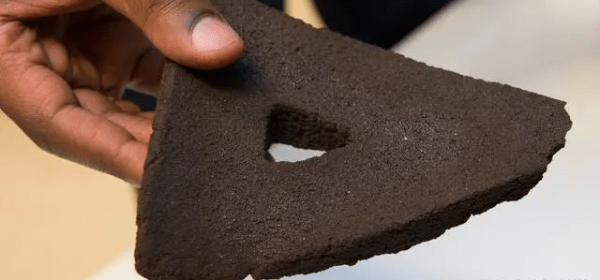
3-D Printer Brick - Luna Base!

China: 3-D Printer “Bricks” Developed for Future Moon-Base Construction! (21.10.2024)

According to China Central Television, the lunar bricks will be sent to China’s space station aboard the Tianzhou-8 cargo spacecraft to verify their mechanical and thermal performance, as well as their ability to withstand cosmic radiation. The first lunar brick is expected to return to Earth by the end of 2025.

China unveiled a national mid-term to long-term development program for space science on Tuesday, outlining a roadmap for the development of space science in China through 2050. The international lunar research station, which was initiated by China, will be constructed during the program’s second phase from 2028 to 2035.

This photo shows lunar samples retrieved by the Chang'e-6 mission at the lunar sample laboratory in the National Astronomical Observatories of the Chinese Academy of Sciences (CAS) in Beijing, capital of China, Sept. 24, 2024. (Xinhua/Jin Liwang)

China: Research on Chang’e-6 [Dark-Side] Lunar Samples Underway! (11.10.2024)

A research paper published in September on the lunar samples brought back by the Chang’e-6 mission says that the Chang’e-6 samples exhibit “distinct characteristics” compared to previously obtained lunar samples.

The Chang’e-6 probe was launched from China on May 3, 2024. On June 25, its returner made a landing in north China, bringing back 1,935.3 grams of samples from the far side of the moon. (Xinhua/Jin Liwang)

PRC Lunar Space Suit - 2024

China Manned Space Agency [CMSA]: Lunar Spacesuit Revealed! (29.9.2024)

According to the CMSA, spacesuits are designed for exposure to the harsh conditions of space, including vacuum, microgravity, radiation, and extreme temperatures, allowing for greater lower body mobility of astronauts to walk, climb, and conduct scientific activities on the moon’s surface. 

Research and development of the spacesuit began in 2020, inspired by traditional Chinese culture.

The red decorative bands on the arms and legs were designed to resemble flowing “Feitian” ribbons — meaning flying deity in traditional Chinese culture. Its combination with the suit symbolizes traditional Chinese philosophy of harmonizing strength and softness. And the leg bands are shaped like the exhaust flames of a rocket, conveying the dynamic energy of space exploration.

The Cosmonaut Party! (21.12.2023)

The “CP” is a none revisionist astronomical-technological institute that rejects the inverted (Trotskyite) ideology which states that all space-exploration rockets should point “downwards” and travel to the Moon through the centre of the Earth’s crust! The “CP” is of the opinion that all rocketry should pursue a path which points “upwards” and traverses through the atmosphere!

1 2 3 4