Victims of 1076 US Terrorist Attack!

Cuba: Remembering the Victims of the US Terror Attack on Cubana de Aviación Flight CU-455! (7.10.2026)

Together with our people, we paid tribute at the Colón Cemetery to the martyrs of the Barbados tragedy, 50 years after this heinous act. On the Day of Victims of State Terrorism, we honoured their memory and reaffirmed our firm condemnation of terrorism in all its forms.

Later, we met with the families of the victims of this and other terrorist acts committed against our country. We denounced the impunity, demanded justice, and reaffirmed the support of our entire people. Cuba embraces you.

Aerial view of the Tonglushan Ancient Copper Mine Site [Photo/provided to chinaservicesinfo.com]

China: A 3,000-Year-Old Glimpse into Bronze Age Technological Prowess! (5.10.2026)

In the 21st century, China has once again emerged as a major industrial and technological power — home to the world’s most comprehensive industrial systems and making rapid advances in areas ranging from new-energy vehicles and artificial intelligence to robotics, quantum technology, space exploration and marine science.

The Tonglushan site was discovered by chance during mining operations in 1973, and archaeological excavations found that mining and smelting activity there dates back at least to the early years of the Spring and Autumn Period (770 B.C.-476 B.C.).

“It confirms that China’s Bronze Age civilization followed a complete and independent course of development,” Chen said. “Archaeological comparisons show that the copper used in the Bianzhong of Marquis Yi of Zeng, a famous set of bronze chime bells, as well as many other bronze artifacts, came from Tonglushan.”

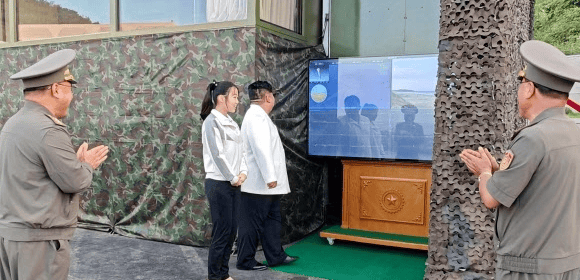
Chairman Kim Jong-un observed the test launch on-site together with his daughter, Ju-ae.

DPRK: The True Meaning of Modernity! (4.10.2026)

Then he stressed that each foodstuff factory should realize the modernization of production lines on a higher level like this factory, adding that modernization based on foreign equipment, not on our own efforts and technology, cannot be termed modernization in its true sense.

He stated that modernization demanded by the Workers’ Party of Korea is the one based on our Juche-oriented forces and technology, not based on the strength and technology of other countries.

His meaningful teachings reflected the iron truth that to strictly rely on one’s own strength and technology is the key to developing the country’s economy and hastening the national prosperity. (End)

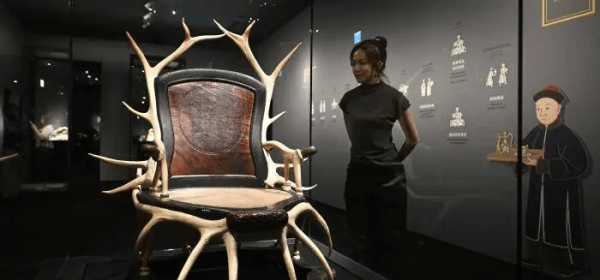
Aesthetics of Qing court workshops from a contemporary design perspective.

Hong Kong: Exhibition Unveils 157 Treasures from Qing Imperial Workshops! (1.10.2026)

Hong Kong, September 29 (Reporter Liu Yueqing) — The special exhibition “Qing Palace Manufacturing and Contemporary Design” held a media preview at the Hong Kong Palace Museum on the 29th and will open to the public starting September 30. This exhibition showcases the craftsmanship and ingenuity of the Qing Dynasty through 157 treasures from the Palace Museum’s collection (including 14 national first-class cultural relics), deconstructing the operations and aesthetics of Qing court workshops from a contemporary design perspective.

Victory for Cuba's Juda-ka!

Cuba: Visually-Impaired Judo-Ka Win Medals! (29.9.2026)

Sheyla Hernández won the first world title for #Cuba in women’s judo at the IBSA (International Blind Sports Federation) in Tbilisi (Georgia) 2026, defeating Italian Carolina Costa in the +70 kg (J2) final.

A victory with a special flavour: silver in 2022, bronze in 2025, and now, finally, a world champion! A reward for perseverance, sacrifice, and dedication.

Congratulations also to Ariagna Hechavarría for her bronze medal in the 70 kg category (J1).

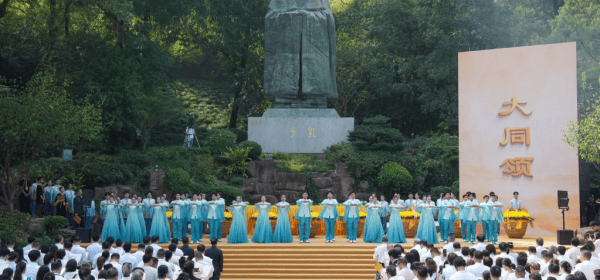
Confucius lived from 551 BCE to 479 BCE

China: Life of Confucius [551-479 BCE] Commemorated! (29.9.2026)

This meant that the nobility could do whatever they wanted to the peasants in different circumstances, and that the there was no set law that applied identically to everyone in every situation. This was fine just as long as the nobility showed proper respect to their superiors and guidance to their inferiors within the aristocracy. As for peasants, Confucius believed they should be treated with the harshest of draconian laws to keep them in-line. Peasants had no rights other than offering the highest deference toward the aristocracy. The Emperor retained the right to execute anyone (of any rank) at anytime, for any reason. Social order was the purpose of politicised Confucianism. On the other hand, some are of the opinion that as a personal philosophy (rather than a forced political ideology), Confucianism advocates self-discipline and a dedication toward a continuous academic study and character-refinement (modern China takes this position). Indeed, Confucius the man pursued this latter model as he possessed no political power during his lifetime. Behind the scenes, scholars argued whether humanity was inherently “good” or “bad’ – and whether people outside your own family (nepotism) should be treated with the same respect and consideration as people within your family. The First Emperor detested hierarchical Confucianism, banned it, and introduced “Legalism” – a unique idea in China at the time – an ideology which advocated that the same law applied everywhere, to everyone – at all times – without exception or deference to social status. Today, The CPC advocates the rule of law and defines Confucianism as pursuing the ability to “educate” in relation to the learning of the Chinese language (reading, writing and speaking). This approach removes the unsavoury aspects of politicised Confucianism (without suppressing Confucianism per se) and lifts its thinking out of the quagmire of a narcissistic philosophy.

1 … 5 6 7 8 9 … 307