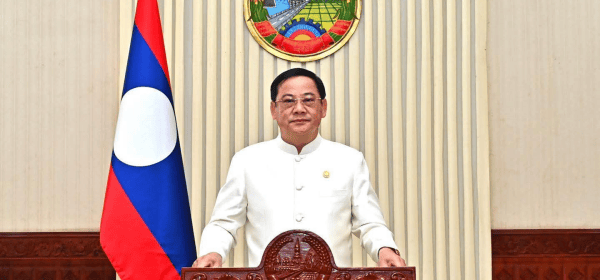
Prime Minister calls on education authorities, teachers, parents, students and society as a whole to strengthen efforts to improve education quality!

Laos Buddhist-Socialist Republic: PM Calls for Strong Improvement in All Education Standards During New Academic Year! (22.9.2026)

He commended education administrators, teachers, students, local authorities and development partners for their contributions during the 2025–2026 academic year, particularly in improving school infrastructure, expanding school meals in remote areas, promoting non-formal education, increasing student allowances and reducing school dropout rates.

For the new academic year, he called for stronger measures to address teacher shortages, reduce dropout rates, improve vocational and higher education enrolment, and enhance teaching quality through modern techniques and technology.

The Prime Minister urged teachers to uphold professional ethics and continuously improve teaching methods, while encouraging parents to ensure their children remain in school through at least compulsory lower-secondary education.
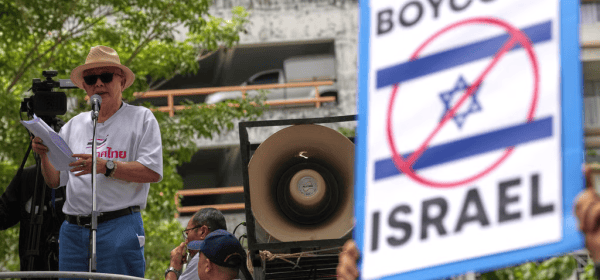
Thais Oppose Zionist Take-Over of Country!

Thailand: Buddhists March Against Zionist Colonisation, Aggression & Criminality! (20.9.2026)

Thailand has a long-standing tradition of “extending warm hospitality to foreign visitors”, he said. “However, let it be clearly understood by the embassy and the government of Israel that generosity must never be mistaken for weakness.”

Accusing Israelis of wanting to “occupy our country, building your own community”, he added: “Hospitality does not equate to submission to exploitation, and courtesy is not an open licence for anyone to act with impunity on our sovereign soil.”

“Widespread grievances” committed by Israeli residents and tourists “include violations of domestic law, public disturbance, disrespect towards local traditions and culture as well as recurring payment default and service-related fraud”, he added.

The Mind Must Be Calm and Serene!

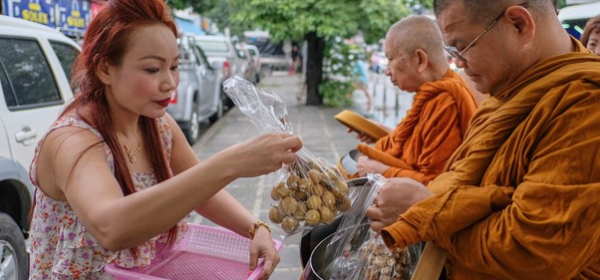
BMA-UK: Buddhist Practice of “Accepting” & “Rejecting” Food Donations – The Politics of the Buddha’s Begging Bowl! (8.9.2026)

Rules in the Dhammic-sense serve only as basic guides toward moral-behaviour – hence the obvious latitude found in the night-life of places such as Thailand. Obviously, a lay-Buddhist is free to follow whatever path they perceive is correct for themselves and the circumstances they inhabit – after-all – it is their karma-producing habit. One issue is not to inflict suffering on others – including animals (this is why my family will never hurt animals in anyway). Hunger striking, in this sense, only physically “hurts” the individual participating in it – although a case can be made that those watching or caring “from afar” might suffer emotional pain. Of course, in the poor parts of Asia, Buddhist monastics exist whilst eating every other day – as the laity is so poor they have very little to share – but what an effort they make! Although starving themselves, the Buddhist laity will put aside a small amount for the Buddhist monastics. I was told that in the Northern forests of Thailand food is so scarce that Buddhist monastics often sieve a type of algae out of the local rivers – using their begging bowls – and share this to eat.

Sheldrake Lecture - 2004

UK: Should Cambridge University Investigate Rupert Sheldrake? (12.8.2026)

The Buddha does not contain ALL knowledge as if it were lying dormant in his mind at any given moment (therefore he is not “omniscient” in this sense) but he does say that an enlightened being can direct the mind in any direction he or she wishes (like a net enveloping and collecting all things) throughout the world, and in so doing bring any part of it into his enlightened conscious awareness.  This lasts for as long as concentration is held in that direction and then fails away – remember that the true nature of the mind is “empty” and spacious – so that all phenomena seems to arise and pass away within it.  In fact the Buddha states a long list of abilities and powers he possesses – including the ability for his mind’s awareness to travel to other worlds.  What happened over-time is that through various commentaries and translations, the fact that the Buddha could move his mind’s awareness in any direction (or none) became conflated with the idea that his mind’s awareness was already in every place and at every time.

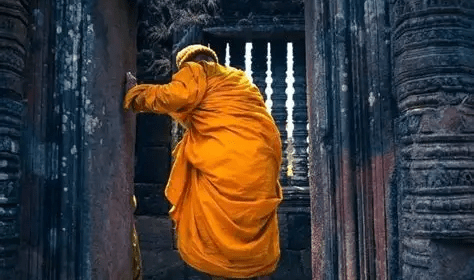
A Theravada Buddhist Monk in the Ruins of “Wat Phu (ວັດພູ)”!

Buddhist-Socialist Laos: “Wat Phu (ວັດພູ)” – An Example of a Khmer-Era Buddhist-Hindu Temple! (6.8.2026)

The stone walls are carved with mythological scenes such as (the Hindu) Hanuman monkey-god fighting demons and Gisna tearing apart the Dragon King. Inside the hall are numerous Buddha statues and a stone statue of King Phayakamata of Champasak. The site area preserves the foundations of two stone palaces, scattered stone figures and beasts, and a sacred lake measuring 300 metres by 200 metres. The lakeside pavilion in the centre connects with the ruins of the Western Hall. The temple is said to have been built in the 7th century, with most existing ruins dating back to the 10th-century – during the peak period of the Khmer Empire. Every year from late January to early February, the Wat Phu Festival is held, featuring various religious ceremonies and activities.

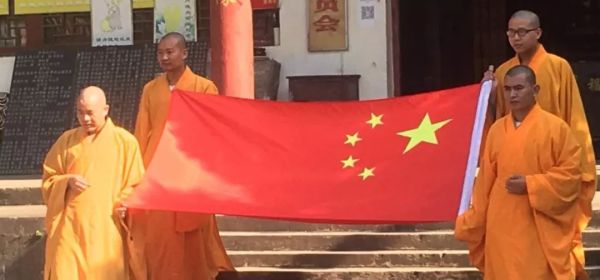
PRC Buddhism is Socialist!

BMA-UK: Zhao Zhihao (赵志浩) – Promoting the Further Sinicization of Buddhism & Integration with Socialist Society! (3.8.2026)

As the Mahayana Sutras became more popular in China than the Pali Suttas – the idea of strict vegetarianism (which had spread from India via various Vinaya Discipline texts) took root (even though it was only meant initially for the monastic order). Buddhist vegetarianism was not invented in China (as the author of the below [translated] text seems to imply). It is true that at least two Emperors in China did ban meat-eating in their respective countries – and instigated an expansive vegetarianism amongst the general public (Buddhist and non-Buddhist). This meant that Buddhist monastic vegetarianism was spread throughout the Buddhist laity and beyond – and this was a transformation of Buddhist practice in general that has persisted into modern times. Much, if not all of the interfacing Chinese philosophy that at least gave structure to Chinese Ch’an (Dhyana) Buddhism arose from the “Change Classic”

1 2 3 4 … 41