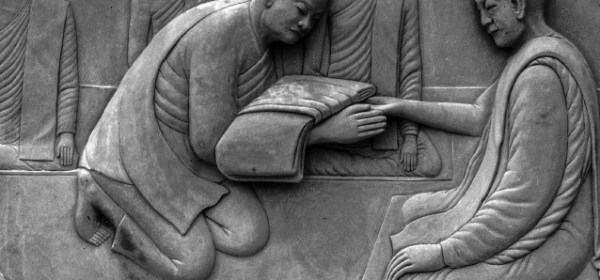
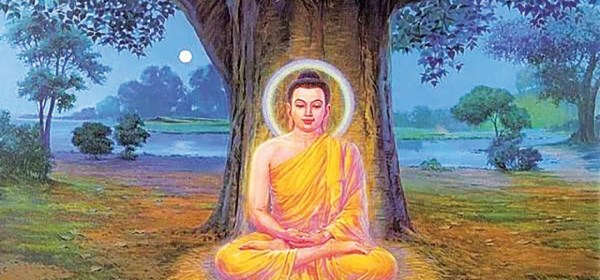
Buddha Practices Bhavana and Uproots the Asavas

UK: The Buddha Practices “Bhavana” [भावना] and Uproots the Asava! (12.11.2026)

‘I have overcome all foes; I am all-wise; I am free from stains in every way; I have left everything; and have obtained emancipation by the destruction of desire. Having myself gained knowledge, whom should I call my master? I have no teacher; no one is equal to me; in the worli am the holy oned of men and of gods no being is like me; in the world of men and of gods no being is like me. I am the holy One in this world, I am the highest teacher, I alone am the absolute Sambuddha; I have gained coolness (by the extinction of all passion) and have obtained Nirvana. To found the Kingdom of Truth I go to the city of Kasla (Benares); I will beat the drum of the Immortal in the darkness of this world.’
Buddhist Heritage in Laos!

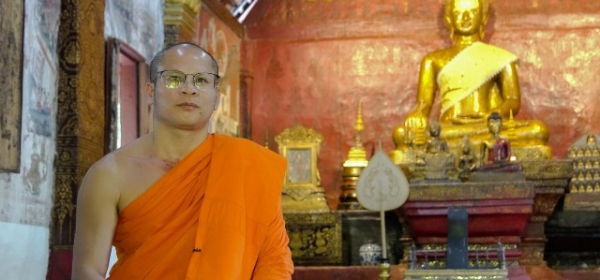
Laos Buddhist-Socialist Republic – Preservation of Theravada Culture! (21.3.2024)

Phra Sombath Somepanno, Abbot of Wat Longkhoun Srikhounnaram, expressed that Wat Longkhoun holds a significant place in the Buddhist heritage of Luang Prabang, and it fills the people of Laos from various regions with pride.

The temple has a deep historical connection with Laos, and the monastic community, along with the lay followers, is dedicated to developing Wat Longkhoun into a beautiful and culturally rich Buddhist heritage site.

UK: Buddhist Pali Bhavana and Chinese Ch’an! (20.9.2017)

Chinese transliterations and translations are useful as the early Chinese scholars had to understand the Indian Pali and Sanskrit terms before they could be rendered effectively into the Chinese language. Obviously, some of the early transliteration of Indian Buddhist terms are purely ‘phonetic’ in nature and in themselves do not convey much meaning as ideograms. This represents an initial process of a slow, careful and gradual building-up of knowledge in China about a thoroughly ‘foreign’ Indian philosophy that had to develop an ‘interface’ with existing Chinese culture.