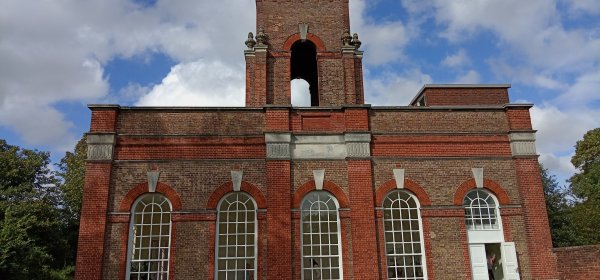
1745 Coaching Stone - Original 18th Century GPS!

Sutton: 18th Century Coaching-Stone – the Original GPS! (13.4.2026)

I may well have written about the old coaching-stones scattered around Sutton and Cheam – I now of two – but was unaware of the date they were established. Basically, these devices informed travellers on foot, horse, or carriage – how many miles it was from where they were to the centre of London. Coachmen could either read the inscription engraved on the stone – or was taught what the stone said and remembered where it was when driving on the road – either way – these coaching-stones served as the original GPS system for travel. I think the Roman established something similar thousands of years ago – so the concept was not new in 1745. What I did not realise is that these stones have now received official recognition of being historically important monuments worthy of preservation and protection. The iron-bars and plaque are the new editions which I only saw when taking a rare walk through Sutton.


The Isle of Sand and the Collective Survival of Humanity! (26.12.2023)

This demonstrates that before the development of advanced human society – communality was (and remains) the basis of human evolution. The modern emphasis on individuality is a cult-like worship of a temporary (artificial) state of affluence. It is hardship that is the normal condition as this possesses the resources for every species to potentially develop given the right conditions. Affluence is the product of the intelligent use of human greed. The above video carefully navigates its way through the true story of North African slaves captured by the pre-Revolutionary French during the 18th century which became stranded upon the Isle of Sand – now termed ‘Tromelin’ Island.

Sutton: Visiting the Carshalton Water Tower! (24.9.2023)

As immense wealth was generated through the labour of the exploited masses (which involved the development of the Trans-Atlantic Slave Trade) a privileged middle-class developed – particularly after the English Civil Wars of the 1640s. This development saw the successful transference of the control of the ‘means of production’ (and political power) from the Aristocracy (the upper-class) to the Bourgeoisie (the middle-class) and with it the unleashing of tremendous creative force (a process magnified enormously by the ‘discovery’ of the Americas and the effective stealing of immense tracts of ‘free’ land and other resources)! Of course, the spread of British power and influence throughout other countries of the world – including Africa and Asia – opened all kinds of diverse markets which spread commodities to the four corners of the earth!