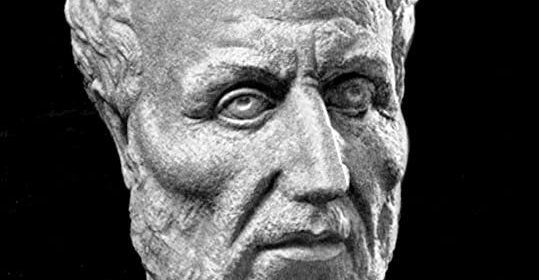
Plotinus: The Concept of ‘Time’ Reconsidered! (21.9.2022)

The Christians then further added to this confusion (entirely of their own making) by superimposing the Germanic term ‘Soul’ over their misinterpretation of the Greek philosophical term ‘Psyche’! Plotinus (and most genuine Greek philosophers) never used or even knew of the Christian conflation of ‘Psyche-Soul’. Certainly, Plotinus NEVER used the Christian term ‘Soul’, but he did continuously use the Greek philosophical term ‘Psyche’, which refers to the ‘breath of life’, ‘the animating principle of existence’ – or that ‘spark’ which sets in motion all the conditions that grant psychological (thought) and physical (existence)! Plato’s 4th Century BCE text entitled ‘Definitions’ a manual of philosophical terms (translated by DS Hutchinson, 1996) used within his ‘Academy’ School of Philosophical Study – defines the Greek term ‘Psyche’ to mean the following:

a) That which moves itself.

b) The cause of vital processes in living creatures.

I would argue that the Greek term ‘Psyche’ implies so much more than the narrow Christian term ‘Soul’, and even if there are elements of the Greek ‘Psyche’ which overlap with the Christian ‘Soul’ – this in no way validates (or accepts) the Christian doctrine of being true anymore than it invalidates the Greek philosophical message!

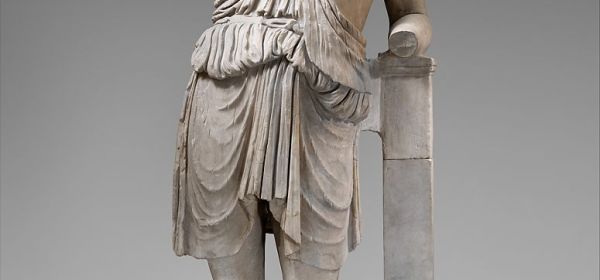
Ancient Greece: How Amazon Women Altered Their Bodies to Prepare for War! (26.7.2022)

An obvious etymology of their name, “breastless,” suggested the belief that they used to burn off the right breast that they might the better draw the bow. In the Iliad Priam tells how he fought against their army in Phrygia; and one of the perilous tasks which set to Bellerophon is to march against the Amazons. In a later Homeric poem, the Amazon Penthesilea appears as a dreaded adversary of the Greeks at Troy. To win the girdle of the Amazon Queen was one of the labours of Heracles. All these adventures happened in Asia Minor; and, though this female folk was located in various places, its original and proper home was ultimately placed on the river Thermodon near the Greek colony of Amisus. But Amazons attacked Greece itself. It was told that Theseus carried off their Queen Antiope, and so they came and invaded Attica. There was a terrible battle in the town of Athens, and the invaders were defeated after a long struggle. At the feast of Theseus the Athenians used to sacrifice to the Amazons; there was a building called the Amazoneion in the western quarter of the city; and the episode was believed by such men as Isocrates and Plato to be as truly an historical fact as the Trojan war itself. The battle of the Greeks with Amazons were a favourite subject of Grecian sculptors; and, like the Trojan war and the adventure of the golden fleece, the Amazon story fitted into the conception of an ancient and long strife between Greece and Asia.’

Down House: A Curious Stone Wall… (9.7.2022)

The middle-classes possessed an idyllic physical space within which their bodies existed – a situation (and set of material conditions) that often generated a corresponding sense of a ‘spacious’ interior (or expansive mind-set) that could, providing the right education and motivation was present, lead to ground-breaking theorising and progressive scientific endeavour!

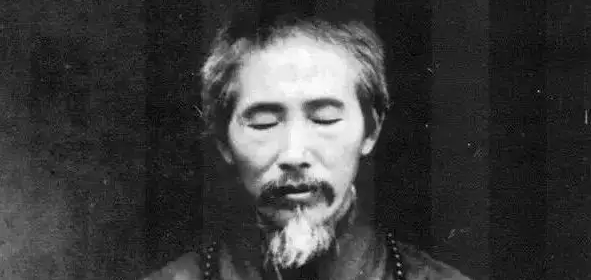
Email: Socialist Martial Arts – ‘Systema’ (система)! (8.6.2022)

The cultural and religious baggage within Asian cultures generally means that it takes decades to finally arrive at the ability that Systema teaches from the first day of training (and only then, if the practitioner of the Asian arts has found a competent Master). This signifies the ‘Socialist’ egalitarian nature of ‘Systema’ where there were no coloured belts representing a fascistic and hierarchical grading system – as is common within Japanese culture. In the original Soviet – (and now ‘Russian’) – martial system (Systema), the highest form of inner and outer awareness, body-alignment, organisation and movement, as well as advanced technical manifestation – is taught first without any hesitation, whilst an individual’s psychological and emotional (spiritual) understanding of what a practitioner is physically experiencing has to catch-up over the many years of training.

1 61 62 63 64 65 97