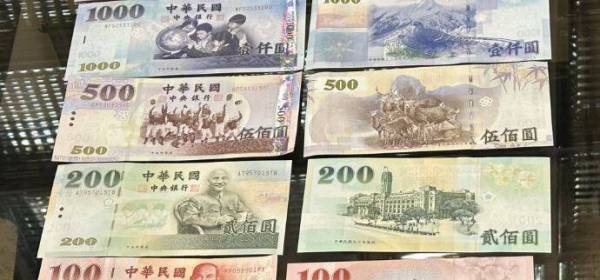
Taiwan Central Bank Redesign the New Taiwan Dollar - No Sun Yatsen!

China: Mainland Criticizes Taiwan DPP Banknote Redesign as ‘De-Sinicization’! (6.2.2026)

Initially, as a Hakka, Sun Yatsen led a left-leaning Nationalism – but following 1911 and the first reforms – right-wing factions came to the forefront and took-over the movement. This led to the US-backed Chiang Kai-Shek assuming power who carried-out mass-murders of Chinese people – and even attacked and burned-down the famous Shaolin Temple in Henan (during 1928) – as the Head Monk refused to align the Temple with US imperialist intentions (there was also Chinese Nationalists who were lay-disciples of the Shaolin Temple – and Chiang Kai-Shek considered this a threat to his political power). Indeed, this Nationalist lurch to the right led to the rise of the separate Communist Party of China (CPC) – which split from Nationalist on ideological grounds. The Nationalists deviated away from Sun Yatsen’s (Chinese) vision and embraced a US model of predatory capitalism and liberal democracy – two completely alien concepts to the ethnic Chinese mind. The CPC chose Marxist-Leninism and centralised democracy – and this dichotomy explains the situation between Taiwan and the Mainland today. The Nationalists invaded Taiwan in the late 1940s and have dominated it ever since. Under Trump II – White (Eurocentric) attitudes are being inflicted once again throughout Taiwan society.
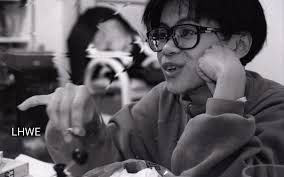
Qiu Miaolin - Author - Lesbian Activist

Email: What Are My Views About Qiu Miaolin (邱妙津) [1969-1995]? (23.1.2026)

I would argue that non-White cultures (not crushed by Eurocentric imperialism) possess a scale of sexual and gender manifestation that is far more fluid than that found in th West. Much more is tolerated with far less reactionary resistsnce. Married Chinese men can be effeminate – just as married Chinese women can be masculine – it is not that big a deal in the everyday world of Chinese existence. Teenagers naturally discover their sexuality and identity without the interference of the State define this or punishing that – so what exactly was Qiu Miaolin rebelling against? Was it the Nationalist domination of Taiwan? Was it the fascist (patriarchal) reality of Kuomintang (KMT) reality? Was it the obvious US domination of her Chinese culture? Was it the left-over influence of the Imperial Japanese presence on the island? I note that in the Chinese-language assessments of Qiu Miaolin – the “gay” Japanese fascist – Yukio Mishima is mentioned. After WWII, Mishima propagated a male gay cult that practiced homo-erotic martial arts whilst dreaming of over-throwing the US-dominated government and returning Japan to its feudal greatness (he would lead a failed military uprising in the early 1970s – before committing ritual suicide). Mishima, of course, was an anti-China racist – so why admire him? I am not a woman and am not a lesbian – so I advise the reader to research freely and to think for themselves.

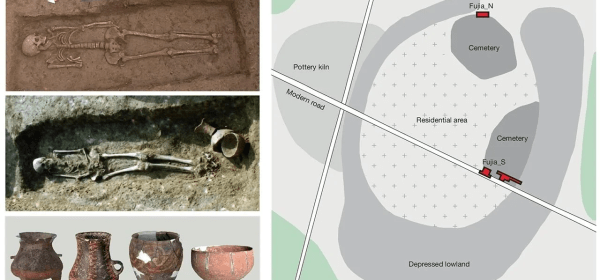
Painted pottery (bottom left) from the Fujia cemetery, as well as from the southern grave (FJ_S21; middle left) and northern grave (FJ_N07; top left). The right panel illustrates the layout and features of the Fujia archaeological site, highlighting residential areas, pottery kilns and the two cemeteries. Scale bar, 50 m. Credit: J. Wang et al., Nature (2025)

China: DNA Study Reveals “Fujia” Matrilineal Society! (4.1.2026)

All 14 individuals from the northern cemetery possessed the same maternally inherited mitochondrial DNA haplogroup — a genetic population group sharing a common ancestor — and exhibited identical mitochondrial DNA sequences, while 44 of the 46 individuals from the southern cemetery had another mitochondrial DNA haplogroup and identical mitochondrial DNA sequences, indicating that the individuals in each group shared a maternal lineage.

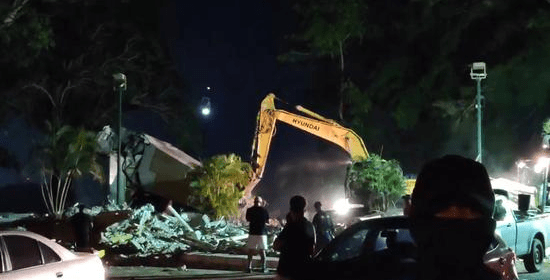
Demolition of the monument commemorating the 150th anniversary of the arrival of Chinese people in Panama on December 27, 2025 local time. Photo: screenshot of video uploaded by Chinese Ambassador to Panama Xu Xueyuan

PRC Embassy Protests Demolition of “Panama-China Friendship Park”!

This monument declaring “China-Panama Friendship” is situated on a mountain over-looking the Panama Canal (in fact, from what I have read regarding travelogues, this mountain it is quite remote and difficult to access) – and Trump believes this symbolises a Chinese declaration of “control” of the Canal. The Park was built in 2004 by funds raised by various overseas Chinese organisations – with support from the Mainland Chinese government (which provided two stone lions). Chinese people first arrived in Panama in 1854 (during the Qing Dynasty – probably fleeing the highly destructive Taiping Uprising and the Hakka-Punti Clan Wars). Indeed, this park is officially termed the “150th Anniversary Monument to the Arrival of Chinese in Panama” (1854-2004). Ironically, Panama declared (also in 2004) that “March 30th” would be “Chinese People Day” (华人日 – Hua Ren Ri). The way things are going, I suspect “Chinese People Day” will soon be abolished. I have been agitating for years that China should stop using US English in its translations – the language of the enemy.

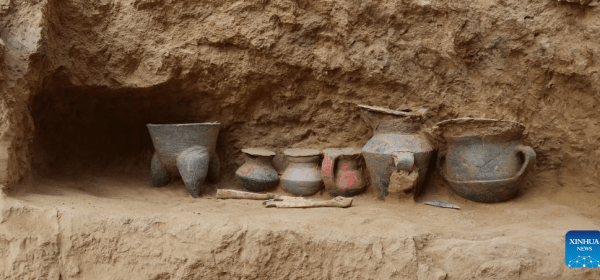
Artifacts unearthed from a tomb at the Shimao ruins in Yulin, northwest China's Shaanxi Province. (National Cultural Heritage Administration/Handout via Xinhua)

China: Ancient DNA Reveals Kinship & Social Structure of China’s Prehistoric Shimao City! (28.11.2025)

The research published on Thursday in Nature presents the first direct genetic evidence regarding the origins of the Shimao population — the builders of Shimao, a massive Neolithic walled settlement in northern China that thrived around 4,300 years ago and was abandoned about 500 years later.

The findings, based on genetic analysis of ancient individuals, offer a glimpse into the kinship practices, including sex-specific sacrificial rituals, of an early state-level society in East Asia.

The 4-million-square-metre Shimao city is the largest known prehistoric settlement in China. Its sophisticated fortifications, including pyramid-like platform, cyclopean stone walls, palatial complexes and stone carving, along with high-status artifacts like exquisite jades, point to a highly complex, stratified society.

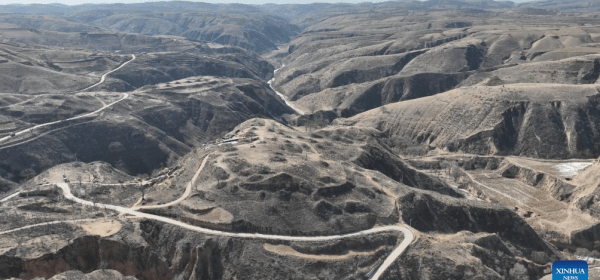
This file photo shows ancient stone fortresses in Yulin, northwest China's Shaanxi Province. (Photo by cultural heritage and archaeology team of the city of Yulin/Xinhua)

China: Survey Team Discovers 573 Ancient Stone Fortresses in North-West! (13.11.2025)

The survey revealed that these settlements spanned from about 2800 BC in the late Yangshao period to around 1000 BC in the Shang and Zhou (1046-221 BC) dynasties.

Mostly distributed along riverbanks, the stone fortresses were surrounded by numerous ordinary settlements without defensive stone walls, indicating a clear clustered relationship, said Ma Mingzhi, head of the team.

The development of these stone fortresses shows a clear evolution from small to large in scale, from simple to complex in layout, and from rudimentary to mature in construction techniques — with social hierarchy becoming increasingly distinct.

The survey provides crucial information for a comprehensive understanding of the origin, development, spread and evolution of prehistoric settlements in northern China, Ma added.

1 2 3 20