Volunteers Fought At Harrisburg!

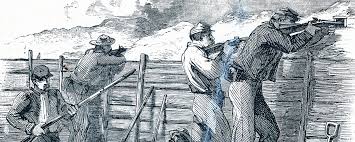
CSA: The Peculiar [1863] Union Defence of Harrisburg! (17.5.2025)

At one-point a thousand White volunteers from Harrisburg joined a large group of Black people to dig trenches and build ramparts around the geographical extremities. After one day, 700 of the White people returned home – saying the labour “hurt their hands” – whilst the other 300 acted as foremen directing the Black labourers (as if they were slaves). Black people built the defences of Harrisburg – but by and large were excluded from defending the place on the grounds that Black men carrying guns (and acting “free”) would scare the women and children. The situation was a little more nuanced than this, however, as NO White person from Harrisburg possessed the courage to join a local militia to defend the place they lived in. This led to the local authorities agreeing to arm a small company of local Black men that everyone knew – who had to drill away from the sight of ordinary people from Harrisburg. Meanwhile, thousands of White volunteers poured into the area to offer their services in defence of the place (risking their lives) – but were met with indifference and hostilities from the locals. Shop-keepers, hoteliers, and bar-owners put up their prices by ten or twenty times (even charging for a glass of water) – asking for excessive amounts of money for the smallest necessity of life.

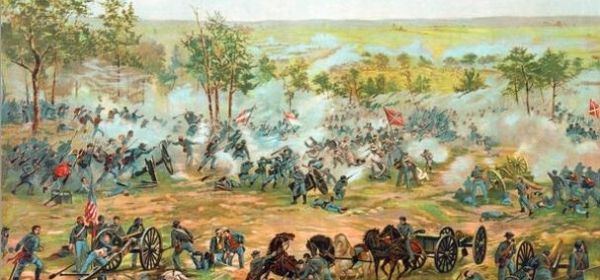
Battle of Gettysburg - Painting by Paul Philippoteaux

CSA: Confederate Army Uniforms, Hats, Ranks & Badges c. 1861! (27.4.2025)

Sometimes, CSA Units proudly wore “Blue” – whilst certain Union Units proudly wore “Grey”. Both sides also possessed Units that dressed (and acted) like English Red-Coats – a designation that then sent shudders through most people due to the reputation the Red-Coats possessed – namely that of strict discipline and ruthless close-quarter-fighting (all wounded were bayoneted as an act of compassion – due to the lack of any reliable medical treatment). English Red-Coats would march indifferently into enemy-fire – safe in the belief that once the distance was closed – the enemy would pay the price. The CSA Units attempted to replicate this attitude and make the Union pay for the damage its forces inflicted upon the Southern States.

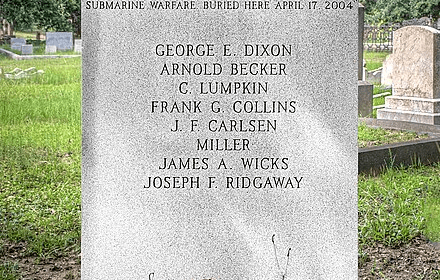
Memorial Stone for the Crew of the CSS HL Hunley!

CSA: Remembering the CSS HL Hunley – Confederate Submarine Recovered in 2000! (8.4.2025)

These were the last Confederate soldiers to be laid to rest in the US. They were buried in 2004 in Charleston – with over ten thousand people attending – many carrying Confederate flags. The official US government stance was one of indifference and perhaps embarrassment (the US was busy illegally invading Iraq and Afghanistan – falsely blaming both countries for the September 11th World Trade Centre Attacks). One of the submarine crew – “C Lumpkin” – was British (images of what the crew looked like have been created), whilst two others (of the eight-man crew) were also non-American (“Corporal Johan Frederik Carlsen” was Danish – whilst “Arnold Becker” was Germany). In other words, three of the eight were foreign – and I know that people came from Ireland (which was then under British control) and from Mainland Britain to join the Confederate Cause.

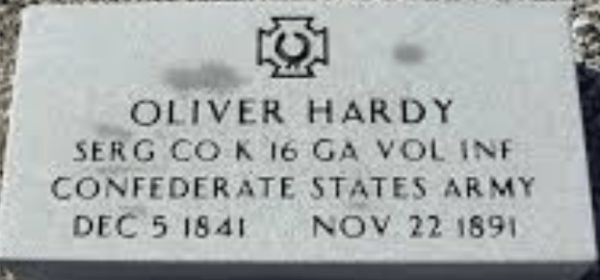
CSA Oliver Hardy - Confederate Army

CSA: Oliver Hardy’s “Confederate” History! (5.4.2025)

The comedy duo – “Laurel and Hardy” (Stan Laurel being from the UK) still make millions of people laugh all the time. It would seem that like many people living in the Southern States, the family of Oliver Hardy were originally from England. I find the Confederacy to be a complex period of US history – often misrepresented by prevailing narratives. It is as if the dominant narrative-writers want to hide something that was present in the South between 1861-1865 – but which is inconvenient to know today. My own view is that there was Revolutionary dialectics in operation that could have led the US in an entirely different direction. I find that this observation is just as unpopular with neo-Confederates as it is with the Federal government in Washington DC!

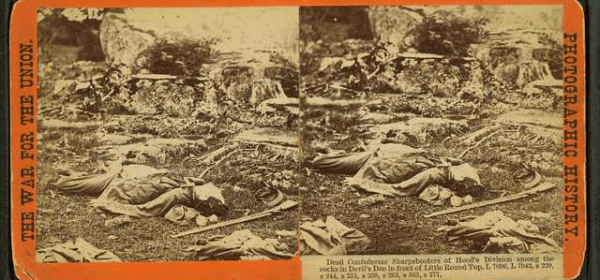
Dead Confederate sharpshooters of Hood's Division among the rocks in Devil's Den in front of Little Round Top.

CSA: Remembering the Bravery of “Irish” Company “K” – 15th Alabama – Little Round-Top [2.7.1863] – Gettysburg! (3.4.2025)

The weather was hot – and the Confederates had to advance over open ground before storming an inclined slope (in the form of a steep hill) – with the intention of sweeping the Federals off its top and consolidating the victory. The previous day had seen the Confederates sweep the Federals out of West and Central Gettysburg – and into the hills to its East. Washington was just 80 miles to the South – and legend has it that Lincoln was packing his belongings to flee! I have audio-typed part of a chapter from Stephen Sears’ book – carefully reproducing the text from an Audible edition (in my native British English). This provides a general background to the battle – but does not mention the Irish specifically – other than one or two fighting for the Union. For the story of “Company K” of the 15th Alabama Regiment of the Confederate States of America (CSA) – we must turn to the excellent work of Phillip Thomas Tucker – who has produced an excellent book examining the contribution to the Confederate cause made by the Irish!

General George Pickett - CSA

CSA: BBC Antiques Roadshow “Experts” Convicted of Fraud After Appearing on Show! (1.4.2025)

Although a small number of the Confederate soldiers managed to reach the Union lines and engage in hand-to-hand combat, they were ultimately overwhelmed. The charge ended in a disastrous defeat for the Confederates, with more than half of the men involved either killed, wounded, or captured. Meanwhile, on a different part of the battlefield, the Union scored yet another decisive victory at Vicksburg on July 4th, 1863, the day after the defeat at Gettysburg (a conflict had been raging at Vicksburg since the beginning of the war – with the defending Confederates scoring a number of victories – but nothing decisive). Nevertheless, despite these heavy-blows, General Lee managed to muster what was left of his Army and retreat in good order back to the South – and continue the war for another two-years.

1 3 4 5 6 7 8