The Dharma Realm is the realisation that the entirety of existence is interconnected, and this interconnectedness is premised upon the fact that all things exist (and pass away) with a profound emptiness.
Category: Buddhism
Exploring the philosophy (and practice) of Early and Later Buddhism.
Blue Cliff Record – Case Number 56
Below is an interesting exchange between Ch’an Master Qin Shan and the wandering ascetic Liang, concerning the attainment and function of the pure mind, discussed through an allusion to the art of archery. Although firing an arrow and hitting through the target is the issue at hand, neither master mentions the bow.
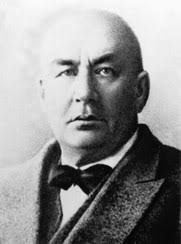
How a Plumber’s Ego Shaped the Western View of Tibet
This pretentious drivel is supposedly from an ‘ordained’ and highly ‘evolved’ Tibetan Lama who has taken a vow not to handle or possess money of any kind (i.e. gold or silver, etc.). The tone of this piece is highly defensive, whilst making (what is in reality), a call for more funds. Hoskin’s attitude is abusive to his own readership – who have after, all already purchased his books – as he attempts in a disjointed manner, to assert an egotistical control over their habit of daring to contact the person who has written such an impressive and nonsensical myth! In this page and a quarter of pure vitriol, Hoskin reveals the true nature of his thoroughly unevolved, selfish, and poorly educated psyche.
Sitting on a Stone
. This paradox is premised upon the understanding of the existence of ‘form’ in emptiness. However, none of this is possible without the cultivation of profound wisdom, compassion, and loving kindness, all of which is required if the mind is to turn around at its deepest level and regain a correct and true conscious awareness. The further paradox is that emptiness is not ‘nothing’, and that consciousness cannot exist without an object.
Buddhism: Hinayana and Mahayana Notions of Emptiness! (10.12.2014)
Through the work of Nagarjuna, the Mahayana movement developed the interpretation that physical matter is ‘empty’ of any substantiality. This is due to Nagarjuna applying his tetra lemma (catuskoti) formula to the assessment of the ‘Chain of Dependent Origination’ (Pratītyasamutpāda), and logically proving that just as the true enlightened state has no-self associated with it; then it is also equally true that physical matter has no substantiality associated with it. Everything is dependent upon everything else, conditioned by everything else, and contingent upon everything else.
Buddhism and China’s Spiritual Beliefs
China has never had the Western notion of secularism – where spirituality is separate from everyday life – nor the convention that the nobility are separate from the clergy, etc.
 SANGHA KOMMUNE (SSR)