by MINSAP Editorial Team · Published 12 February 2026 · Updated 12 February 2026 – Written by Redacción MINSAP
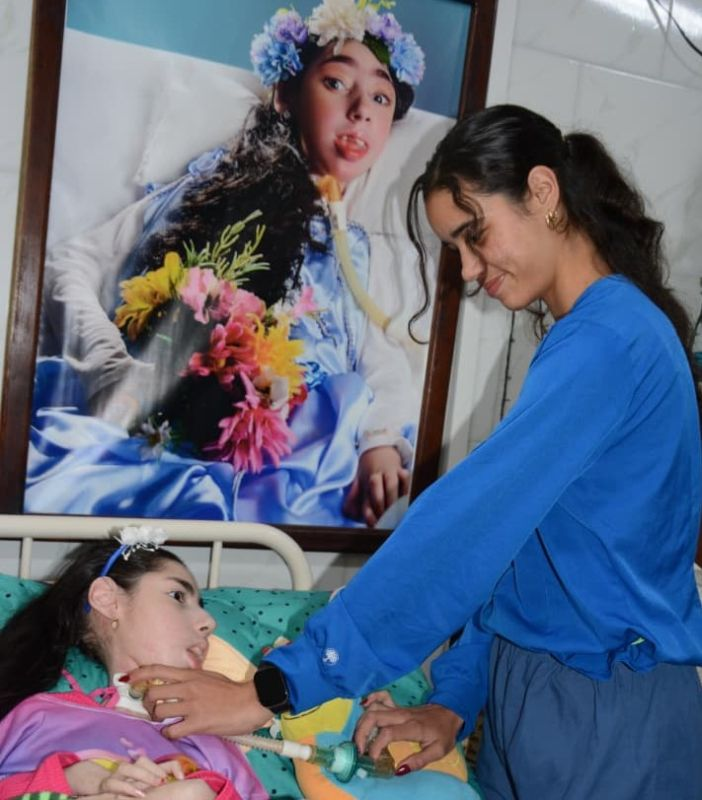
In her eyes you can see the world, even if her voice is not heard, even if she cannot hold your hand. By her side, you can weave dreams with the threads of the moon, nothing is forbidden for Yésika Mora Hernández, who turns 20 years old on February 12 and has been admitted to the José Martí Pérez Provincial Paediatric Hospital in Sancti Spíritus since her infant stage.
Suffering from Werdnig Hoffman syndrome, this girl becomes the second longest surviving case of this disease in Cuba and it has been, precisely, because of the extreme medical care and the love that family members and teachers have professed for her…
Dr. Frank Felipe Martín, a second-degree specialist in Pediatrics and in Intensive Care and Emergency Medicine, speaks of her as part of the medical team that has put together this passage of salvation.
“Yésika was referred from her health area, and one day she consulted with the Neurology services and the possibility of a neuromuscular disease was raised. After the studies, he was diagnosed with Werdnig Hoffman syndrome type I.
“It is a disease that causes, due to an alteration at the level of the neuromuscular level, a progressive weakness with a final paralysis of all the muscles; but, at the same time, it is a condition that maintains the child’s cognitive abilities for a while.
“This condition is described in all the medical literature as lethal, regardless of the fact that it has several degrees and that in some the survival may be greater than in others.
YÉSIKA, OUR PROTÉGÉ
“Yésika arrived at the Paediatric Intensive Care Unit of this hospital around six months and remained here for 10 years,” Dr. Frank Felipe Martín confessed some time ago.
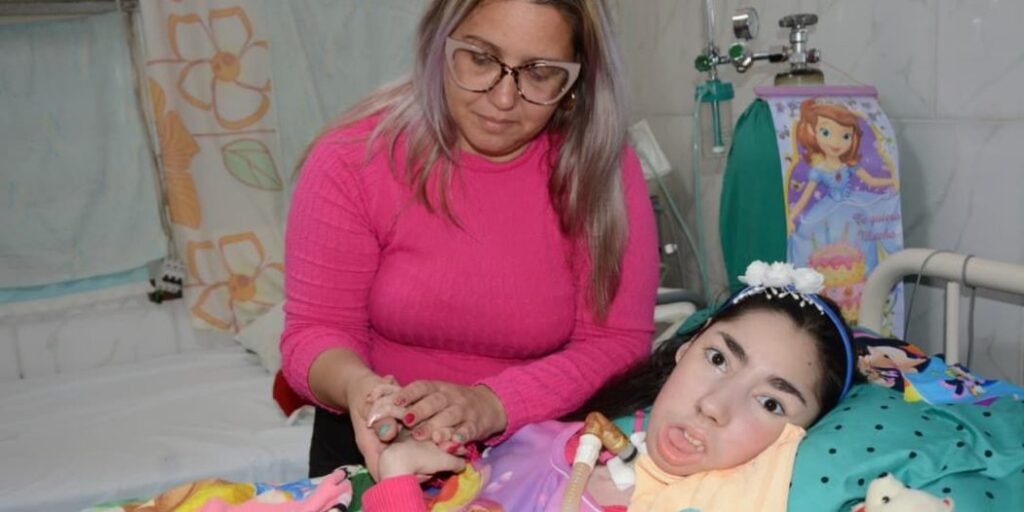
In 2016, the Ministry of Public Health in the territory provided for the girl, within the Sancti Spiritus Paediatric Hospital itself, a special cubicle with conditions close to those of a home and with the necessary technology, where the patient could remain coupled to a 24-hour ventilation team, with a reinforced, exclusive diet and special medications to avoid pulmonary complications.
“Yésika was referred from her health area, and one day she consulted with the Neurology services and the possibility of a neuromuscular disease was raised. After the studies, she was diagnosed with Werdnig Hoffman syndrome type I.
Another almost 10 years have passed and “Yésika is still our protégé,” emphasizes Dr. Frank Felipe Martín, head of the PICU at this health institution, with the affection of a father.
“With this cubicle, we bring the patient closer to the environment of a home because there is greater comfort for her and her family. There is a nurse for her permanent care, and she is evaluated every day by the medical guards. It also has the necessary equipment because it requires ventilatory assistance all the time,” adds the specialist.
“In intensive care, much of the material we use is disposable, you can imagine what is spent on Yésika. Most of them are inputs that the country acquires in foreign currency abroad, often even in third countries with this whole situation of the blockade.”
MY DAUGHTER IS PRETTY LUCKY
With the sweet expression of the mother she has known how to be, Yairé Hernández Alonso looks out into the world and thanks the attention of the medical and paramedical staff who have taken care of Yésika all this time.
“My daughter is quite lucky, as Dr. Niurka Agramonte said, she is an adopted daughter of this hospital, despite the fact that she has the unconditional help of her parents and grandparents.
“In the midst of so many shortcomings that the country has had, because there are very difficult situations, she has lacked nothing. The attention by the nursing staff is 24 hours a day and there is a family relationship. Those who stay with her the most are Mrs. Isis, Mrs. María Eduarda, Mrs. Juneidy, Mrs. Delenis, Mrs. Vanesa and Mrs. Thalía. They, in rotation shifts, are in charge of Yésika’s aspiration, her feeding, observing her vital signs, soothing any pain.”
Someone once said that when you are born a nurse there is an incurable need to take care of others, this happens with Delenis González Paneca.
“From the first time I attended her, I had a special connection, she knows almost my entire life and I know hers. You just have to spend some time interpreting the language of her eyes, her moans, her facial expressions, and you understand her perfectly. She shows you that communication goes beyond words.”
Like other children and young people from Sancti Spiritus, Yésika Mora benefits from the Cuban hospital classroom programme, created to provide educational care to paediatric patients hospitalized in cancer hospitals, injured or with conditions that require prolonged hospitalization.
With adjustments in the study programme, due to the effects in the sphere of speech, the young woman finished the twelfth grade, and in the words of Osmedy Fumero Rodríguez, professor of Spanish and Literature, “she has had the privilege of bringing teachings and lessons to a sui generis, exclusive Yésika, who lives and loves with an incomparable dedication and who earns and will win the admiration of those who know her here and in all other areas”.
These words, written in Professor Osmedy’s own handwriting, hang on the wall of the room. Yairé Hernández Alonso points to them and her index finger is pinned to the last word “Congratulations”.
“Fortunately, my daughter has reached 20 years old. It has been a difficult road, but thanks to God, to the health personnel, to the teachers, to my family, we have been able to get here. In the Paediatric Hospital everyone has helped me; from specialist doctors, nurses, to the staff of the laboratories, the warehouse, the pharmacy… I have to be grateful for that. Yésika is a daughter of this hospital.”
Text and photos: Escambray Newspaper
Spanish Language Text:
Yésika es hija de este hospital
por Redacción MINSAP · Publicada 12 febrero 2026 · Actualizado 12 febrero 2026
Written by – Redacción MINSAP
Yésika Mora Hernández, el segundo caso de más larga sobrevivencia en Cuba con el síndrome de Werdnig Hoffman tipo I, cumple este 12 de febrero 20 años de vida, la casi totalidad de ellos ingresada en el Hospital Pediátrico de Sancti Spíritus
En sus ojos puedes viajar el mundo, aunque no se escuche su voz, aunque no pueda tomarte de la mano. A su lado, se puede, incluso, tejer sueños con los hilos de la luna, nada está prohibido para Yésika Mora Hernández, quien cumple este 12 de febrero 20 años de vida y desde su etapa de lactante permanece ingresada en el Hospital Pediátrico Provincial José Martí Pérez, de Sancti Spíritus.
Aquejada del síndrome de Werdnig Hoffman, esta muchacha deviene el segundo caso de más larga sobrevivencia por esta enfermedad en Cuba y ha sido, precisamente, por los cuidados médicos extremos y por el amor que le han profesado familiares, maestros…
El doctor Frank Felipe Martín, especialista de segundo grado en Pediatría y en Medicina Intensiva y de Emergencias, habla de ella como parte del equipo médico que ha hilvanado este pasaje de salvación.
“Yésika vino remitida de su área de salud, y un día se interconsulta con los servicios de Neurología y se plantea la posibilidad de una enfermedad neuromuscular. Realizados los estudios, se le diagnostica un síndrome de Werdnig Hoffman tipo I.
“Es una enfermedad que provoca, por una alteración a nivel de la placa neuromuscular, una debilidad progresiva con una parálisis final de todos los músculos; pero, a la vez, constituye una afección que mantiene las capacidades cognitivas del niño durante un tiempo.
“Dicho padecimiento está descrito en toda la literatura médica como letal, independientemente de que tiene varios grados y que en unos la supervivencia puede ser mayor que en otros.
YÉSIKA, LA PROTEGIDA DE NOSOTROS
“Yésika llegó alrededor de los seis meses a la Unidad de Cuidados Intensivos Pediátricos de este hospital y aquí permaneció por 10 años”, confesó tiempo atrás el doctor Frank Felipe Martín.
En 2016 el Ministerio de Salud Pública en el territorio dispuso para la niña, dentro del propio Pediátrico espirituano, un cubículo especial con condiciones cercanas a las de un hogar y con la tecnología necesaria, donde la paciente pudiera permanecer acoplada a un equipo de ventilación las 24 horas, con una alimentación reforzada, exclusiva y medicamentos especiales para evitar complicaciones pulmonares.
Otros casi 10 años han transcurrido y “Yésika sigue siendo la protegida de nosotros”, recalca con el afecto de un padre el doctor Frank Felipe Martín, responsable de la UCIP en esta institución sanitaria.
“Con este cubículo, acercamos más a la paciente al ambiente de un hogar porque existe mayor confort para ella y su familia. Hay un enfermero para su atención permanente, y es evaluada todos los días por las guardias médicas. Dispone, además, de los equipos necesarios porque requiere de asistencia ventilatoria todo el tiempo”, añade el especialista.
“En la terapia intensiva gran parte del material que utilizamos es desechable, te puedes imaginar lo que se gasta en Yésika. En su mayoría son insumos que el país adquiere en divisas en el exterior, muchas veces hasta en terceros países con toda esta situación del bloqueo”.
MI HIJA ES BASTANTE AFORTUNADA
Con la expresión dulce de la madre que ha sabido ser, Yairé Hernández Alonso se asoma al mundo y agradece el desvelo del personal médico y paramédico que se ha ocupado de la atención de Yésika todo este tiempo.
“Mi hija es bastante afortunada, como bien decía la doctora Niurka Agramonte, es una hija adoptiva de este hospital, a pesar de que tiene la ayuda incondicional de sus padres y abuelos.
“En medio de tantas carencias que ha tenido el país, porque hay situaciones muy difíciles, a ella no le ha faltado nada. La atención por parte del personal de Enfermería es de 24 horas y existe una relación de familia. Las que más permanecen con ella son las seños Isis, María Eduarda, Juneidy, Delenis, Vanesa y Thalía. Ellas, en turnos de rotación, se encargan de la aspiración de Yésika, de su alimentación, de observar sus signos vitales, de calmarle algún dolor”.
Alguien afirmó cierta vez que cuando se nace enfermera hay una necesidad incurable de cuidar a los otros, ello sucede con Delenis González Paneca.
“Desde la primera vez que la atendí, tuve una conexión especial, conoce mi vida casi completa y yo la de ella. Basta pasar un tiempo interpretando el lenguaje de sus ojos, de sus quejidos, de sus expresiones faciales, y la entiendes perfectamente. Ella te demuestra que la comunicación va más allá de las palabras”.
Al igual que otros niños y jóvenes espirituanos, Yésika Mora se beneficia con el programa cubano de aulas hospitalarias, creado para brindar atención educacional a pacientes en edad pediátrica internados en hospitales oncológicos, accidentados o con padecimientos que requieren de ingresos prolongados.
Con adecuaciones en el programa de estudio, debido a las afectaciones en la esfera del habla, la joven concluyó el grado doce, y al decir de Osmedy Fumero Rodríguez, profesor de Español y Literatura, “ha tenido el privilegio de traer enseñanzas y lecciones a una Yésika sui géneris, exclusiva, que vive y ama con una entrega incomparable y que gana y ganará la admiración de los que la conocen aquí y en otras todas las latitudes”.
Estas palabras, escritas de puño y letra del profesor Osmedy, cuelgan de la pared de la habitación. Yairé Hernández Alonso las señala y el dedo índice queda prendido de la última palabra “Felicidades”.
“Afortunadamente, mi hija ha llegado a los 20 años. Ha sido un camino difícil, pero gracias a Dios, al personal de salud, a los maestros, a mi familia, hemos podido llegar hasta aquí. En el Pediátrico me ha ayudado todo el mundo; desde los médicos especialistas, enfermeras, hasta el personal de los laboratorios, del almacén, de farmacia… Eso lo tengo que agradecer. Yésika es hija de este hospital”.
Texto y fotos: Periódico Escambray
 SANGHA KOMMUNE (SSR)