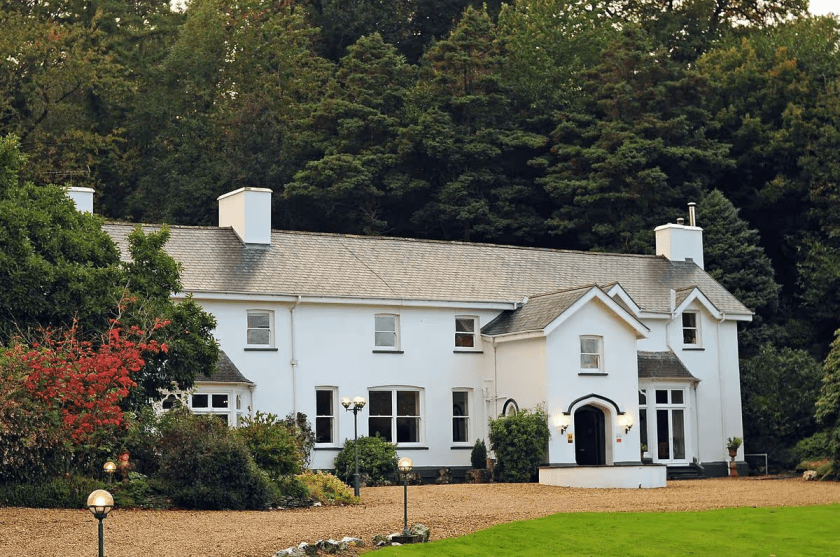
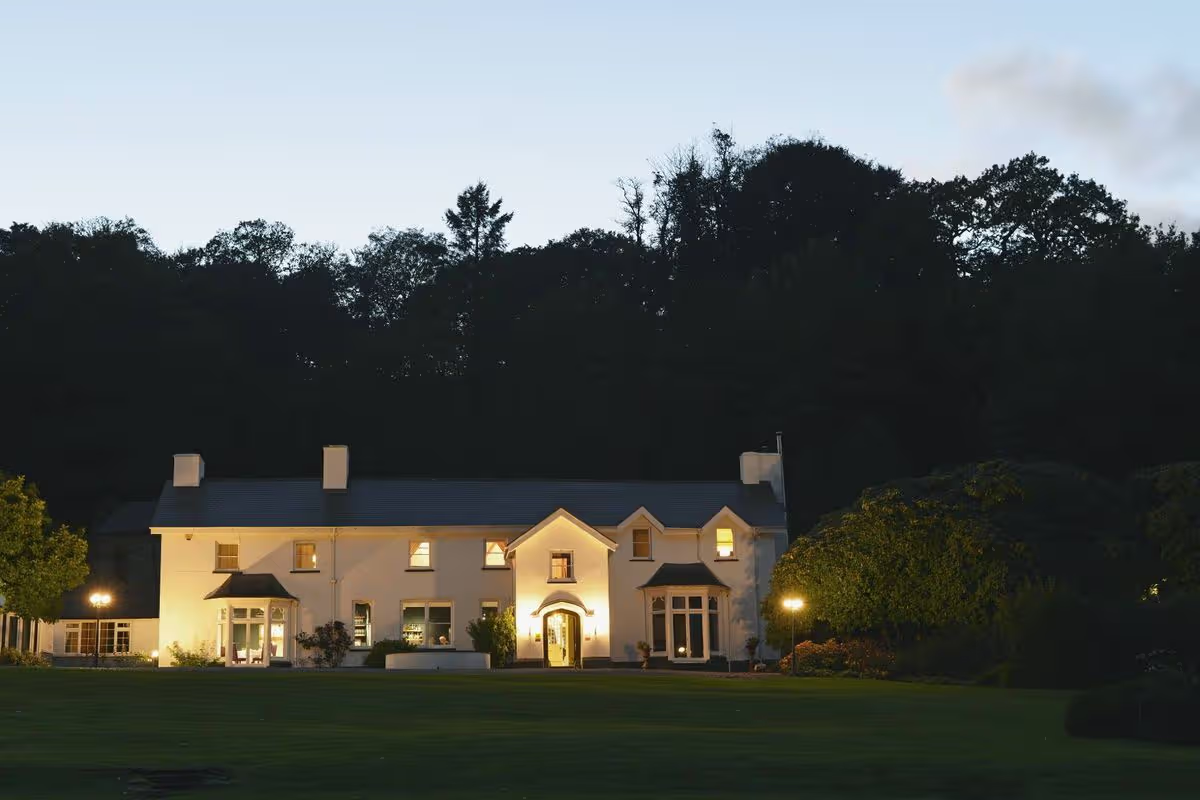
The full details behind Wales’ best restaurant’s damning food hygiene rating have been revealed. It cites flies, cross-contamination risks, ‘significant hazards not identified’ dirty facilities, broken equipment and misinformation, among other things.
In January WalesOnline reported that Ynyshir Restaurant and Rooms – a renowned Welsh restaurant boasting two Michelin stars – was given a food hygiene rating of one, indicating “major improvement necessary”.
Located near Machynlleth, the restaurant made history in 2022 by becoming the first in Wales to earn two Michelin stars. On February 9 we reported that it had retained its two Michelin Stars at the 2026 Michelin Guide ceremony in Dublin. It remains the only two Michelin star restaurant in Wales.
Prized for its 30-course dinner experience which takes up to four or five hours to enjoy, and costs from £468 per head, the eatery was recently praised by Saturday Morning presenter James Martin who called it the best restaurant “anywhere in the world”. For the latest restaurant news and reviews, sign up to our food and drink newsletter here
Wales’ best restaurant misses out on third Michelin star after food hygiene rating controversy
Countryfile health woes from Matt Baker’s life-changing issue to star’s ‘end of life’ fear
However, following an inspection on November 5, 2025, the Food Standards Agency awarded the establishment a food hygiene score of just one out of five.
The report highlighted “major improvement [is] necessary” in terms of “management of food safety”. It also noted that “improvement [is] necessary” regarding the “cleanliness and condition” of the facilities.
In response, in January, 2026, a spokesman for Ynyshir told WalesOnline the venue took the outcome “seriously” and explained some of its “specialised” cooking methods “differ from conventional kitchen operations”.
He said a re-inspection had been requested. Shortly afterwards head chef Gareth Ward insisted he was “not embarrassed” and that the “place is immaculate”.
WalesOnline has now obtained the full environmental health report on the premises via a Freedom of Information request. It refers to a number of food hygiene concerns and ‘obstruction’ faced by inspectors as they tried to do their job.
The full report details how environmental health officers repeatedly asked to see the menu during their inspection, which they said was ‘vital’ for officers to see as part of their inspection and was “eventually” provided.
Officers were then given misinformation about the extent to which the restaurant’s burgers were cooked.
The report said: “Your failure to provide officers with a menu in a timely manner inhibited officers in their official duties. When questioned about burgers, we were initially advised that they are thoroughly cooked, however, when questioned further, we were then told the burgers are less than thoroughly cooked.
“We received two copies of the food safety policy at different stages, both of which are dated June 3, 2025, however the contents are significantly different. Providing mis-information to an officer conducting official controls, is an offence of obstruction.”
The report went on to raise concerns about flies: “Flies were observed in the smithy during the inspection,” it states. “Flies pose a significant food safety risk, as they can transfer harmful bacteria such as e.coli and salmonella from contaminated surfaces or waste onto food, equipment and surfaces.”
It continued: “A fly paper sticky strip was being used in the prep room near the walk in chiller as a means of pest control had an accumulation of dead flies. Its position directly above a food prep surface presents a risk of food below being contaminated.”
On the issue of cross-contamination, the report detailed concerns about the storage of ready to eat raw meat.
It read: “Ready to eat raw minced beef (sear and shave) was stored in the raw meat drawer of the service fridge next to uncooked raw meat products. Although uncooked, following an effective shear and shave process it is then considered to be a ready to eat product and as such it should be stored above and away from raw meats and must be protected from contamination at all times.”
Additionally, the knife used for the ‘shaving’ step of the beef used for “less than thoroughly cooked” burgers was described as “dirty”. There was “no wash hand basin for food handlers” working in the smithy.
The report also referred to “significant hazards not identified” in relation to lobsters and lobster meat, which was being served raw. The report stated: “Significant risks associated with the service of raw lobsters, specifically microbiological hazards have not been fully identified and/or controlled.”
It stated that no Hazard Analysis and Critical Control Point (HACCP) document existed to cover this “high risk” activity and that “no verification” had been carried out.
Referring to a live lobster tank used for the purpose of serving raw lobster, there was “no documented procedure available” for the control measures in place including the water treatment, temperature or waste filtration.
“Concerns were also raised in regard to the vacuum packing of this product as to which designated vacuum packer is used, as the product is both raw and ready to eat,” the report stated.
The report went on to describe a “dirty” floor in the prep room closet, while a large carpet rug hung on the kitchen wall – used on the floor during service times – was not suitable for effective cleaning and might “harbour bacteria, dirt and other contaminants”.
Further concerns were noted regarding Ynyshir’s monitoring records, with “inconsistencies and irregularities” reported. These included the documentation of timings of daily cooking temperatures, delivery temperatures, and cooling temperatures.
The report specified: “For example, your cooling records note that on September 23, 2025, ‘Lamb rib’ started cooling at 11.39pm at a temperature of 72°C, the time at end of cooling was also recorded at 11.39pm on the same date, at a temperature of 7°C.
“This was also the case with all cooling records provided to officers. These records provide officers with little confidence in their accuracy, and you are therefore reminded that it is an offence to falsify monitoring records.”
A number of broken facilities were identified including two missing extraction filters directly above the ‘“big green egg” BBQ which were “necessary” to prevent an accumulation of grease and odours.
The report stated: “This is a re-occurring issue which was raised in the letter following your last inspection on April 24, 2024. Not only is this a food hygiene requirement; it is also required under the requirements of health and safety legislation.”
It was also noted that the “big green egg” grill was broken, which “presents the risk of physical contamination”, while a broken ceiling in the pot wash needed to be fixed to prevent “the accumulation of dirt and shedding particles”.
A number of issues were raised with the restaurant’s food safety management system. These were:
- No fish freezing time temperature record sheets were available for the critical control point of freezing fish frozen in house.
- You are not adhering to critical limits or undertaking corrective actions when these limits have been breached as required within your specialized HACCP document for dry aged meat.
- Your specialized HACCP document for dry aged meat refers to the provision of UV lighting within the dry ageing unit as a control. No UV lighting was observed during the visit.
- There was no specialized HACCP available for the ‘aging’ of duck and pigeon.
- There was no specialized HACCP available for the ‘ageing’ of whole fish or cuts of fish intended to be eaten raw.
- The flow diagram available in the specialized HACCP document for fish frozen by the supplier is not reflective of the current process.
- Your cooking temperature records show that you are not achieving the critical limit of >75°C for 30 seconds at the final cook/heat step for the sous vide cod or undertaking corrective actions, as required within your specialized HACCP validation document for the sous vide cod.
- You are not implementing the critical control points as outlined in your specialized HACCP for the sear and shave.
- Your specialized HACCP document for ice creams specifies a sheep’s whey ice cream, however, it was established that this product was no longer in production.
- The service of thinly-sliced raw meat with hot broth known as ‘shabu shabu’ is undertaken, however, this is not covered in your food safety management system.
- You are undertaking foraging activities, specifically for birch tree sap and wild garlic. This activity was not covered in your food safety management system.
WalesOnline has contacted Ynyshir for a comment in response to the full report.
In January a spokesman said: “At Ynyshir, we take food safety and hygiene extremely seriously and are committed to maintaining the highest possible standards for our guests.
“Following a recent routine inspection by the local authority, a number of administrative and procedural actions were identified for improvement. We take this outcome seriously and have already addressed these points in full. We are currently working closely and cooperatively with Environmental Health and have requested an early reinspection in line with the council’s guidance.
“Ynyshir operates with cooking techniques and processes heavily influenced by Japanese ingredients and methodologies. This approach involves specialised preparation and handling practices that differ from conventional kitchen operations. We operate at the highest professional level and are proud to work with some of the finest suppliers and ingredients from across the globe.
“We remain fully confident in our processes, our team, and the safety of our operation.
“As always, our focus is on delivering an exceptional and safe dining experience for every guest who visits us.”
 SANGHA KOMMUNE (SSR)