
Update: 11.6.2023
WWII: Private Alfred Wyles and the ‘Italy’ Puzzle! (11.6.2023)
Author’s Note: This is the latest (and most succinct) version of my history of my paternal grandfather – Private Alfred Wyles (Ox & Bucks Light Infantry) who fought in the Northwest Theatre during WWII. Throughout this process – I have been engaged in a) clearly defining our family memories of WWII, and b) linking these memories with official historical records. As I have kept ALL my research (from the ‘earliest’ to the ‘latest’) stored online – the ‘archaeology’ of this effort is visible for ALL to see! I am of the opinion that with regards to the process of effective genealogy – the slightest ‘fact’ (that is located in the ‘oddest’ of places) – can have the most dramatic effect upon developing cogent historical narratives when linking disparate oases of knowledge together! Sharing reliable data is the key to good research. Below, I have ‘tightened’ the historical narrative relating to the military career of Alfred Wyles. His story is the most complex and possesses difficult sections due to the ‘special’ military role he played – and the habit of the British MOD to protect our national security through the use of ‘secrecy’. This is the ‘latest’ and most ‘accurate’ version of his story that supersedes all earlier versions.
ACW (11.6.2023)
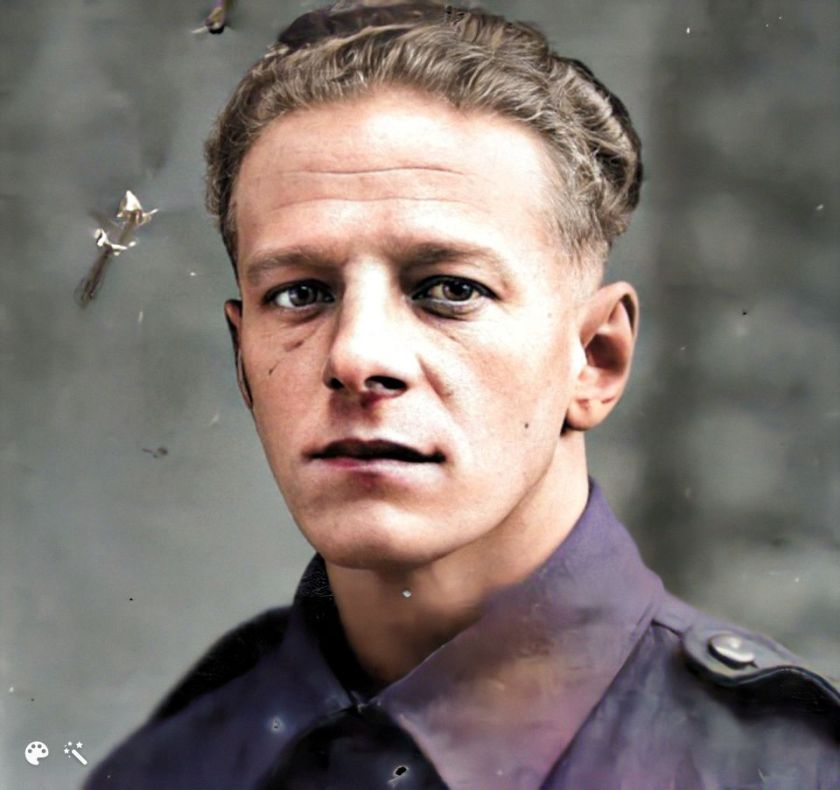
My Paternal grandfather – Alfred Wyles (1916-1976) – was a very great man. He took part in the first waves of the British Army – as these brave men stormed the beaches of Normandy on D-Day (June 6th, 1944)! As a working-class man, he had joined the British Army in 1940 (initially in the Royal Warwickshire Regiment) before being transferred to the Oxford and Buckinghamshire Light Infantry (Territorials) – 1st Buckinghamshire Battalion. The designation is often shortened to ‘Ox & Bucks Light Infantry 1st Bucks (T)’. He was placed in this Regiment due to him being a good shot with a rifle – a ‘sharp-shooter’ – although he became part of an ‘Anti-Tank Platoon’ – specialising in a) destroying enemy tanks, b) disabling enemy tanks and c) neutralising the enemy personnel ‘operating’ and ‘protecting’ enemy tanks!
This has been a slow and unfolding process of historical research. I was initially working from incomplete data comprising of ‘war stories’ passed on to me by Alfred Wyles, his wife (Gladys Wyles) and my father (Peter Wyles) and my mother (Diane Wyles). Alfred Wyles passed away in 1976 aged just 60-years old. Like hundreds of thousands of British men – the war took its toll and he never recovered from the stresses of frontline combat. The Nazi German enemy was different in many ways and brutal beyond belief. At this time in British culture the returning men were told to be quiet about their problems, get a job and disappear back into society. There was no recognised PTSD in those days – and even the then ‘new’ NHS (which offered medical treatment ‘free’ at the point of use) – had nothing to say on this matter.
Obviously, in my earlier efforts inadvertent errors were made. I mistakenly thought that Alfred Wyles was in the ‘1st Battalion’ of the Ox & Bucks ‘Professional’ Regiment – and this mistaken interpretation followed through much of my previous work. However, I recently contacted a Military Museum in Oxford – which keeps the names of ALL men who fought in ‘Oxford’ designated Units – and an expert kindly corrected my misunderstanding and put my work right! I was told that Alfred Wyles was in the ‘Ox & Bucks’ Territorials – 1st ‘Buckinghamshire’ Battalion (not the ‘1st Battalion’) – and that this Unit did land on June 6th, 1944, on ‘Sword Beach’! The task of this Unit was to fight ten miles in-land to the canal system of Caen – where British Glider Troops had landed around seven hours before (taking the now famous ‘Pegasus Bridge’)! These Gliders were staffed by men of D Company of the 2nd Battalion, Ox & Bucks (Professionals)!
My paternal grandmother – Gladys Wyles (nee Kilmurray) – lived for a time in Bovey Tracy in East Devon. This was because her husband – Alfred Wyles – was a serving British solider between 1940-1946, and this housing belonged to the British Army (Ministry of Defence). Alfred Wyles was based in Bovey Tracy because his Ox & Bucks Regiment were training in (and around) the Exeter Canal System! This was in preparation for the D-Day Landings on ‘Sword Beach’ and Caen – as the Exeter Canal System was similar to the Canal System in Caen! The Ox & Bucks (T) were training alongside the Ox & Bucks (P) – as both were expected to link-up in the first few days of the conflict! Although Alfred Wyles probably landed on ‘Sword Beach’ – I cannot be entirely sure. As there is far more military data available today, there was a very diverse British military structure operating in and around ‘Sword Beach’ – with many types of unspecified ‘Special’ and ‘Unusual‘ Units – including various ‘Commando’ designations. The very concept of ‘landing’ on the beach may not be as simple as it sounds – but we are getting nearer to the truth!
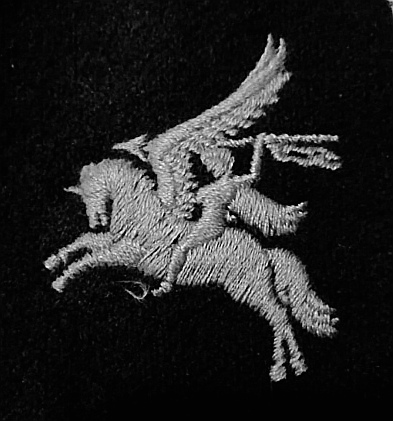
My grandmother stated that Alfred Wyles was on ‘Hazardous Pay’ because he was a ‘Commando’ (a designation given to any British soldier involved in unusual duties – and not necessarily the well-known and daring ‘Royal Marine Commandos’). Furthermore, I have inherited his shoulder badge featuring a ‘Winged Pegasus’ (now worn by the British Parachute Regiment). This badge is maroon red and features a (gray-silver coloured) caped warrior (a women – possibly ‘Athena’ the Greek Goddess of War) who is wielding a raised spear in her left-hand. The horse is a ‘Unicorn’ with ‘wings’ – or what is today referred to as an ‘Alicorn’. In WWII, the soldiers of the British Airborne Division wore this shoulder-badge regardless of whether they were ‘Glider-Landed’ or ‘Parachute-Landed’. In the early 1950s, the British military gliders were replaced with helicopters and Glider troops were abolished.
A question I have pondered is whether Alfred Wyles landed on ‘Sword Beach’ from a landing craft under intense fire (these landings started at around 7:25 am) – or did he land in a wooden glider seven hours previously in Caen (these landings started at 12:16 am) – also under intense fire? I know that his best friends were killed. Alfred Wyles recalled, “I saw that a German soldier had me in the sights of his rifle – and as he pulled the trigger – my best friend ran in front of me, and he was struck in the top of the head. His body carried on running for about ten feet before falling dead to the ground.” This happened due to the zig-zagging the men were trained to do in open ground to spread the risk of being hit and to confuse and displace the aim of enemy soldiers. As a consequence of his Unit being ‘wiped-out’ – Alfred Wyles became what was termed a ‘straggler’. He fought his way through France – having to counter pro-Nazi French (Vichy) and the Nazi German soldiers – many of whom had been pressed into uniform from the non-German conquered territories. Some fought hard – whilst others threw-down their weapons immediately!
Alfred Wyles was eventually took-in by the Gordon Highlander Regiment – as he fought his way toward Germany. Records state that after he reached Hamburg – his advance was brought to an end. He had been exposed to daily hostile fire for around six months without rest! As there are gaps in his War Record (due to MOD censoring) and gaps in my knowledge, I can only piece things together with ‘likely’ scenarios and supposition. My paternal grandmother (Gladys Wyles) stated that at one-point in the War, Alfred Wyles ‘wrote’ a letter whilst on ‘Active Duty’ late in the War – which he later confirmed was from ‘Italia’ (Italy). Having checked the deployment of his Unit I saw that it had nothing to do with the ‘Liberation’ of Italy post-1943. After reaching Hamburg, Alfred Wyles was transferred to the ‘Duke of Cornwall’s Light Infantry’.
Indeed, the ‘DCLI’ was the Regiment Alfred Wyles Served in after returning to the UK in 1945. Yesterday, I was contacted by a fellow British military historian who informed that his grandfather had Served in the 2nd Battalion of the ‘DCLI’ – and that it had been deployed in Italy during the latter part of WWII. He enquired as to whether my grandfather had been ‘transferred’ to it given the story of the ‘letter’ home sent from ‘Italia’. It was interesting to receive this historical data and to check its relevance to my relative. Alfred Wyles was Serving in the Northwest Europe Theatre between 2.6.1944-20.1.1945. He left for D-Day ‘four’ days before contact with the enemy (the glorious ‘6th of June’).
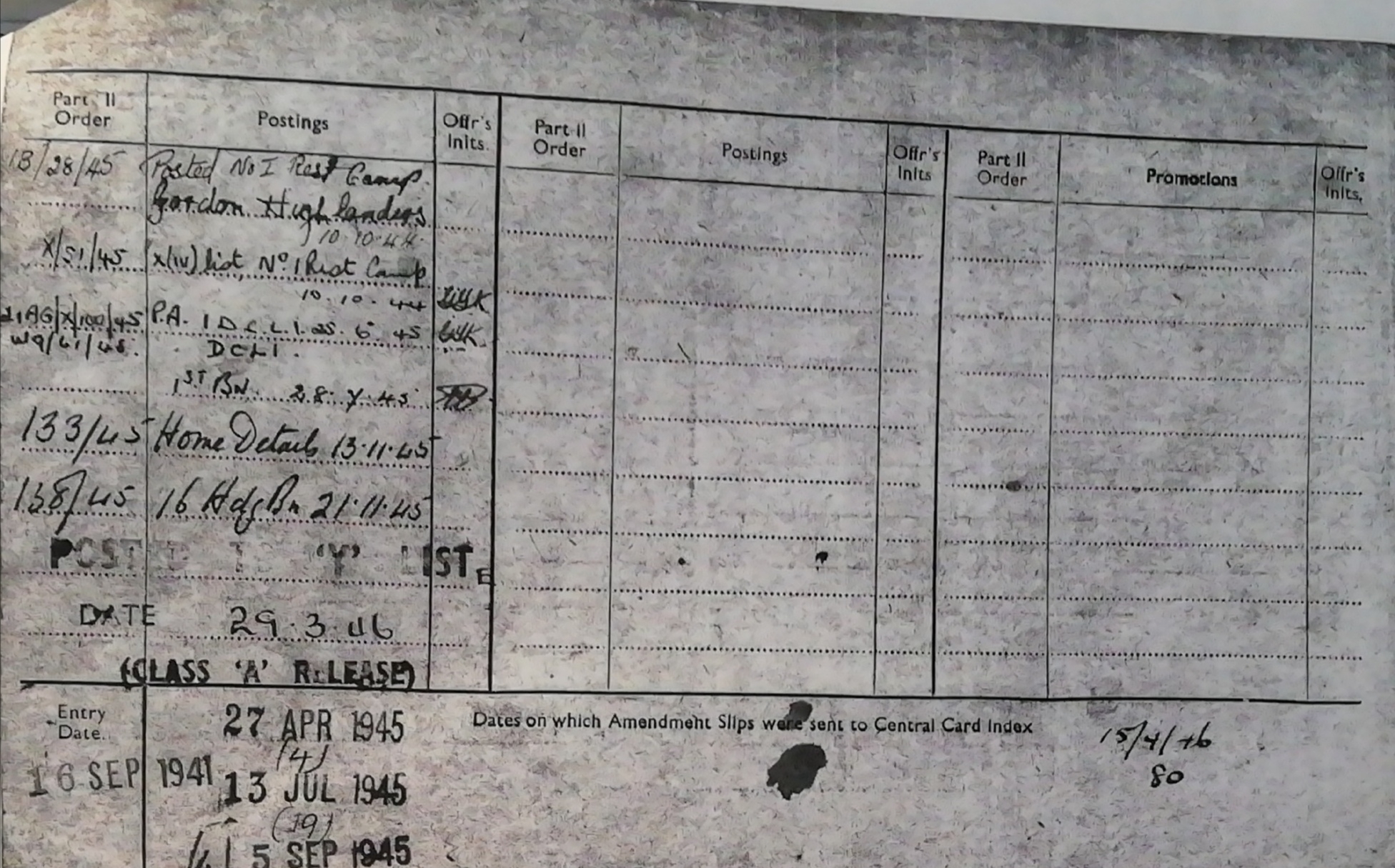
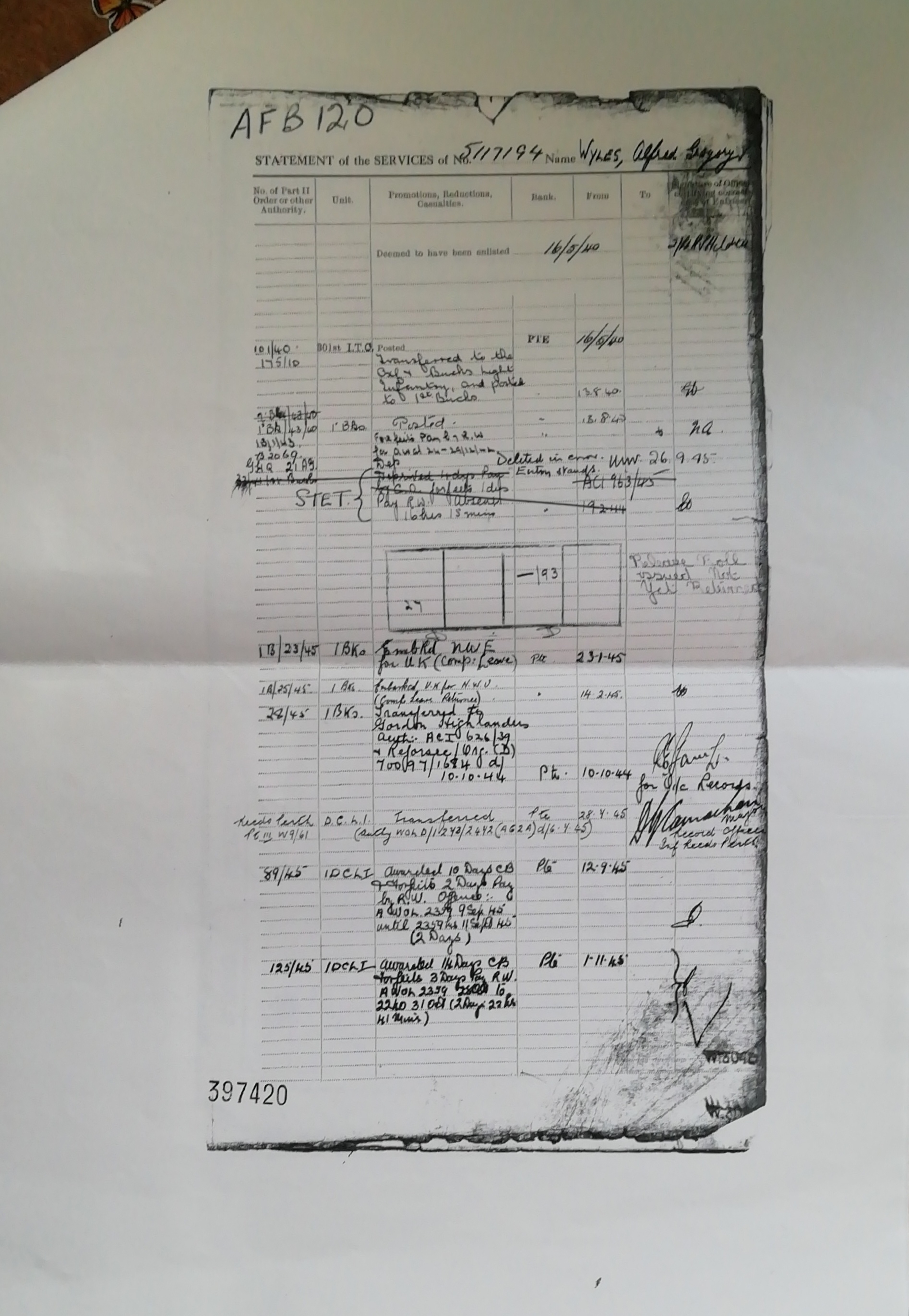
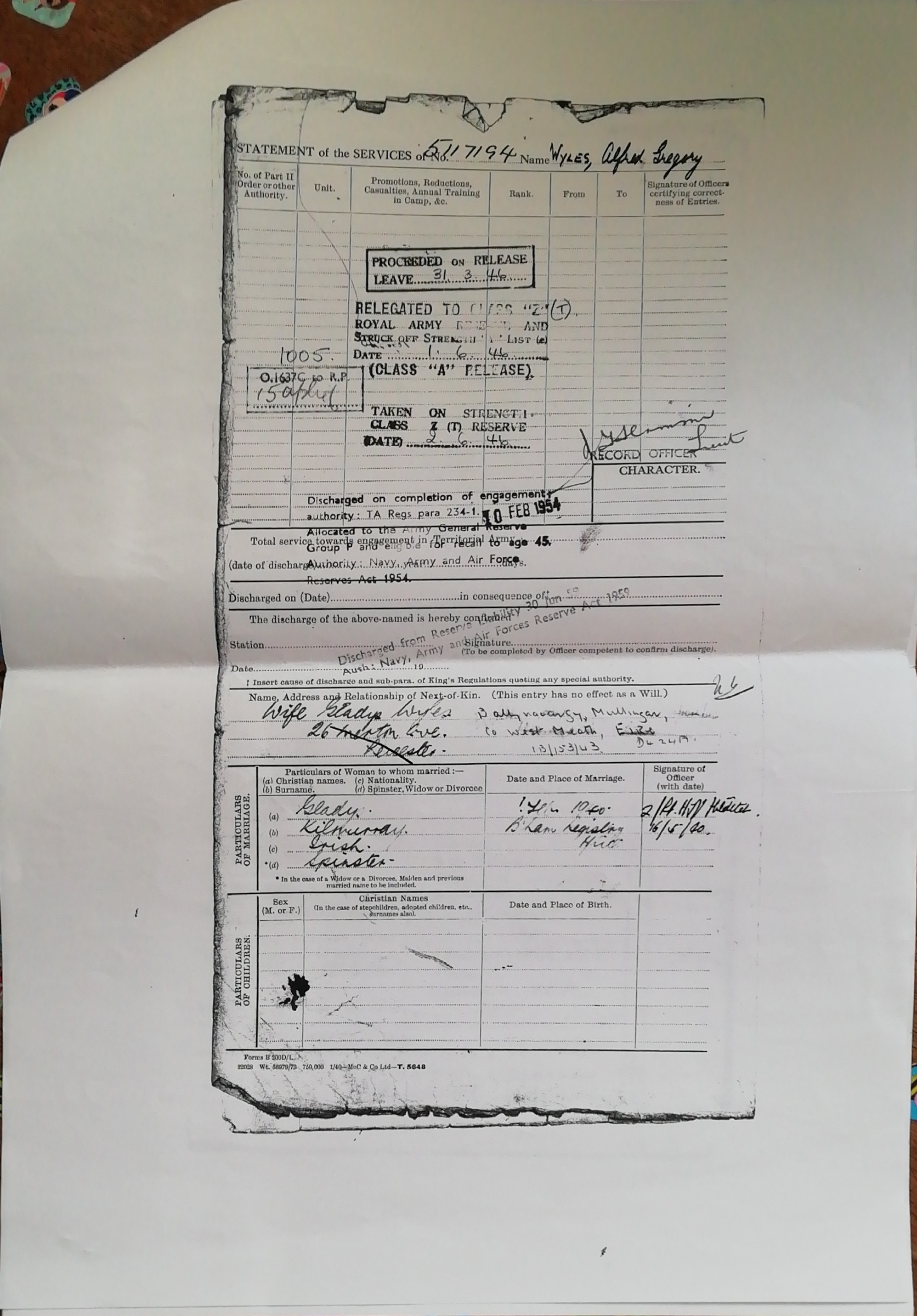
He was officially Seconded to the Gordon Highlanders (in the Northwest Theatre) on the 10.10.1944. His War Record then states that he was transferred ‘Home’ – where he continued Serving as a British soldier between 21.1.1945-1.6.1946. He joined the ‘Duke of Cornwall’s Light Infantry’ on the 28.4.1945 (for three-months after returning to the UK it looks like he was still a ‘Gordon Highlander’). He was then ‘Demobilised on the ‘1.6.1946’ – nearly two-years after D-Day! Therefore, the DCLI Unit he joined was in the UK and NOT Italy (with the letter from Italy remaining a mystery). Alfred Wyles remained as a member of the British Army Reserve (Territorials) between 2.6.1946-10.2.1954 (around eight-years). He had fought numerous frontline battles against the Nazi German Army (including the ‘SS’) – and had physically ‘survived’! He was 38-years old when his military duty in the British Army finally came to an end. Altogether he had Served fourteen years in the British Army in total – and had fought in a major World War! We are very proud of his achievements!
Update: 27.1.2022
I was 9-years-old in 1976 when my paternal grandfather – Alfred Gregory Wyles – passed away. As I was only a young child my memories of him are few but clear. He was always clean and tidy of appearance and was a strict disciplinarian. I believe much of this was in his character prior to WWII and instilled in him by his father – Archibald Britton Wyles (1887-1941) – who was born in Duddington. His service in the British Army, however, particularly during a time of war, emphasised that survival is dependent upon superior organisation and exact command and control. Each individual concerned must exhibit the highest standards of self-discipline and attention to duty. My grandfather certainly possessed all these vitally important qualities of character – coupled with the ability to effectively ‘fight-back’ when circumstances demanded it. The fact he landed on Sword Beach and fought his way into Hamburg (Germany) proves he also possessed this latter quality. As the years have passed by, I have had to reconstruct his military career from scratch primarily using the ‘hearsay’ passed down within my family. I have, however, been able to slowly move into official ‘MOD’ and historical data-base sources, and ascertain the ‘facts’ of his service in the British Army. This has been a process of constructing, deconstructing and re-building narratives of interpretation as new and reliable information has become available. As I now possess a great deal of legitimate data from official sources, I can now construct and definitive account of his experiences whilst on active duty during WWII.
He served in the 1st Buckinghamshire Battalion of the ‘Territorial’ version of the Oxfordshire and Buckinghamshire Light Infantry. This is a different outfit to the ‘Professional’ Ox & Bucks Regiment, although, of course, the two military entities are related in recruitment area and in the sharing of certain historical traits. The ‘Territorials’ were originally conceived as part-time military units (that recruited locally) trained to defend local areas from an invading force. Eventually, these ‘Territorial’ units became so efficient (and numerous) that the British government sent them abroad to fight in battles that were only usually contested by ‘Professional’ (full-time) military units. Alfred Gregory Wyles spoke of ‘glider- troops’ and ‘Airborne’ units and it was assumed that he had something to do with this. He and his wife were stationed in military housing in Bovey Tracey in Devon whilst Alfred trained in and around the canal system in the city of Exeter. This was believed to be very similar to the canal system of Caen in France. Not only did the 1st Bucks Battalion, Ox & Bucks (Territorial) train here, but also did D Company of the 2nd Battalion, Ox & Bucks (Professional). Why was this happening? The men of D Company were training to land in wooden gliders in and around Caen just after midnight on June 6th, 1944. The men of the 1st Bucks, however, were training to land on Sword Beach around 730am on June 6th, 1944, and fight their way in-land to join-up with – and ‘relieve’ – the men of D Company whilst ‘taking’ and ‘securing’ the city of Caen.
I suspect that Alfred (and his fellow comrades) had to be educated with regards what to expect to find when encountering a glider-landed assault. Familiarity was the prime objective so that the combined plan of attack could unfold smoothly with no unnecessary hindrances through inexperience. This would explain the war stories passed down in my family with the proviso that there had been a misunderstanding. Alfred Gregory Wyles fought alongside men who were glider-landed – but he reached Sword Beach by landing-craft (on foot). The shoulder-badge he possessed (now in my possession) featuring a winged Pegasus – was given to him by a colleague serving in the Glider-landed branch of the Airborne Regiment of the British Army. This would seem to be the most logical course of events – but there is a nagging doubt in my mind about all of this. Some of the family war stories clearly state that he landed in a glider on D-Day and this is something I still need to research. On the other hand, his unit suffered heavy casualties and he was with placed the Gordon Highlanders for the rest of the war!
——————————————————————————————————————–
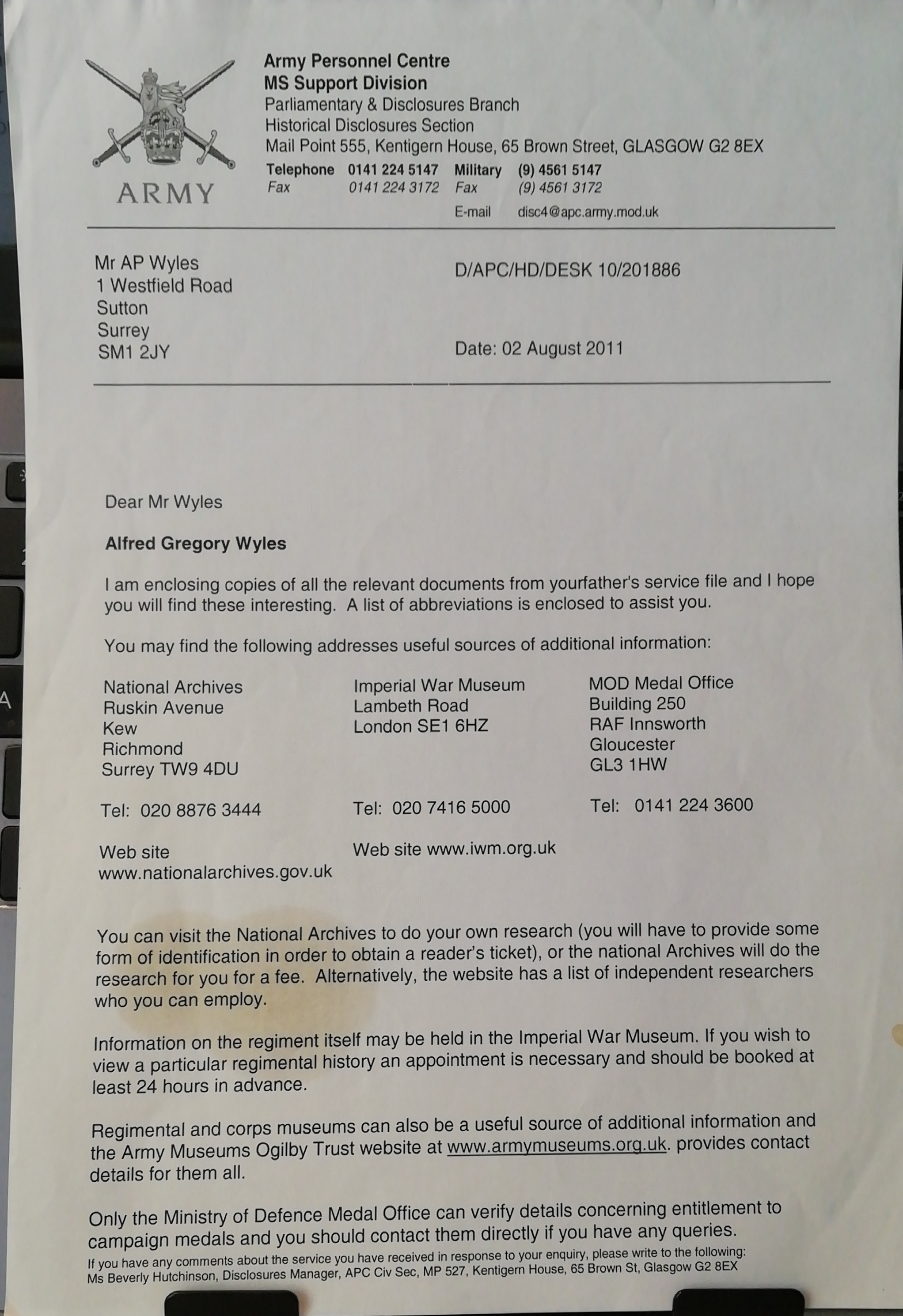
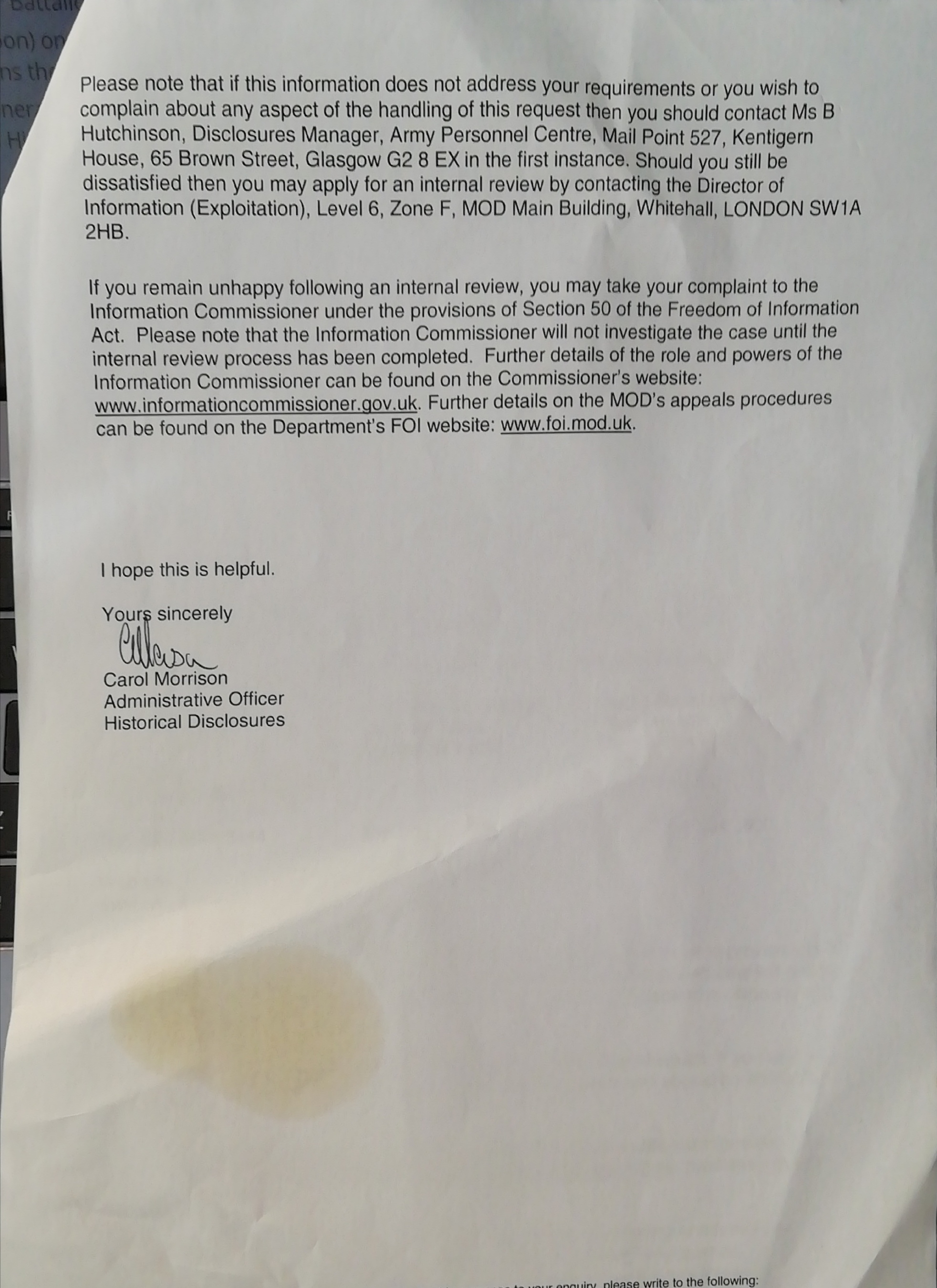
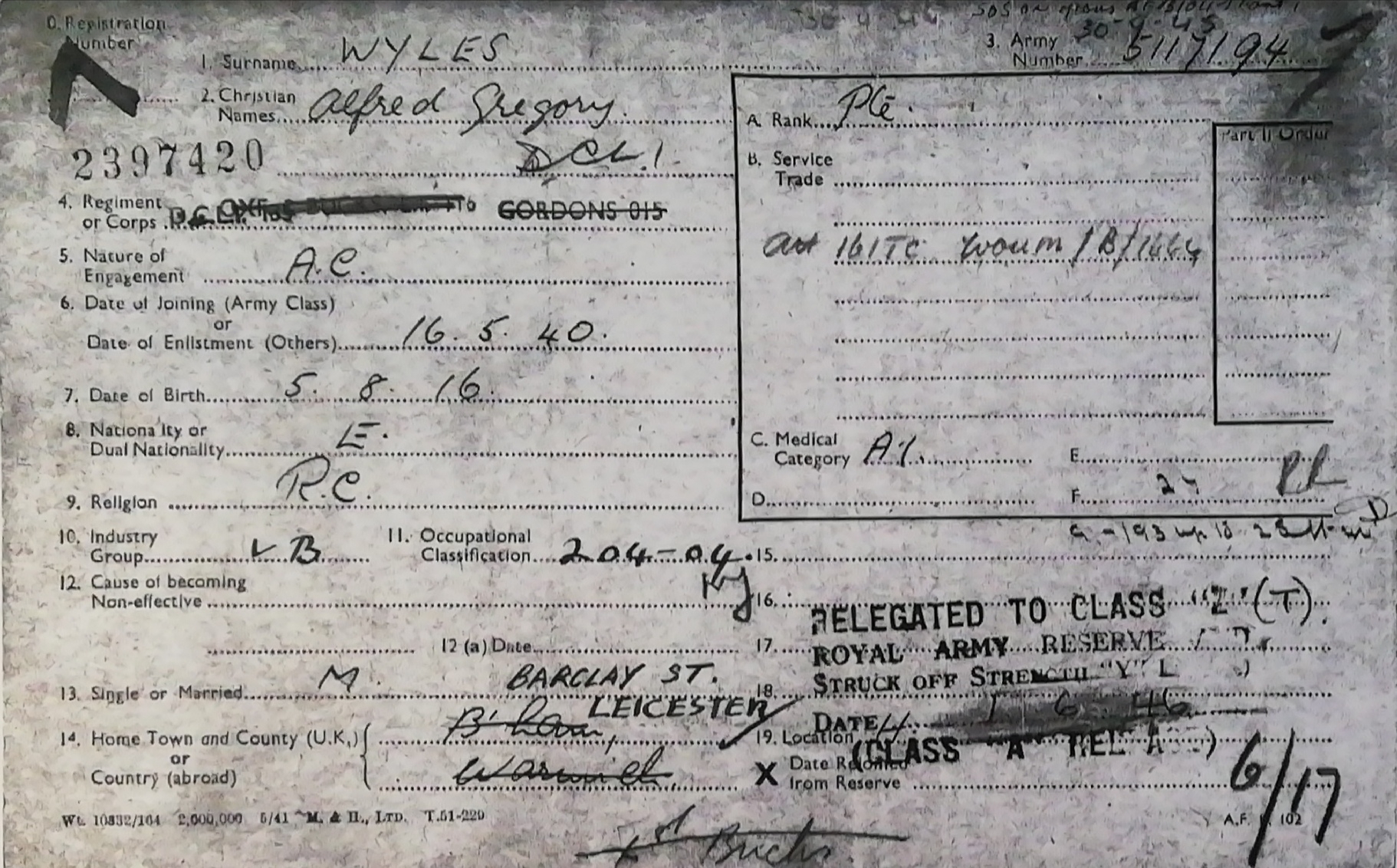
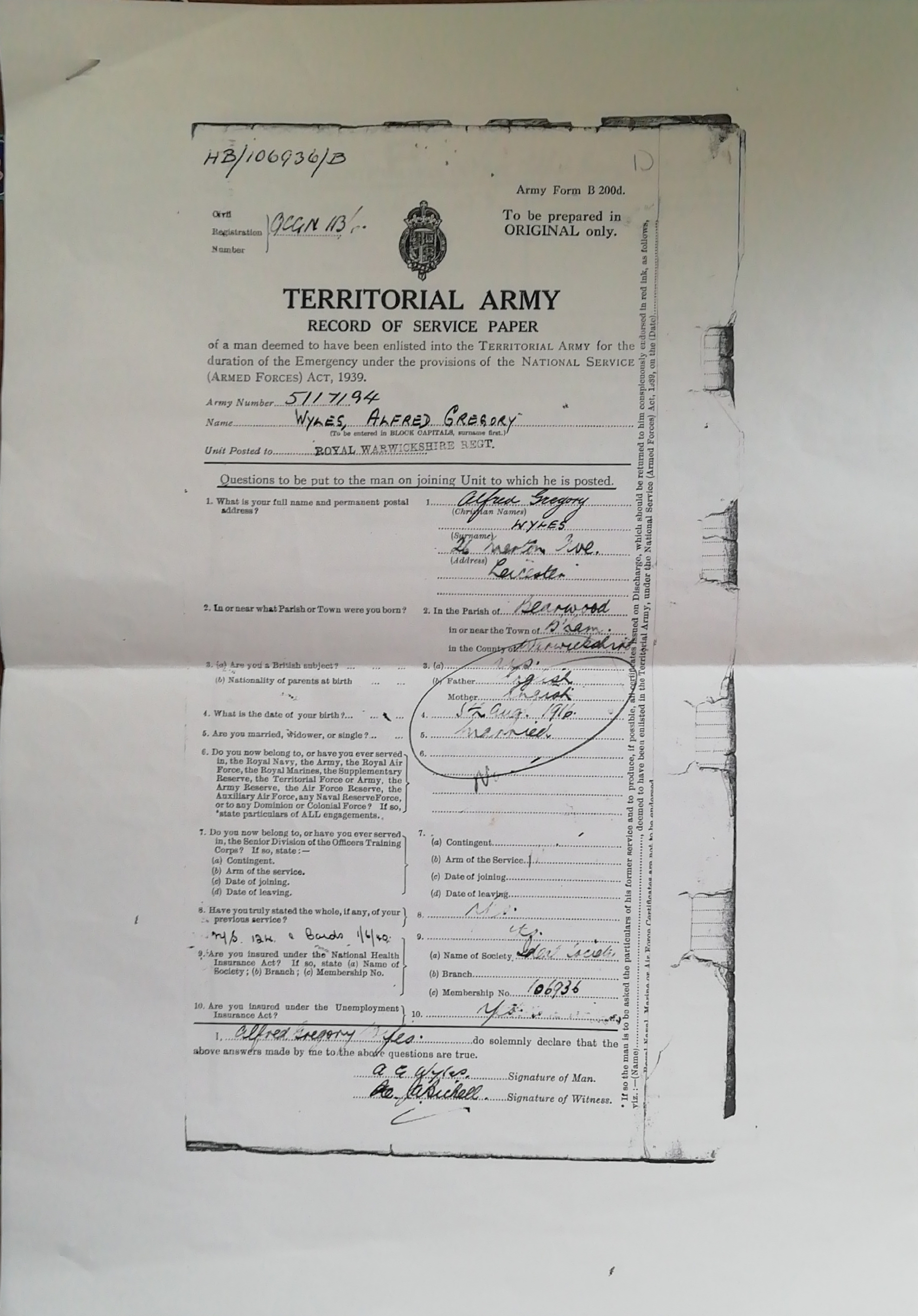
The following is my attempt at arranging the plethora of dates, times, designations, assignments and deployments associated with my paternal grandfather’s War Record during WWII, into a logical and coherent narrative. He officially enlisted on the 16th of May 1940 – for the ‘Duration of Emergency’ – and was sent to France with the 1st Buckinghamshire Battalion Ox & Bucks Light Infantry (TA) to reinforce the Gordon Highlanders (according to a ‘Discharge’ Memorandum). Military records are often so precise (and concise) that they convey very little about the reality of war and what the individual soldiers had to endure for our safety and freedom. As a family we are very proud that our paternal grandfather – Alfred Gregory Wyles – who volunteered to join the British Army to fight Nazi Germany in the 1940’s. I acquired the War Record of ‘Private Alfred Gregory Wyles’ (of the 1st Buckinghamshire Battalion – Oxfordshire and Buckinghamshire Light Infantry [Territorial Army]) during August 2011 from the amazing staff at the Imperial War Museum, London, after a considerable wait due to an increased need for ‘Veteran Care’. These helpful people had to research through thousands upon thousands of paper records stored in their secure vaults! Due to their hard-work on my behalf, I have been able to reference the following (received) military documents:
- a) Territorial Army – Record of Service Paper (Army Form B 200d)
- b) Two Discharge Papers (i.e. Amendment Slips) and Two Memoranda
- c) Service and Casualty Form (Army Form B 103-I)

My grandfather enlisted in the British Army on the 16th of May 1940 (just six days after the Battle for France had begun). His join-up papers state he was initially in the ‘Royal Warwickshire Regiment’ (TA) – which I assume is a designation referring to the 301st Infantry Training Centre (ITC). He was transferred to the 1st Buchinghamshire Battalion of the Territorial Army branch of the Oxford & Buckinghamshire Light Infantry Regiment (serving as part of an Anti-Tank Platoon) on the 13th of August 1940, around three months after enlisting. The ‘Territorial Army’ in the UK evolved out the very old tradition of forming local ‘volunteer’ militias (within villages, towns and cities, etc() who were self-financing and self-organising – the members of which had to be fine and upright members of the community who were a) trusted by the local population and b) wealthy enough to afford to purchase their own uniforms and weaponry – before learning how to defend the local area within which they lived from internal or external attack. Interestingly, not only does this tradition demonstrate that the ‘right to bear arms’ (see the ‘Militia Act of 1757’) has existed in the UK, but as the ‘Wyles’ family originates from Duddington in Northampton, Alfred Gregory Wyles had at least one direct ancestor in the form of ‘George Wyles‘ (listed as a ‘Taylor’) – who is recorded as serving in the local militia of 1777!

Only one document mentions the impressive ‘Royal Warwickshire Regiment’ – which is never mentioned again. The British Territorial Army was formed in 1920 from various local military formations formerly known as the ‘Territorial Force’ (which was found in 1908 and fought in WWII). The thinking behind the ‘TA’ concept was that motivated volunteers ‘knew’ their local area far better than any potential invader, and were therefore in a far superior position to efficiently defend it from attack.

However, as time progressed, these local military units became ever better trained in general combat and were viewed as an exploitable resource by the British government. Indeed, far from staying in their local areas in a peaceful country where not much happened (and now receiving a wage from the government) – these developed units were deployed abroad as a means to ‘test’ their mettle and earn their pay! There is also the issue that (part-time) TA units were viewed as ‘expendable’ and used to preserve the professional regiments from unnecessary exposure and destruction on the battlefield. This attitude which favours ‘tradition’ over ‘existentialism’ still exists today in the UK where the use of the part-time TA for frontline duties is a commonly accepted reality (even the ‘SAS’ has two TA Regiments). In 2013, the TA was renamed the ‘Army Reserve’ probably in mimicry of the US system.
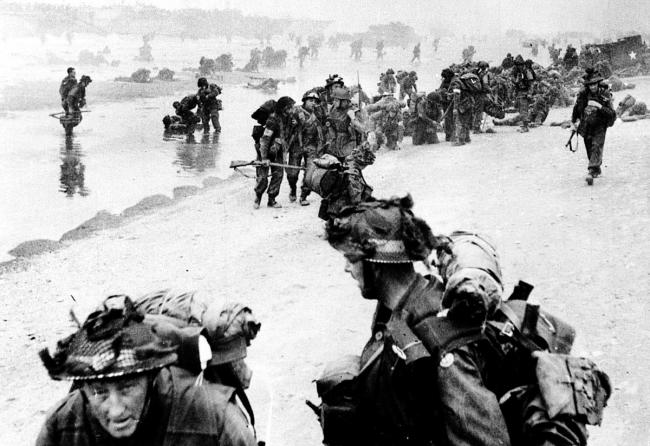
Sword Beach, the easternmost beach of the five landing areas of the Normandy Invasion of WWII. It was assaulted 0725hrs on June 6, 1944 (D-Day of the invasion), by units of the British 3rd Division, with French and British commandos attached. Shortly after midnight on D-Day morning, elements of the 6th Airborne Division (including D Company 2nd Battalion Ox and Bucks Light Infantry), in a daring glider-borne assault, seized bridges inland around 11 miles South from the beach and also silenced artillery pieces that threatened the seaborne landing forces. The area code-named Sword Beach occupied an 8-km (5-mile) stretch of the French coastline from Lion-sur-Mer on the west to the city of Ouistreham, at the mouth of the Orne River, on the East. The area was dotted with vacation homes and tourist establishments located behind a seawall. It was also approximately 11 miles North of the important city of Caen. All major roads in this sector of the Normandy countryside ran through Caen, and it was a key city to both the Allies and the Germans for transportation and manoeuvre purposes. This is the background to the initial fighting Alfred Gregory Wyles experienced. Obviously, he had to fight his way across Europe and into Hamburg where his adventures appear to come to an end.
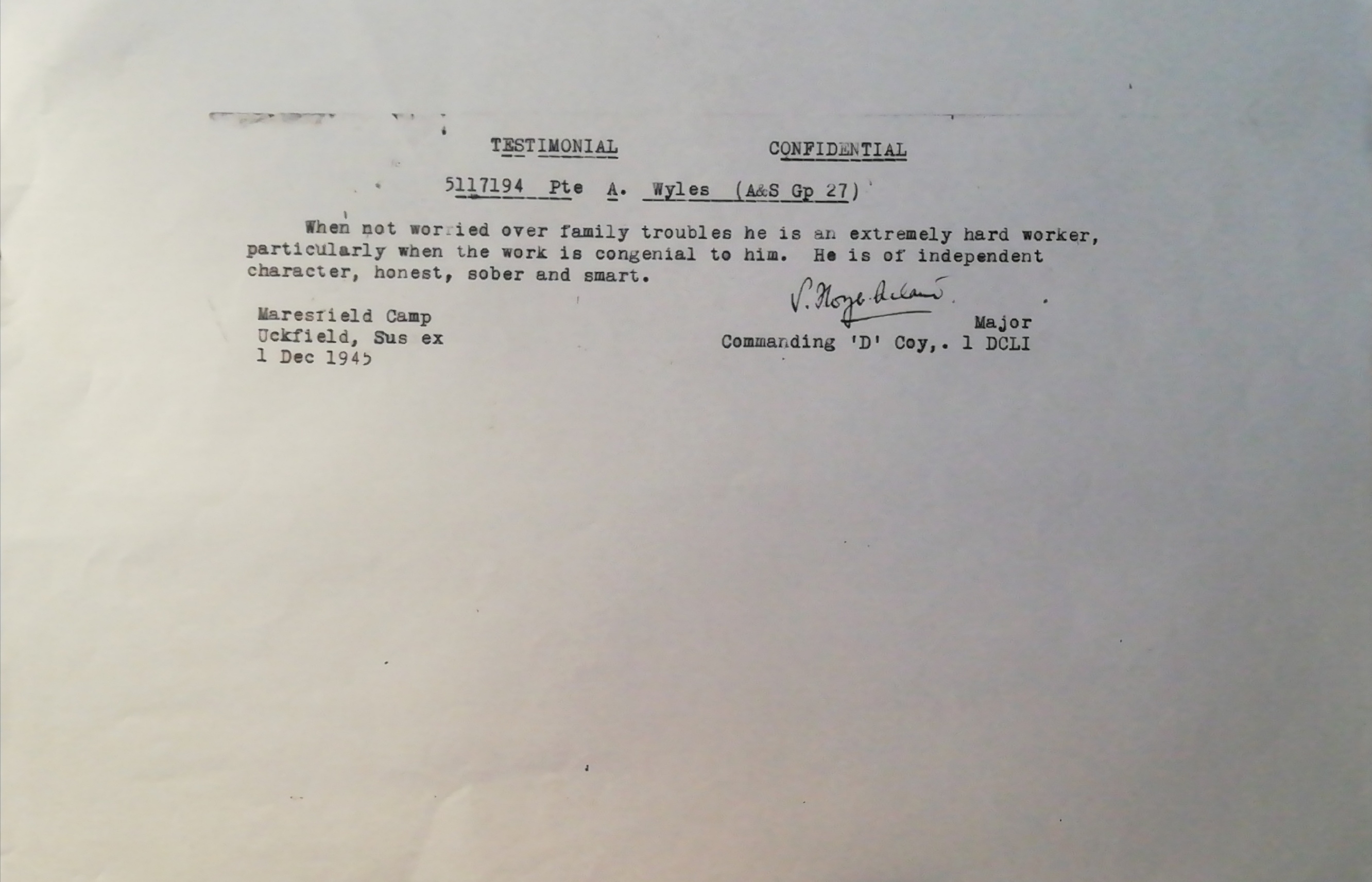
His record states that he was in North West Europe from the 2nd of June 1944 to the 20th of January 1945 – and that he served 233 days in theatre. He was granted a period of rest after intense combat and frontline duties and Posted to No 1 Rest Camp Gordon Highlanders – on the 10th of October 1944. He returned to the UK on the 24th of January 1945 and began the process of demobilisation. He was assigned to D Company, 1st Battalion of the Duke of Cornwall’s Light Infantry and was eventually posted to Colchester (16/ITC/HQ/17) at the ‘Goojerat Barracks’. (The specific dates given are to the Gordon Highlanders (10,10.1944) and finally the Duke of Cornwall’s Light Infantry [21.1.1945]). A Memorandum dated the 1st of March 1946 is entitled ‘Release Character’ – written by a Captain J Flemming – and describes my grandfather as being sober, honest and smart in his appearance, as well as being of ‘good character’. By that time, he had been at that barracks for 2 months. He was awarded the Defence Medal and War Medal 1939-1945. An added note states ‘Stars & Clasps B/20 – 23rd of November 1948’. This War Record omits any direct mention of war activities, presumably for security reasons. However, my grandfather saw action and once recalled the death of his friend (who was shot in the head) whilst his body continued to ‘run’ for a short distance.

His wife – Gladys Kilmurray – always said that my grandfather was sometimes engaged in ‘hazardous duties’, which she referred to as ‘Commando’ activities (this was supported by my grandfather’s war stories told to his family). He told his son (Peter Wyles – my father) he was assigned to the Glider (Air Landed) Troops for a time (certainly my grandfather and his wife were stationed in the military barracks at Bovey Tracey in South Devon for a time, whilst he ‘trained’ in Exeter), and that his platoon was always sent first into enemy territory. I suspect this narrative is a little muddled and has become more confused over-time where the various (and distinct) activities carried by the entire Ox & Bucks Light Infantry in France have become ‘conflated’ and ‘merged’ with one another due more to a sense of awe rather than any attempt at deception. Besides, my grandfather was psychologically ‘damaged’ (suffering PTSD) after the war and never sought any type of acknowledgement for what he had to endure and had to do. My grandfather’s friend known as ‘Chalky Wright’ was shot in the head whilst both men were running for cover (indeed, his friend carried-on running for a few seconds afterwards). This followed a German soldier (aiming with a rifle and) targeting my grandfather – but his above friend got in the way and the bullet struck him instead!


Update: Email Received from the ‘Soldiers of Oxford Museum’ (13.11.2021)
Hi Adrian,
Sorry for the delayed response, we receive a huge number of enquiries around Remembrance Day each year, and with a small team here at the museum it can be difficult to keep up with everything!
We’re often sadly quite limited in the further information we can offer about individual soldiers’ service during the the Second World War due largely to their records still bring held by the MOD – now that you have his papers, you actually have far more detail about him than we do. Regimental records, chronicles and war diaries rarely name individual men, often only officers by name, so the information we have is often limited to whatever material has found its way to the museum from family members. I’ve attached our database entry for him, but I don’t think it adds anything you won’t already have in long form from his personal records.
That said, having a look at the image of his papers on your website I notice he’s referred to as being ‘posted to 1st Bucks’ – this is actually a different battalion to 1st Battalion, Oxfordshire and Buckinghamshire Light Infantry (one of the regular army battalions, sometimes also referred to as ‘the 43rd’). 1st Buckinghamshire Battalion, Oxfordshire and Buckinghamshire Light Infantry were a Territorial Army battalion of the regiment, and crucially, they actually landed at Sword Beach on D-Day itself – which should hopefully make some of the other details you have make a bit more sense.
The links below provide details from the Regimental Chronicles, in the form of officers accounts of events, which give more detail about 1st Bucks in the run up to their part in D-Day, and a lot more besides (the site is run by a regular volunteer researcher at the museum). We hold original copies of these chronciles at the museum, but no reproductions/reprints are currently available for sale – but the information on the website is transcribed from them, so is a great resource.
http://www.lightbobs.com/1944-1st-bucks-normandy-d-day.html
http://www.lightbobs.com/composition–role-of-beach-group.html
Many thanks,
Duncan


 SANGHA KOMMUNE (SSR)