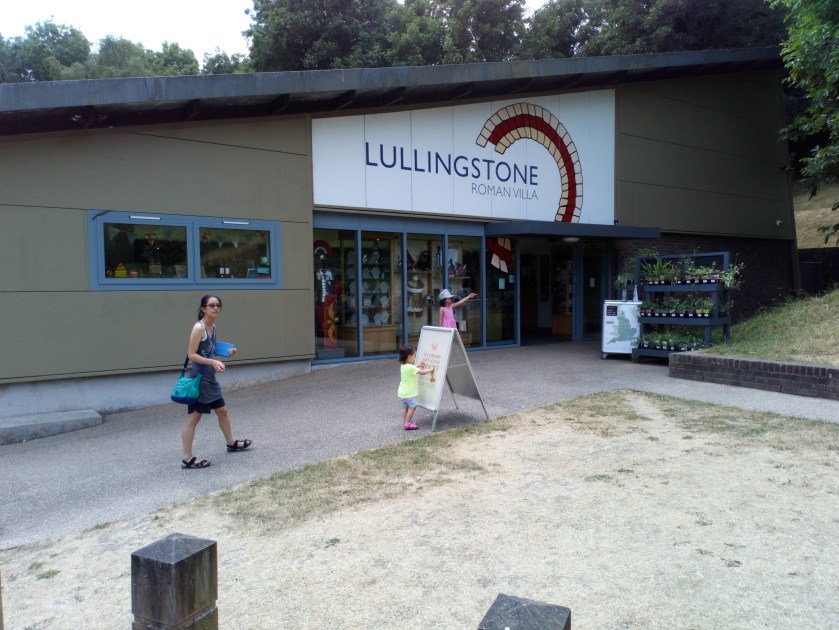

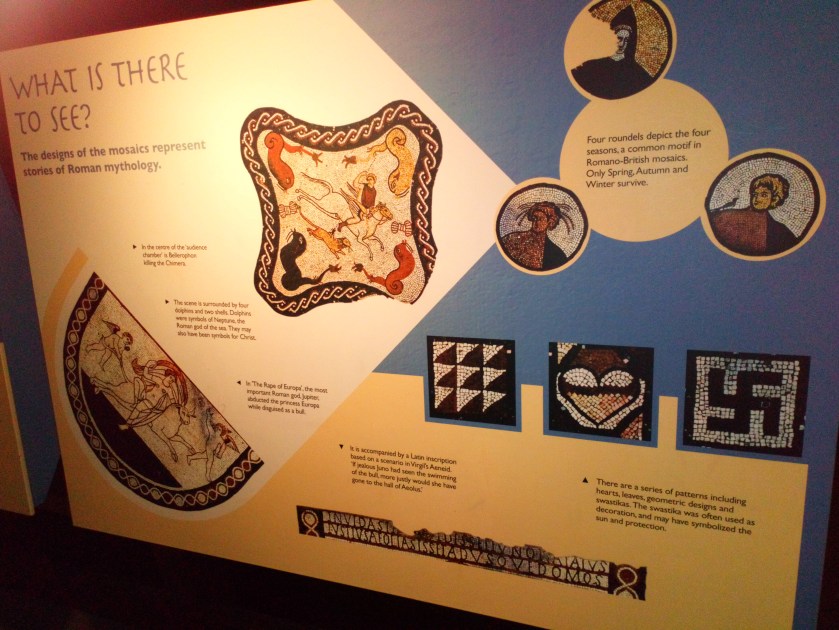
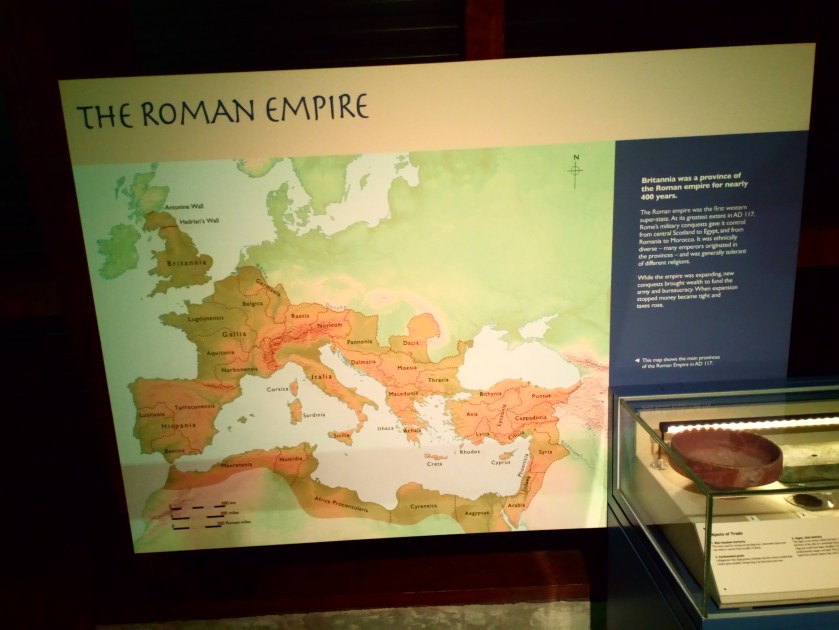
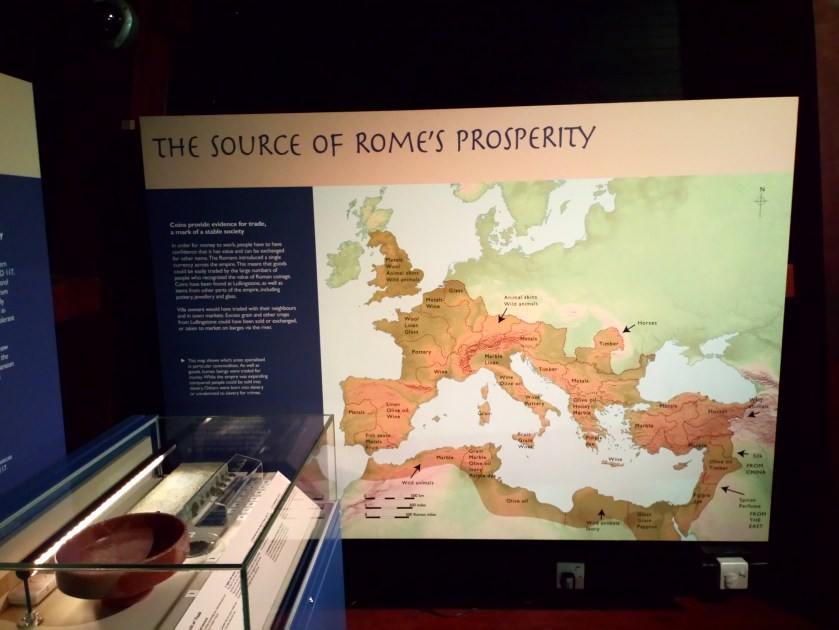
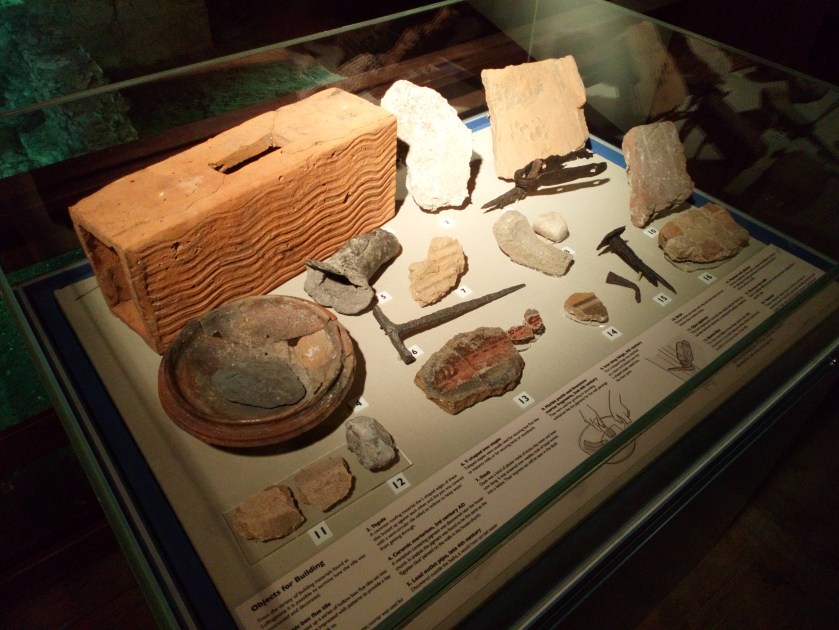
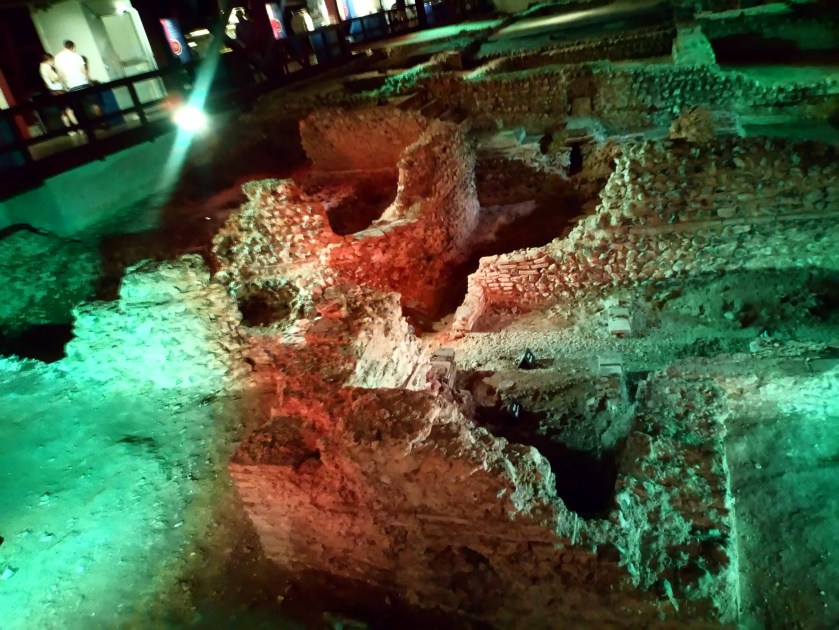
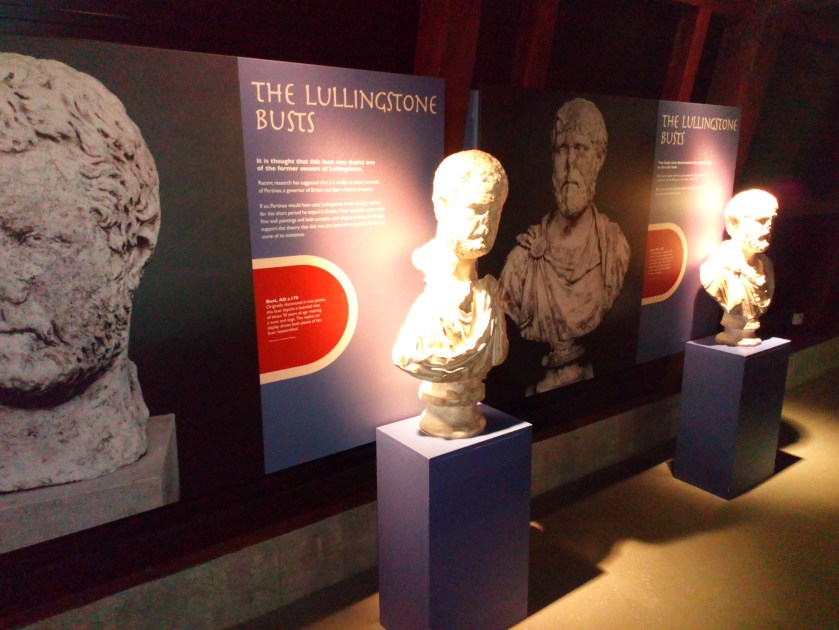
We visited here probably about two years ago, but I did not write a blog post (which is highly unusual). We think this might have been because I did not get enough good photographs with the camera I had at the time – uploading only to social media. Still, that time was with Mei-An only, as Kai-Lin had not yet been born. Today, the entire family visited on a glorious Sunday afternoon, with temperatures reaching 30 degrees (centigrade). Educational experience is important for a child’s psychological, emotional and physical development. diversity of experience generates a broad, caring and insightful mind, and so we headed to Lullingstone in Kent, to explore a Roman villa that spanned 400 years of the Roman occupation of our country. We, as Celts, were beaten back and eventually defeated by the Romans, and this led to the development of the ‘English’ and of ‘England’ at a later date. At the time, our Queen Boudicca united the British Celtic tribes in the 1st century CE, and despite winning many stunning battles (through use of the Celtic Charge and horse-drawn chariots), she was finally defeated. Tacitus, the Roman historian states that the Romans stopped counting the British dead when the number of 80,000 was reached… Through invasion, imperialism and conquest, Britain’s ancient culture was washed away, and the foundation of modern, Western civilisation was established by the Romans throughout Europe. Of course, the Romans had been the product of barbarians copying Greek culture, and eventually conquering the Greeks – as the Greeks would ever accept these ‘Italians’ as equals – other than through force of arms. Not only did the Greeks establish colonies within Southern France, the Greek explorer Pytheas set-foot on mainland Britain in the early 3rd century BCE. It seems that the British Celtic tribes and their Greek and Roman counter-parts did know of one another, and perhaps coexisted in peace and mutual respect for quite sometime, but with the rise of Julius Caesar, all this changed as Rome sought to push forward her borders and conquer new lands. We – as the conquered Celts – probably had to serve the Romans as manual labourers, servants, slaves and auxillary soldiers when needed. The Roman Villa at Lullingstone allows us to examine the developmental stages of our own history, and to understand how ‘we’ got here!













 SANGHA KOMMUNE (SSR)
One comment