Hakka Associations from around the world gathered in Heyuan City (an area of ancient Hakka population) as a sign of respect and admiration.

Proletariat Blogging in the Heart of (UK) Predatory Capitalism! Exploring the Interface between Matter and Perception, Chinese Buddhism, Daoism, Hakka Ethnography, and All Aspects of Radical Politics, History, Psychology and Philosophy – 全世界无产者联合起来!
Hakka Associations from around the world gathered in Heyuan City (an area of ancient Hakka population) as a sign of respect and admiration.
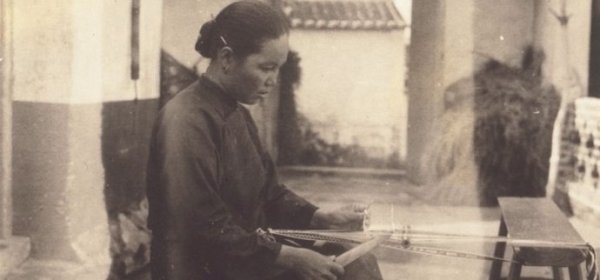
These 25 black and white photographs (arranged into 5 categories) depict village life in the Langkou area of Shenzhen, taken over a seven year time period. Shenzhen is situated within South Guangdong province and prior to 1997, existed on the border with the British controlled New Territories and Hong Kong. This general area is renowned for its Hakka populations and this collection of photographs record various aspects of life within a traditional Hakka village.
From a young age many Hakka people join religious groups, be they Buddhist or Christian, etc. This is not because Hakka people are overly religious (as a rule Hakka people are more practical than religious), but rather as an insurance policy for a place to live in the after-life (should such an after-life exist).
Original Chinese Language Article By: Chen Wen Hong (陳文紅) (Translated by Adrian Chan-Wyles PhD) As the ancient culture of the Hakka has become more prominent
This bond between the Hakka and their Northern Chinese ancestors is considered a defining Hakka characteristic. So much so that even when Hakka people moved out of China and into foreign lands, when they married non-Hakkas, these outside people were taken back to the old ancestral hall to ritualistically pay their respects to the Hakka ancestors of their spouse, and in so doing, become ‘Hakka’ themselves. This cultural solidarity may well explain why wherever Hakka people have gone, they have brought success to their new countries. As China is affluent and peaceful today, the Hakka people are no longer under threat from attack. They are now legally acknowledged as ‘Han’ people living in the south, and many younger Hakkas have moved out of the round houses, which are now mostly occupied by the elder generation.
The murderous Nationalist regime came to power in China in 1911, over-throwing centuries of imperial rule. As it pursued a pro-Western policy of rapid modernisation
 SANGHA KOMMUNE (SSR)