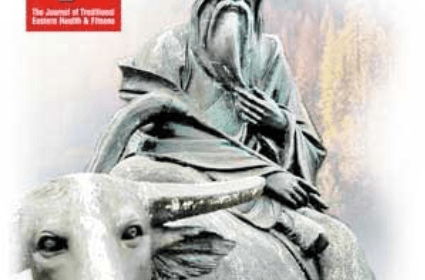
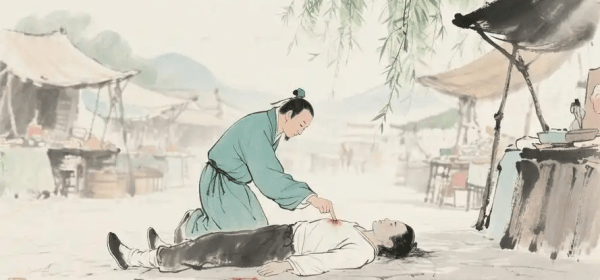
Pressure-Point Therapy is an Important Aspect of TCM!

China: Buddhist-Marxist Alliance (UK) “Socialist” Medicine Upgraded – 70% of TCM Patents Withdrawn Due to Safety! (31.1.2026)

On top of this, some aspects of TCM have developed through added-on superstitions that became popular in the past – but are not related to the philosophical foundation of TCM (probably the “Change Classic”). These Chinese superstitions are culturally comforting – but are not premised upon genuine TCM philosophy – and cannot be materially (objectively) proven to work either traditionally or cotemporally. In the West there are two strands of TCM – one practiced and passed-on by ethnic Chinese people (who may or may not – be linked directly to Mainland China) – the other practiced and passed-on by (usually “White”) non-Chinese people. The latter category evolved out of the Western invasion of China – and the “enforced” teaching of TCM to Westerners. In the UK there are TCM centres (specialising in “acupuncture”) that have no links with any authorising ethnic Chinese institution. These are considered “racist” in historical origin and function – as such entities represent the “White” appropriation of Chinese TCM culture – a process which “excludes” the ethnic Chinese from their own culture. This remains the case even if certain ethnic Chinese individuals are taught this stream of Westernised TCM (which actually happens).
Traditional Judo Self-defence

UK: Is Goju Ryu Karate-Do Linked to the Chinese Book of Change? (29.12.2025)

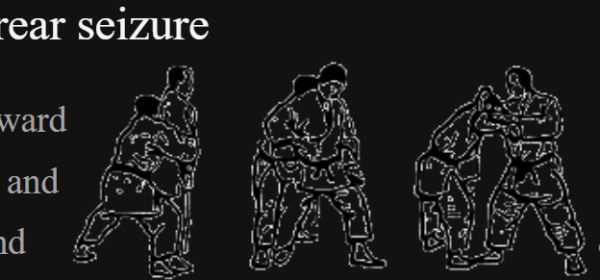
Indeed, those scholars who developed the Commentarial material that seeks to explain the Book of Change (Yijing) – often attempt to superimpose the ancient “hard” and “soft” with the concept of “yang” and “yin” – although the amorphous nature of this schematic means that one quantity is continuously exchanged for the other. When lecturing in China – this often becomes an interesting and contentious point of discussion. Many are unaware that the yin-yang ideal is not that old as it is presented as all conquering in many Chinese-language texts. Whatever the case, I keep in contact with a number of Goju Ryu practitioners – as this is a style of fighting I explored in my youth. I still assist practitioners of this style with their historical research – which is often of a linguistic nature. Linked above is a blog article uploaded onto our Ch’an Dao Blog.

Qi Journal - The "Great Treatise" Translation

US: Qi Journal – My Published “Great Treatise” Translation! (26.12.2025)

This material will be published throughout numerous (and obscure) academic journals – but I will make every effort to have a version published for “free access” on the internet. The fee I charge is that your return the six senses a) to the empty mind ground, and that b) you allow the empty mind ground to expand to embrace the entire environment. As you can see, this is a much higher price than just an ordinary exchange of money – be it supposedly empowered metal or paper. Here is the problem – I will accept no other payment for my work – but I will not “demand” in a dogmatic manner. Your realisation of “freedom” is entirely a matter of your own affair. Look within properly – or do not – the choice is yours. I will not alter my charge regardless of your decision. I will not stop you reading – as reading is the first-step.

Archery as an Ancient Art!

Daoism: Archery in the Central Plains! (5.3.2024)

Indeed, as a distinct body of rituals – Confucianism is older – with Daoism developing later. The problem is that historical elements of both ideologies exist within China’s early history. These elements eventually diversified into specific and distinct schools of thought – that seem ‘different’ in practice (which they are) – whilst sharing similar or identical concepts. Term ‘道’ (Dao) exists in Confucian thought as well as in the musings of Laozi and Zhuangzi! Above is my short research paper on the ‘中’ (zhong1) ideogram in relation to archery and ‘hitting the target’.

35000 BCE - Dragon

Qianfeng Daoism: Enter the Dragon! (9.2.2024)

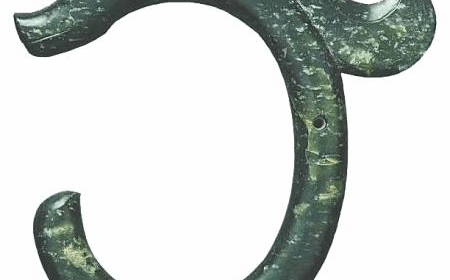
Considering how important the concept of the ‘Dragon’ is throughout Chinese culture – I was surprised just how haphazard the construction of its representing ideogram actually is. As this is my area of academic expertise, I could not believe what I was looking at! Consequently, it took me three-days to disentangle the mess that this ideogram seems to have gotten itself into. Having achieved this objective – I then unloaded the finished article onto the Qianfeng Daoist website I help to administer.

The Great ‘Ginseng’ Heist! 

The etymology of the term ‘人蔘’ (Ren Shen) is interesting and complex and well worth exploring, as this is the term Westerners are routinely using when referring to ‘Ginseng’. The first ideogram ‘人’ (ren2) and refers to a ‘human-being’. This Ideogram is often associated with ‘們’ (men2) – meaning ‘us’ or ‘fellow people gathered behind the safety of a gate’ – and ‘閄‘ (huo4) – meaning a ‘door or gate in-front of a human-being’ or ‘a human-being protected by a structure or institution’, etc.

1 2 3