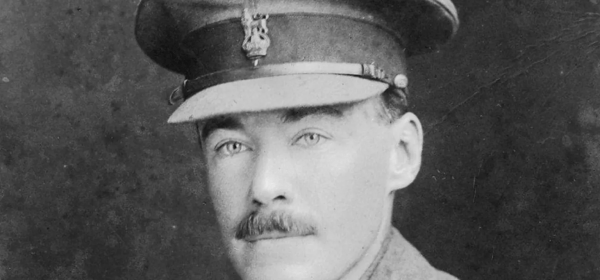
Philip Neame was born in Faversham in 1888

UK: How the BBC Lies About Tibet Whilst Reporting on Lt Gen Sir Philip Neame! (11.11.2025)

Neame survived and was decorated with the Victoria Cross, the highest accolade for valour in war.

He continued his career in the army while also pursuing an interest in rifle shooting, and competed in the 1924 Olympics with great success.

Neame went on to train the Tibetan army, before getting called up for World War Two.

He fought, and was captured, in North Africa, then was a prisoner of war in Italy before escaping back to Britain.

He died in 1978 and is buried in the village of Selling in Kent.

His son, with the same name, fought in the Falklands War in 1982.

In his home town of Faversham a plaque on the pavement near the guildhall commemorates Neame’s place in history.

First Russian Aviator – Mikhail Nikiforovich Efimov (1881-1919) Bolshevik Revolutionary

On March 21st, 1910 in Odessa, Mikhail Efimov – in the presence of 100,000 people on the field of the Odessa Racetrack – took to the skies yet again. On this day he climbed five times, (performing three laps) at an altitude of 50 meters, including two flights with passengers – bankers Ivan Xidias and the Chairman of the Odessa Flying Club -A rthur Anatot.

World War One and the Working Class Holocaust

This arousal of working class consciousness unfolded hand in hand with the intensification of bourgeois angst and resistance, which threatened to boil over into an all-out war between the competing bourgeois countries. This situation was reflected by the fact that the various congresses of the Second International dedicated much thinking time to the solving of the problem of what policy should be adopted by the international working class within their respective countries, should war breakout between those countries. In other words, should the developing working class regress into the old pattern of simply following the lead of the bourgeoisie in time of war, and kill one another in the name of ‘nationalism’ for their respective countries? In the 1907 Stuttgart congress, the Second International – with the help of Lenin – issued what was thought of at the time, to be a definitive statement upon the matter (see opening quote). In essence, the Second International in 1907 called upon its constituent members to use every available means to prevent a war from happening, or to shorten a war by the same means should hostilities have already broken out.