Animals Rights has a nasty under-belly of far-right membership.
Tag: theravada
George Galloway’s Comments on Buddhism
Criticism is an important and central aspect of Buddhism. However, the Buddha taught that such a process should be ‘truthful’ if it is to be effective.
Buddhist Anti-Muslim Racism & Violence in Sri Lanka
When this faction of Buddhist monks are not directly committing the violence themselves, they often incite poorly educated lay Buddhists to carry-out the destruction on their behalf. This faction of Buddhist nationalists believe that they are defending the Sri Lankan nation from foreign invasion, despite the fact that many of the Muslims they attack are from families that have been resident in Sri Lanka for generations.
Buddhism & Islamophobia
There are a number of Buddhist monks from Myanmar and Thailand, who are advising the lay people in their communities to attack and kill their fellow citizens who happen to be Muslim. A recent BBC Radio Four documentary investigating this phenomenon found that it was a minority of high ranking Buddhist masters (in Myanmar) who were responsible for this behaviour, and that the majority of masters did not agree, or had no opinion. This demonstrates that theses rogue masters are behaving in an unBuddhist manner and not only creating hellish karma for themselves, but also causing hellish karma for all those who unthinkingly follow their delusion without question.
Buddhism is a Philosophy of Non-Racism
These events have occurred in predominantly Theravada Buddhist countries, and have led to an intellectual climate which feels comfortable enough to routinely express sentiments of Islamophobia – an expression that legitimises itself by masquerading as a manifestation of Buddhist wisdom, when in reality it is nothing more than the product of greed, hatred, and delusion.
The Mahayana Transformation
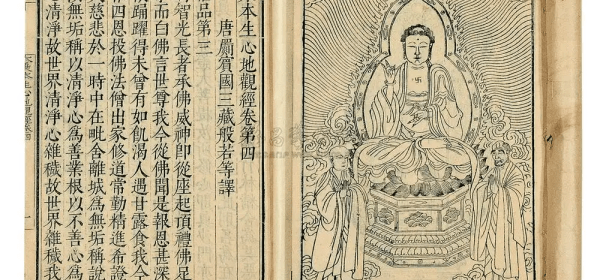
‘Collectively, the schools of early Buddhism are often historically referred to as ‘Hinayana’ so as to distinguish them from the emergence of the Mahayana. Whereas the Mahayana becomes historically recognisable around the 1st century CE in India, the Hinayana schools are seen to decline around four centuries later – in the 5th century CE. This demonstrates that both types of Buddhism coexisted for hundreds of years (inIndia) and there are records of monasteries containing monks who adhered to either tradition – living and practicing side by side. The emergence of the Mahayana created the conditions for earlier Buddhism to be viewed as ‘narrow’ and in some way ‘incomplete’. As the Mahayana interpretation represents a substantial expansion and elaboration of the teachings contained within earlier Buddhism, this sets the agenda for the historical interpretation of history with regard to what may be described as the ‘perceived’ developmental history of Buddhism as a distinct academic entity.’
 SANGHA KOMMUNE (SSR)