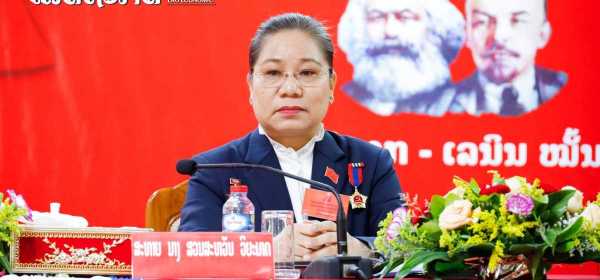
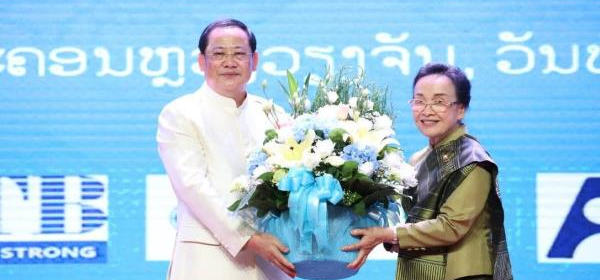
Ms. Naly Sisoulith praised the Lao Women’s Union for its active role in empowering women

Laos Buddhist-Socialist Republic – Leaders’ Spouses Celebrate 70th Anniversary of Lao Women’s Union! (19.7.2025)

In her remarks, Ms. Naly Sisoulith praised the Lao Women’s Union for its active role in empowering women, promoting gender equality, and supporting the Party and government’s socio-economic development efforts. 

She also paid tribute to past and present members of the LWU for their dedication to advancing the rights and well-being of women across the country.

Established in 1955, the Lao Women’s Union has grown into a vital mass organization with branches nationwide, playing a central role in mobilizing women to participate in political, economic, and cultural activities.

NVA Soviet-Built Tank Smashes Down Gates of US Embassy in What Was Saigon!

Laos: Buddhist-Socialist Republic – Breaking Barriers – Transforming Immunization – Promoting Greater Gender Equality! (1.5.2025)

Khamsy’s story is common among rural communities and echo the new study’s stark statistic: 60 per cent of interviewed female caregivers reported a lack confidence in vaccine decisions, often deferring to husbands or elders. While in some cases mothers do lead vaccination decisions, particularly for routine immunization and HPV vaccines for girls, men in the family frequently hold the final authority, including the power to veto decisions. They also tend to have greater influence over vaccination choices for boys than mothers do. Regardless of who holds influence, the study highlights that adolescents generally have limited agency in making vaccination decisions, which are instead made primarily by parents and are often shaped by misinformation.

Laos Dedicated to Socialism!

Laos: 70 Years Under the Leadership of the Lao People’s Revolutionary Party! (23.2.2025)

Mr. Sayadeth Phouyavong further emphasized: “To continue the mission of safeguarding and developing the nation, as well as leading the Lao people along the path to socialism, we must unite in the face of current economic and financial challenges. Party members, civil servants, the armed forces, and the multi-ethnic people of Laos must continue to support and trust the Party’s clear-sighted leadership. We must enhance our proactive role in implementing the two national agendas, particularly Resolution 04 of the Party Central Committee, which focuses on building an independent and self-reliant economy in the new era. Our goal is to strengthen the people’s democratic state, ensuring the people’s prosperity and happiness, and building a just and prosperous society.”

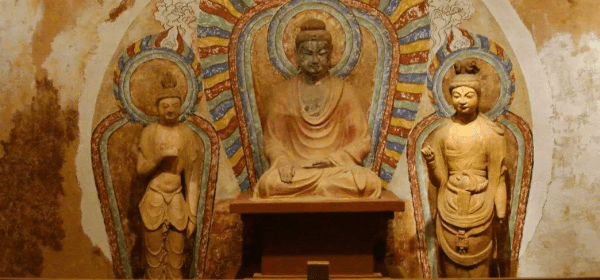
Life of the Buddha!

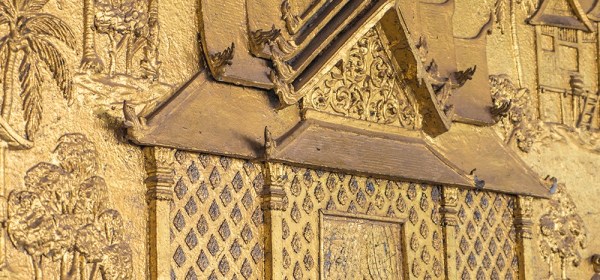
Laos: Buddhist Temple – “Golden Ground of Ram” [ວັດໃໝ່ ສຸວັນນະພູມາຣາມ – Wat Mai Suvanna Bhumi Ram]

Laos is a Socialist (Marxist-Leninist) State. Religious freedom is guaranteed as a private matter (through the separation of Temple and State) whilst Theravada Buddhism is the tradition religion of the people. Therefore, Laos may be considered a Buddhist-Socialist State – as the Buddhist Masters advocate Socialism and Dhamma in equal measure. In English, this old temple should be literally known as the “New Temple” – due to its relatively recent repair (just over 200-years) – by Royal Command. As to the Pali name – it translates as “Golden Ground of Ram” – “Ram” is an avatar of the Hindu god Vishnu. Throughout Southeast Asia and beyond, ancient Brahmanism spread far and wide from India – before the rise and spread of Buddhism. By the time Buddhism arrived in the region – Brahmanism was already in-place – with the Buddha being associated with Vishnu (even in modern India – many contemporary Hindus count the Buddha as an incarnation of Vishnu [Ram] sent to earth to encourage vegetarianism).

Buddhist Swastika

China: How to Read the Buddhist “卍” (Swastika) Symbol Currectly! (17.10.2024)

Empress Wu Zetian (武则天) of the Tang Dynasty was attracted to Buddhism very much and often invited Ch’an Masters to the palace to explain Buddhist Sutras to her. It was under the promotion of Wu Zetian that Huayan (华严) Sect became a major Buddhist school during the Tang Dynasty.

At that time, there was still no consensus on the pronunciation of “卍” within Buddhism. Some people insisted that it should be pronounced as “万” (Wan4) or “The Ten Thousand Thing” – but others opposed this interpretation – and believed it should be pronounced as “万”(mo2) or “Scorpion” – referring to an Oracle Bone Inscription which refers to a non-Chinese primitive tribe (during the Shang Dynasty) that worshipped the “Scorpion” whilst mimicking its movements in a ritualistic dance (perhaps implying the “foreignness” of India).

Musing on Transgenderism!

BMA-UK – Musings on Transgenderism! (21.5.2024)

Although the Theravada believes that the six senses must be kept clean by a continuous disassociation with the outside world to avoid regression – the Mahayana and Tantrayana both teach that once the six senses are purified by emptying the mind of greed, hatred and delusion, the mind and body remains permanently “clean” in all situations (with no regression). In other words, even by engaging in the outside world as lay-people – the six senses of those who are enlightened will never become sullied. This reality can be seen in the Vimalakirti Nirdesa Sutra and the Altar Sutra – as well as in the stories of the Mahasiddhis. Monastics can return to lay-life – but lay-people – given the right conditions, can also fully realise Enlightenment!

1 2 3 6