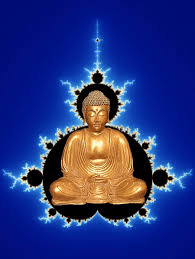
Tree of Enlightenment - Buddha Disappeared!

Perceptual Experiment: “Portrait of God” [Short Film]! (6.1.2024)

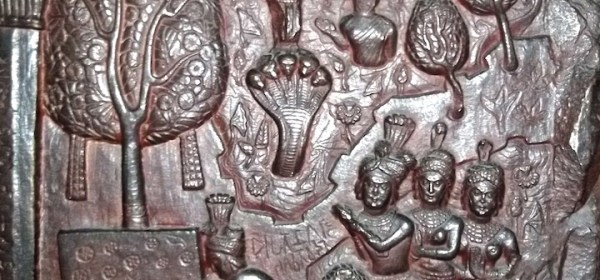
When the Buddha attained ‘Enlightenment’, the habitual karmic-power that continuously pulled together his physical and psychological existence fell away – leaving only the residual karmic-power of his present (final) bodily existence. Although the Buddha had broken the ridge-pole of continuous delusional habit – the physical body he occupied whilst attaining this position still had to be ‘lived through’ – until its biological functions naturally expired and its cohesive structure fell away. All of the material universe exists within empty space. Buddhist ‘Enlightenment’ seems to suggest a subjective appreciation of this external space and understands that all material expression exists within a continuous state of flux. As the Buddha broke-free of the human attachment to physical existence – his achievement was originally portrayed by his followers as ‘being not there’.
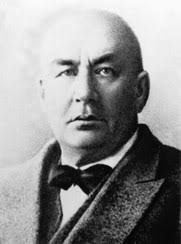
Soviet Buddhist scholar Theodore Stcherbatsky!

Buddhism: Hinayana and Mahayana Notions of Emptiness! (10.12.2014)

Through the work of Nagarjuna, the Mahayana movement developed the interpretation that physical matter is ‘empty’ of any substantiality. This is due to Nagarjuna applying his tetra lemma (catuskoti) formula to the assessment of the ‘Chain of Dependent Origination’ (Pratītyasamutpāda), and logically proving that just as the true enlightened state has no-self associated with it; then it is also equally true that physical matter has no substantiality associated with it. Everything is dependent upon everything else, conditioned by everything else, and contingent upon everything else.

Mandelbrot Buddha!

Sunyata: The Beautiful Emptiness! (9.2.2012)

‘To understand this developmental process, an assessment of ‘emptiness’ (sunyata) must be undertaken. It is clear that in early Buddhism emptiness refers to the lack of the presence of greed, hatred and delusion, as well the abandonment of the notion of a permanent self. It is an emptiness that marks the absence of delusion. Delusion is no longer present in the mind or perceived in the environment (in relation to the mind). The mind does not create the conditions that lead to the desire of external entities or attachment to those entities. It is true that no further karma is produced but that the karma relating to the world and the physical body continues until it is fully burnt off (at the point of death), and there is no more re-birth. The nirvanic state has present within it certain powers of the mind, and perfected knowledge. This concept of nirvana exists as an escape from the physical world of samsara. It is viewed very much as an antidote to the suffering experienced within ordinary life.’