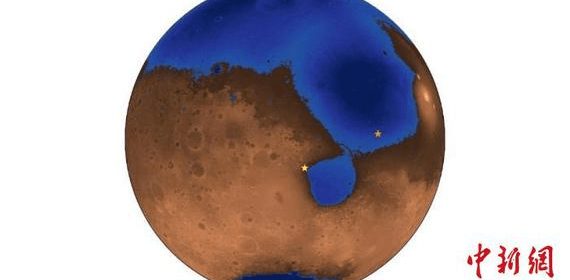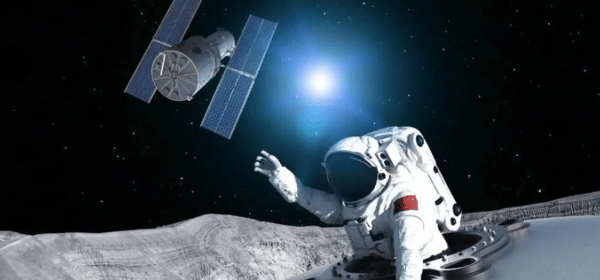
A hypothetical illustration of Mars 3.6 billion years ago.(Photo/Aerospace Information Research Institute)

China’s Mars Rover Data Suggests Existence of Ancient Oceans on Mars! (3.3.2025)

If an ocean once existed in this region, climate changes could have trapped large amounts of water in the form of subsurface ice, which holds great potential for future Mars base water resources, significantly reducing the cost of construction and maintenance.

Fang emphasized that the ancient oceanic sediments preserve records of Mars’ climatic history. Studying these sediments could help people understand how the planet transitioned from a warm, wet world to a cold, arid one. This knowledge could guide efforts to terraform Mars into a long-term sustainable human habitation, according to Fang.

Fang mentioned that Zhurong landed in the southern part of Utopia Planitia in mid-May 2021. It is equipped with a subsurface penetrating radar to explore underground structures and potential water ice deposits.

Mars Rover Beats US!

China: Socialist Space Science Builds Advanced Mars Rover! (13.2.2025)

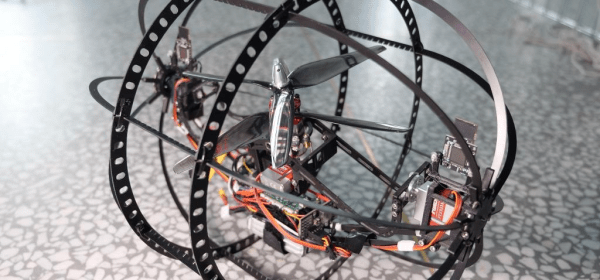
Weighing just around 300 grams — about the same as an apple — the robot can roll on the ground and take flight to pass over obstacles. It was created by a research team at the Harbin Institute of Technology (HIT). The team has developed multiple versions of the aerial/terrestrial robot, achieving an endurance time six times longer than similar-sized unmanned aerial vehicles. These robots can be used to perform tasks such as monitoring, probing, and maintenance. They come in various forms, such as two-wheeled or spherical designs. They can be adapted to different terrains, and they can also be equipped with manipulators to perform screwing or pressing actions.

Socialist Science Triumphs!

China: Socialist Light Shone on “Big Bang”! (26.1.2025)

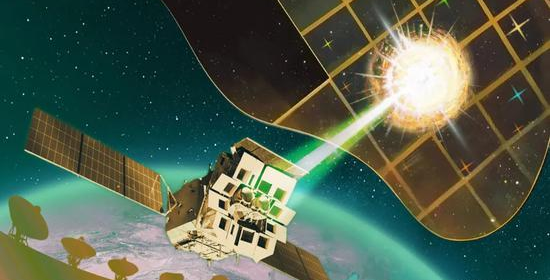
Many experts at home and abroad said that the observation results of EP240315a by the EP satellite have deepened humanity’s understanding of early universe gamma-ray bursts, offer fresh insights into the origins and evolution of the universe, Xinhua reported.

The EP mission is one of a series of space science missions led by CAS. This is an international collaboration effort, featuring contributions from the European Space Agency (ESA), the Max Planck Institute for Extra-terrestrial Physics (MPE) in Germany, and the French space agency CNES.

Launched into space in January 2024, the satellite has achieved several initial discoveries, such as an uncommon transient phenomenon, advancing understanding of the universe and extreme physical phenomena, Xinhua reported.

Magnetic Pulse - Chirp - 2025

China: Joint Research Team – Unexpected “Chirping Chorus” Detected from Outer Space! (23.1.2025)

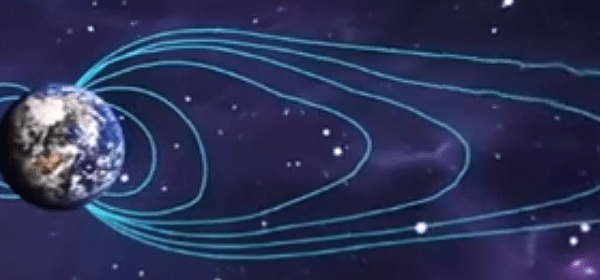
According to the research team, electromagnetic bursts play a crucial role in the formation of the Earth’s radiation belts, pulsating auroras, and the precipitation of particles into its atmosphere. Traditional views hold that chorus waves are formed in the magnetic field of a dipole of near-Earth space, where the magnetic field is similar to a large bar magnet.

The newly-found chorus waves were detected in a region where Earth’s magnetic field is stretched out, which scientists didn’t expect. They lasted about 0.1 second with a frequency of nearly 100 hertz per second, which are similar to the waves detected in near-Earth space. That raises fresh questions about how these chirping waves form.

China Manned Space Agency (CMSA)

China: Logos Unveiled for 3 “Socialist” Space Missions in 2025! (20.1.2025)

According to the CMSA, crews for the Shenzhou-20 and Shenzhou-21 missions will consist of three astronauts each. Shenzhou-20 is set to dock with the radial port of the space station’s core module, while Shenzhou-21 will dock with its front port.

The main tasks of the astronauts will include extravehicular activities, cargo outbound deliveries via the station’s cargo airlock module, and the conducting of space science experiments and technology tests.

In the second half of 2025, China plans to launch the Tianzhou-9 cargo spacecraft from the Wenchang Space Launch Site in its southern Hainan Province. This mission will deliver supplies for astronauts, propellants to ensure the space station’s operation, various types of payloads, and more.

China’s manned space station project has entered its application and development stage — with two manned spacecraft missions and one to two cargo missions planned annually.

Lunar Magnetic Field

China: Chang’e 6 Samples Shed Light on Lunar Magnetism! (23.12.2024)

They discovered that the Moon’s magnetic field may have experienced a rebound around 2.8 billion years ago, suggesting that the Moon’s generator may have been reinforced after an early sharp decline.

“The reason for this rebound could be a change in the primary energy source of the generator or a restrengthening of the initial driving mechanism,” Cai said.

“The data fill in a billion-year gap in the evolution of the lunar paleomagnetic record and provide the first paleomagnetic measurements from the lunar far side,” a reviewer for the journal Nature said. “The authors are to be congratulated on a historic study that provides a major advance in our understanding of lunar magnetism.”

The evolution history of the Moon’s magnetic field is markedly different from that of the Earth’s, the research team said.

1 4 5 6 7 8 18