TS Hermes - Tiverton Sea Cadets

Tiverton: WWI Naval Gun [Lime Kiln Road] – Playing in the 1970s Was Very Different! (5.7.2025)

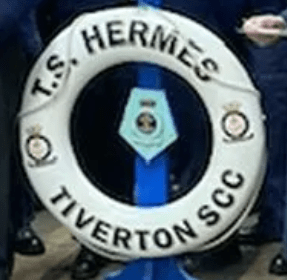
I was born in Oxford – but my parents moved to Tiverton (in East Devon) in 1970. I started school (Wilcombe) in 1972 (when 5-years old) – but changed to a school in Exeter in 1977. However, I have a memory of joining (after school) a group of classmates who “played” on a WWI Naval Gun situated on a public street (situated in Lime Kiln Road)! I have lived in Sutton (South-West Greater London) for over three-decades today – but recently – whilst picking-up my children from school in Cheam, I saw youths dressed in the uniforms of what is today termed the “Combined Cadet Force”, and the thought of myself once playing on a military gun (around 1977) bubbled-up in my mind (although publicly accessible – the gun in question was placed outside the Tiverton Sea Cadets Training Hall). In fact, after having experienced many interest things in my life (including four wonderful years based in Hereford during the 1980s), and having travelled around the world, I surprised myself with this memory and was not even sure it was real!

WWII "Drifting" Mine!

WWII: D-Day 81st Anniversary [1944-2025] – Remembering Arthur Gibson and the HMS Beaumaris Castle (FY 992) – of the “Royal Navy Patrol Service” [RNPS] ! (5.6.2025)

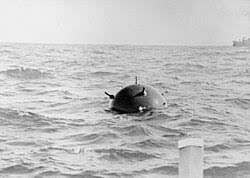
A “moored” mine (or “Naval” mine) is a single mine anchored to the seabed by a length of metal chain or rope – operating at a depth decided by the length of mooring tether. These mines were deadly as they often hid below the waterline and the line of sight – waiting for the hull of a ship to strike it in passing. A “drifting” sea mine was a device (sometimes “magnetic” but also “non-magnetic” or “contact” detonated) that floated about on the surface of the sea according to the tide. These mines could travel hundreds of miles and bob and weave their way up estuaries and into harbours. From what I gather according to the stories I was told, it was these “drifting” mines my grandfather was responsible for destroying. Obviously, a “U-Boat” was a Nazi German “Unterseeboot” or “Under Water Boat” – whilst an E-Boat referred to a Nazi German fast-attack “Enemy Boat” – usually carrying torpedoes. 

Arthur Gibson - RNPS

WWII: 1939 Founding of the Royal Navy Patrol Service [RNPS]! (26.5.2025)

I think the Royal Navy and RNPS acted in parallel around the UK – as I remember two Royal Navy ships working at exactly the same time during WWII – both holding exactly the same name of “HMS Beaumaris Castle” (but with different registration numbers). The point was that the war with Nazi Germany caught the UK government by surprise and there was not enough time (nor was there the resources) for the government to build proper military-grade mine-sweepers. Fishing vessels were acquired and thousands of volunteers called for to immediately defend the UK coastline. Those men who volunteered were permitted to “choose” to serve in the RNPS – rather than being placed wherever the government most needed men. The above extract sheds light on how the RNPS was first formed in 1939.

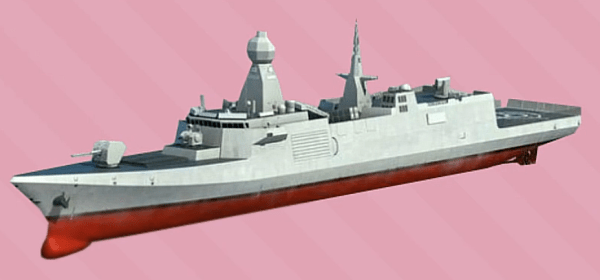
PLA Navy Type 054B frigate

China: PLA Navy Modernises for “Self-Defence” War! (23.1.2025)

Xiao Liang, a senior hardware researcher in the nation’s shipbuilding industry, said the Type 054B is the largest class of frigate the Navy has ever used and is almost as big as some of China’s old-type destroyers.

“Its large size allows for carrying more munitions and fuel, and also means this new class has bigger potential for further upgrade,” Xiao said. “Its propulsion system enables it to sail farther than other Chinese frigates. Another remarkable point is the new type’s radar system, which, without any exaggeration, makes previous radars of its kind look like antiques.

“Compared with previous frigate models in China that are mainly tasked with anti-submarine operations, the Type 054B is also capable of performing fleet air-defense missions,” he added.

Meanwhile, the larger air-service zone means the new frigate can bring a bigger helicopter such as the Z-20, and that will give the ship a better capability to detect, track and hit hostile submarines, according to Xiao.

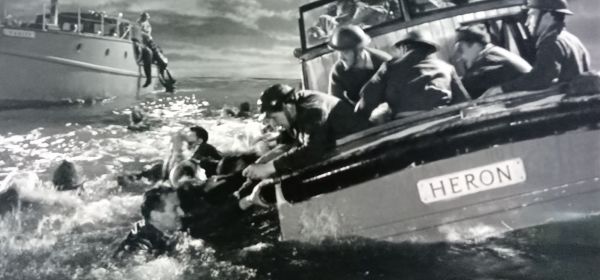
British Newsreel - 1940 - Dunkirk

Dunkirk: Remembering the British Army Rear-Guard! (25.2.2024)

This is a section of a 1940 British Newsreel lamenting the crushing defeat we British – as a nation – suffered at Dunkirk at the hands of the rampant Nazi Germans! Not only did a flotilla of around 800 civilian boats volunteer to sail (unarmed) from the UK to Dunkirk to get as many of the 400,000 stranded British and French soldiers off the beaches – but a very professional British Army Rear-Guard was ordered to hold to the last round and fight to the last man! If not for their sacrifice, the small boats (and the ships of the Royal Navy) could not have succeeded in their task of saving the bulk of the British Army so that the UK could live to fight another day!

ALEXANDER WERTH [PART III]: RUSSIAN ARCTIC CONVOY PQ-16 – May in MURMANSK (USSR) – MERCHANT NAVY SHIP “EMPIRE BAFFIN”! (2.9.2023)

This content discusses a chapter from Alexander Werth’s book, ‘The Year of Stalingrad,’ which provides an insightful portrayal of WWII events concerning the Soviet Union. It highlights Werth’s journey in the PQ-16 convoy from Murmansk to Moscow, offering readers an in-depth view of the war from an ordinary Soviet citizen’s perspective. Despite his work being overlooked due to his left-wing views and refusal to entertain anti-Soviet propaganda during the Cold War, the narrative praises his bravery and sincerity.

1 2 3 4