Nagarjuna – who read virtually all the known Buddhist sutras of his time, deduced that the Buddha was teaching from this philosophical position – which by necessity – has no position.
Tag: reality
Being ‘Aware’ of Awareness
Within his teaching on the Four Noble Truths, the Buddha refers to this habit as ‘mental formations, or ‘thought constructs’.
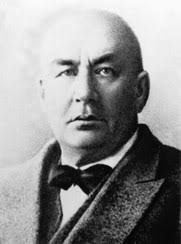
How a Plumber’s Ego Shaped the Western View of Tibet
This pretentious drivel is supposedly from an ‘ordained’ and highly ‘evolved’ Tibetan Lama who has taken a vow not to handle or possess money of any kind (i.e. gold or silver, etc.). The tone of this piece is highly defensive, whilst making (what is in reality), a call for more funds. Hoskin’s attitude is abusive to his own readership – who have after, all already purchased his books – as he attempts in a disjointed manner, to assert an egotistical control over their habit of daring to contact the person who has written such an impressive and nonsensical myth! In this page and a quarter of pure vitriol, Hoskin reveals the true nature of his thoroughly unevolved, selfish, and poorly educated psyche.
Buddhism: Hinayana and Mahayana Notions of Emptiness! (10.12.2014)
Through the work of Nagarjuna, the Mahayana movement developed the interpretation that physical matter is ‘empty’ of any substantiality. This is due to Nagarjuna applying his tetra lemma (catuskoti) formula to the assessment of the ‘Chain of Dependent Origination’ (Pratītyasamutpāda), and logically proving that just as the true enlightened state has no-self associated with it; then it is also equally true that physical matter has no substantiality associated with it. Everything is dependent upon everything else, conditioned by everything else, and contingent upon everything else.
Ch’an Buddhist Practice: Giving Up Sleep
Many Ch’an masters, such as Ben Huan and Fo Yuan, talk of the inherent dangers for the mind whilst in the sleeping state. This is because all kinds of hellish states can be accessed when the body is dormant, but the mind remains active.
Working With The Mind.
‘Even this material plane with its apparent solidity and predictable behaviour is a manifestation of the mind itself. It is not an illusion, nor is it real. Language and concept break down when the mind reaches beyond its innate conditioning. What is seen (or perceived) is reported through the limitation of human language, which is itself the product of living within a material world. It is not designed to formulate concepts that lay beyond its normal cognitive reach. This explains why advanced science, insightful philosophy and transcendental religion appear to be expressing truth in a nonsense language that appears incomplete and often irrational. To explain that which lies just beyond the senses stretches conventional language to its limit. Logic dictates that such descriptions can not be soundly provided and that to stay true to the originating perception, the descriptions provided must be open ended – as if the open end in the logic is in fact a map pointing the way toward the truth. The material plane assumes a completeness and totality for itself that is blatantly not true. The logic based upon the observation and measurement of matter, likewise also assumes a completeness that is incorrect from the position of the multiverse. Of course, closed systems of logic are complete within their respective operational boundaries, but this completeness is highly localised and not indicative in any way of a possession of higher knowledge or wisdom. The use of enclosed (local) logic systems to explain the entirety of what exists outside of itself – is itself an error in philosophical speculation. Rigid thought patterns are reflective of the rigid material forms that they measure. The multiverse is neither rigid nor flexible and it can not be assessed or limited to a set of binary opposites, or conceptual dichotomies.’
 SANGHA KOMMUNE (SSR)