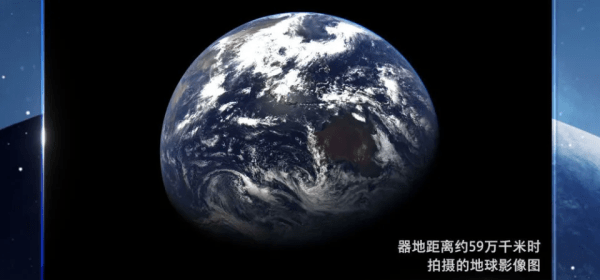
Images of Earth and the moon captured by the Tianwen 2 robotic probe are released on Tuesday by the China National Space Administration.

China: Tianwen 2 Sends Back Images of Earth & Moon! (2.7.2025)

The samples will be distributed among scientists, who will examine their physical properties, chemical and mineralogical content and isotopic composition, contributing to studies on the formation and evolution of asteroids and the early solar system.

Delivering the samples to Earth will not be the end of the mission. The Tianwen 2 spacecraft will then enter the second phase of its journey, flying toward a main-belt comet called 311P to conduct a remote-sensing survey and transmit the data back to Earth for scientific research, according to the CNSA.

The whole mission is expected to yield ground-breaking discoveries and expand the understanding of Earth and small celestial bodies inside the solar system, scientists said.
Socialist China - Space Science!

China: Lunar Sample Reveals Far-Side Drier Than Near Side! (11.4.2025)

For nearly 20 years, there has been a debate over whether the water content in the Moon’s mantle, the middle layer between its surface and core, is abundant or scarce, while all published estimates were derived from near-side samples.

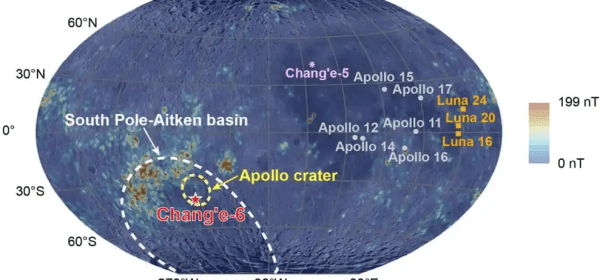
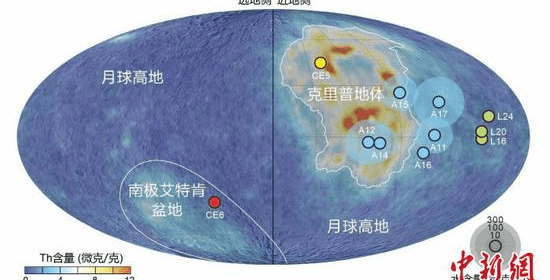
China’s Chang’e-6 lunar probe retrieved the first-ever lunar far-side samples from the Apollo crater within the South Pole–Aitken Basin, providing the first opportunity to determine the water content of the lunar mantle in this region.

The study revealed that a unique volcanic event dating back 2.8 billion years had not been observed in previous samples obtained from the near side.

Mars Rover Beats US!

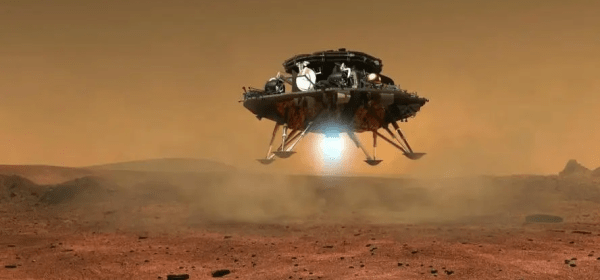
China: Socialist Space Science Builds Advanced Mars Rover! (13.2.2025)

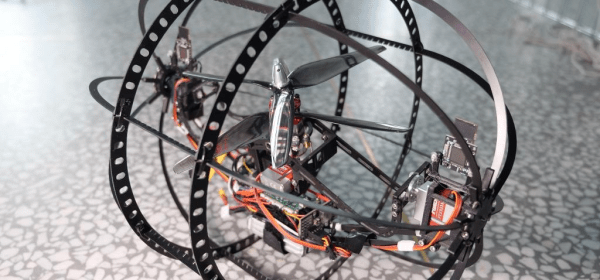
Weighing just around 300 grams — about the same as an apple — the robot can roll on the ground and take flight to pass over obstacles. It was created by a research team at the Harbin Institute of Technology (HIT). The team has developed multiple versions of the aerial/terrestrial robot, achieving an endurance time six times longer than similar-sized unmanned aerial vehicles. These robots can be used to perform tasks such as monitoring, probing, and maintenance. They come in various forms, such as two-wheeled or spherical designs. They can be adapted to different terrains, and they can also be equipped with manipulators to perform screwing or pressing actions.

Lunar Magnetic Field

China: Chang’e 6 Samples Shed Light on Lunar Magnetism! (23.12.2024)

They discovered that the Moon’s magnetic field may have experienced a rebound around 2.8 billion years ago, suggesting that the Moon’s generator may have been reinforced after an early sharp decline.

“The reason for this rebound could be a change in the primary energy source of the generator or a restrengthening of the initial driving mechanism,” Cai said.

“The data fill in a billion-year gap in the evolution of the lunar paleomagnetic record and provide the first paleomagnetic measurements from the lunar far side,” a reviewer for the journal Nature said. “The authors are to be congratulated on a historic study that provides a major advance in our understanding of lunar magnetism.”

The evolution history of the Moon’s magnetic field is markedly different from that of the Earth’s, the research team said.

Socialist Science Leading Space Research!

China: Socialist Space Science Development Programme for 2024-2050! (15.10.2024)

The programme also outlines a roadmap for the development of space science in China through 2050.

In the first phase, leading up to 2027, China will focus on the space station operation, implementing the manned lunar exploration project, and the fourth phase of its lunar exploration programme as well as the planetary exploration project. Five to eight space science satellite missions will be approved during the period, according to the programme.

The international lunar research station initiated by China will be constructed during the second phase from 2028 to 2035, and approximately 15 scientific satellite missions will be carried out during this period.

In the third phase from 2036 to 2050, China will launch over 30 space science missions.

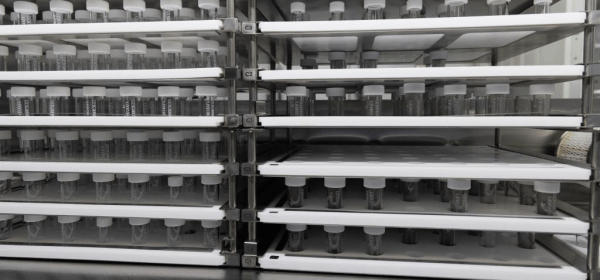
This photo shows lunar samples retrieved by the Chang'e-6 mission at the lunar sample laboratory in the National Astronomical Observatories of the Chinese Academy of Sciences (CAS) in Beijing, capital of China, Sept. 24, 2024. (Xinhua/Jin Liwang)

China: Research on Chang’e-6 [Dark-Side] Lunar Samples Underway! (11.10.2024)

A research paper published in September on the lunar samples brought back by the Chang’e-6 mission says that the Chang’e-6 samples exhibit “distinct characteristics” compared to previously obtained lunar samples.

The Chang’e-6 probe was launched from China on May 3, 2024. On June 25, its returner made a landing in north China, bringing back 1,935.3 grams of samples from the far side of the moon. (Xinhua/Jin Liwang)

1 2