Plato seems to be the origin of Western mysticism (Phraedo) and (through his lineage disciple Aristotle who taught Alexander the Great) also the Western scientific
Tag: Plotinus
Genuine Contemplation
‘More than other believers, the contemplative ought to be an “expert in atheism.” Does he believe? Perhaps, yet without believing, it seems to him. He
Philosophy: Three Theistic Terms
‘Theogony’ is a poem written by the ancient Greek poet Hesiod (8th-7th Centuries BCE), which describes the origins of the ancient Greek gods.This body of knowledge may be considered augmented by the myths and legends as recorded by Homer.
Email: Buddha, Nagarjuna, Plotinus and the World of Matter (6.9.2017)
Dear N Thank you for your very interesting Plotinus quotation and Nagarjuna-related question. The tetralemma of the Indian Buddhist monk Nagarjuna states: 1) All exists.

Plotinus and his Assessment and Definition of Matter
Whatever the case, I suspect Plotinus fully understood that the world of matter was primary for biological life, and that through this biological existence, the rarefied state of conscious awareness that Plotinus undoubtedly experienced, could only be realised if the physical body (and the mind it contains) was trained in the right way.
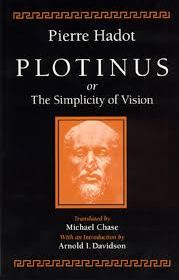
How Plotinus Makes Use of the Material World
Therefore, it must be truthfully stated (as Plotinus does), that a continuously changing beauty exists beyond any concepts of ‘static’ beauty, and that such a beauty with regards to that which lives is ‘beautiful’, but that even that which is ‘dead’ is also ‘beautiful’ when viewed in a certain way. Although Plotinus advocates (for a time) a ruthlessly ‘looking within’, he does not permanently ‘reject’ the physical world he strives to ‘look beyond’.
 SANGHA KOMMUNE (SSR)