Dark Side Moon

PRC: Lunar Samples Indicate Previous Magma Activity! (19.11.2024)

am lunar soils.

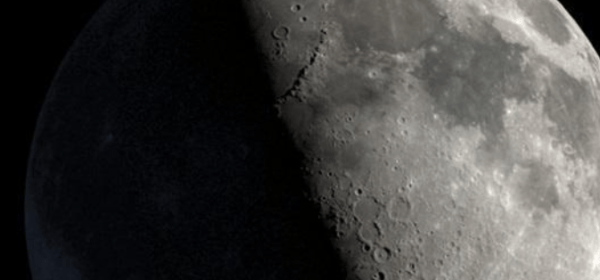
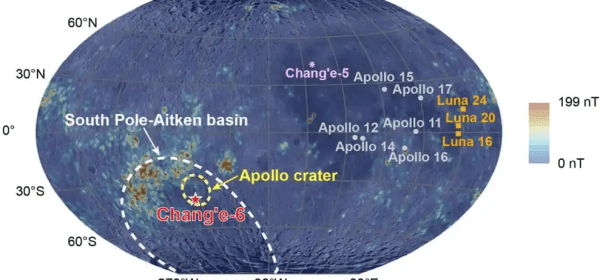
The study published on Science, conducted by a team led by Xu Yigang, an academician of the CAS and a researcher at the Guangzhou Institute of Geochemistry of the CAS, also confirmed magma activity on the lunar far side 2.8 billion years ago.

The study also indicates that the eruption of lunar mare basalt is influenced by the internal composition of the moon, explaining why the South Pole-Aitken Basin on the lunar far side lacks abundant volcanic activity.

“These samples are the first to be collected on the lunar far side so it provided a unique view to the moon’s global geological history. The results are novel and are deserving of publication in Science. They will be of interest to a broad readership,” Science reviewer Katherine Joy said.

PRC Reusable Space Shuttle!

China: Greater Efficiency Space Shuttle! (13.11.2024)

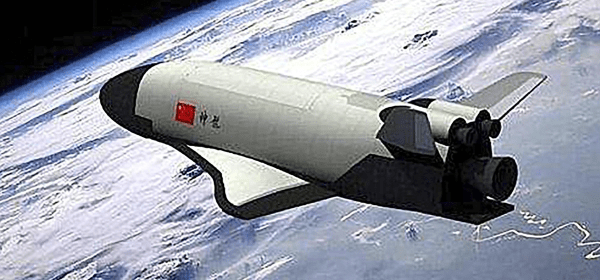
A model of the spacecraft will be displayed at the 15th China International Aviation and Aerospace Exhibition, which opens on Tuesday in Zhuhai and runs through Sunday.

Currently, China has only one model of cargo spaceship, Tianzhou, which is a product of the China Academy of Space Technology in Beijing. So far, seven Tianzhou vessels have been launched and six of them were used to transport supplies to the Tiangong space station.

Orbiting Earth at a distance of about 400 kilometres, the Chinese space station has three permanent parts — a core module and two science capsules — and is regularly connected to several visiting crew and cargo spaceships.

It has been manned by eight Chinese crews, including the incumbent Shenzhou XIX team. All of the crews’ living and work necessities need to be transported by cargo vessels.

Lunar Rover Premised on Ancient Chariot!

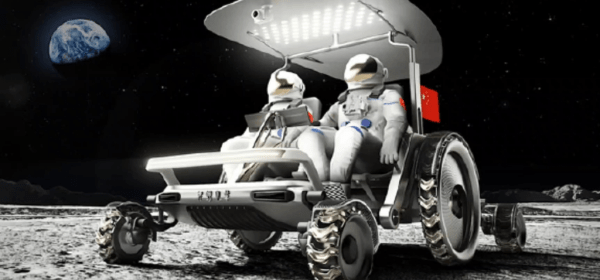
China: Crewed Lunar Rover Enters Initial Prototype Research & Development Stage! (7.11.2024)

Given that they will not only perform space station missions but also future manned lunar landing tasks, the training curriculum has been designed to focus on essential skills such as living and working in a weightless environment and maintaining health, as well as specialized skills like carrying out extravehicular activities, equipment maintenance and space science experiments. 

Furthermore, the training aims to enhance taikonauts’ capabilities for future manned lunar missions, including operating spacecraft, driving lunar rovers, identifying celestial bodies, conducting geological surveys and transitioning from weightlessness in space to walking under load on the lunar surface, the agency said.

PRC Landing on Moon!

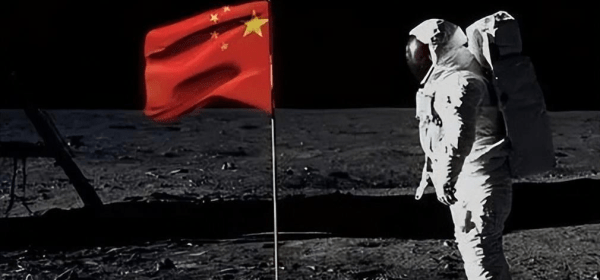
China: Manned Lunar Landing Programme Fully Advanced! (29.10.2024)

The fourth batch of astronauts started training in August, and has so far concentrated on the fundamental theories of manned space engineering and targeted physical training, as well as on-site learning, symposiums and lectures. Subsequently, they will proceed to engage in training tasks of more than 200 specific subjects under eight categories.

The training will also cover a set of skills tailored for life and work on the country’s space station, as well as tasks of extravehicular activities, maintenance and repairs of equipment, and space science experiments, according to Lin.

Now, the two payload specialists from Hong Kong and Macao have become an integral part of the team, and they have exhibited a strong passion for training and maintained optimal physical and mental well-being, said Lin.

The pair of candidates have also received Mandarin courses, and a personalized meal plan has been created to accommodate their dietary preferences, according to Lin.

3-D Printer Brick - Luna Base!

China: 3-D Printer “Bricks” Developed for Future Moon-Base Construction! (21.10.2024)

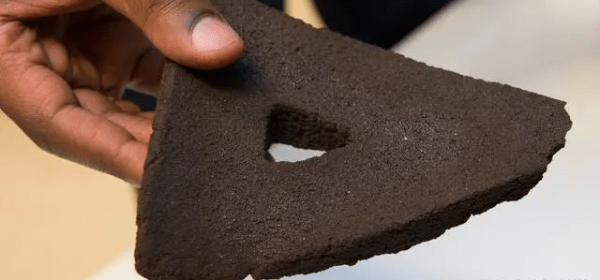
According to China Central Television, the lunar bricks will be sent to China’s space station aboard the Tianzhou-8 cargo spacecraft to verify their mechanical and thermal performance, as well as their ability to withstand cosmic radiation. The first lunar brick is expected to return to Earth by the end of 2025.

China unveiled a national mid-term to long-term development program for space science on Tuesday, outlining a roadmap for the development of space science in China through 2050. The international lunar research station, which was initiated by China, will be constructed during the program’s second phase from 2028 to 2035.

Socialist Science Leading Space Research!

China: Socialist Space Science Development Programme for 2024-2050! (15.10.2024)

The programme also outlines a roadmap for the development of space science in China through 2050.

In the first phase, leading up to 2027, China will focus on the space station operation, implementing the manned lunar exploration project, and the fourth phase of its lunar exploration programme as well as the planetary exploration project. Five to eight space science satellite missions will be approved during the period, according to the programme.

The international lunar research station initiated by China will be constructed during the second phase from 2028 to 2035, and approximately 15 scientific satellite missions will be carried out during this period.

In the third phase from 2036 to 2050, China will launch over 30 space science missions.

1 2 3 4 5 6 7