Stilling the mind is the essence of Chinese Ch’an Buddhist practice. Less words – more tranquillity! Peace and love to all!
Proletariat Blogging in the Heart of (UK) Predatory Capitalism! Exploring the Interface between Matter and Perception, Chinese Buddhism, Daoism, Hakka Ethnography, and All Aspects of Radical Politics, History, Psychology and Philosophy – 全世界无产者联合起来!
Stilling the mind is the essence of Chinese Ch’an Buddhist practice. Less words – more tranquillity! Peace and love to all!
Some end their days inflated figures – like Henry VIII (but not Puyi).
Hesitant in handling so much amassed power.
Perhaps it is a seasonal thing.
The mood will change with the tilt of the breeze, or the sweet scent on the air.
Wise words have become ever more poignant.
They slip with a greater ease into my consciousness.
The first was in 1992 – purchased from a local WH Smiths in a place called ‘Tiverton’ in East Devon (I believe during the time that my Irish grandmother – Gladys Kilmurray – was very ill and when her British daughter and American grandchildren were visiting the UK from Seattle, US) – whilst the second was acquired from The Works in Torquay High Street in 2007 (five-years after my family had uprooted and migrated to the South Coast). Both are superb editions with the first being easy to carry around whilst the latter is a very large, impressive and “Grand” Limited Library Edition – designed as a “Reference” copy only NOT to be borrowed or moved about (it is far too heavy for that)! The first is compact – whilst the second is lavishly illustrated and easy to read.
I suspect there must be a constructive “rejection”. What comes next is not written in stone. What comes next is unwritten. It could be that an intelligent worker – that is an oppressed entity who can read and write – can infiltrate the culture of the oppressor and work to bring it down from within. This is an important observation as the “lessening” of oppression in one part of society – may well relieve the burden of suffering inflicted upon oppressed individuals somewhere else within society. As the choice of dialectical development is essentially infinite, in theory there is no limit to the objectives that can be achieved. Things are not simple – but neither should there be a “fear” that limits expression.
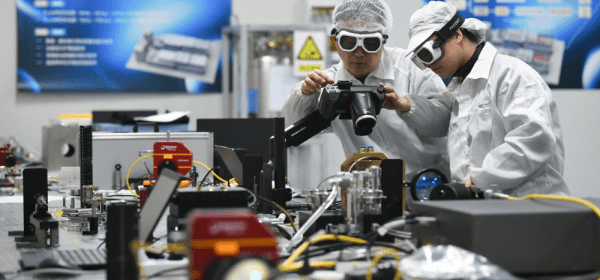
He expressed great satisfaction at the fact that the factory has inspired great enthusiasm for struggle by briskly conducting dynamic mass movements including technological innovation movement and effectively organizing Socialist emulations among workshops, work-teams and operators, giving priority to ideological education, and that the employees are keeping their workplaces clean and tidy with warm love for their factory and creating a highly cultured labour and production environment.
When the Buddha attained ‘Enlightenment’, the habitual karmic-power that continuously pulled together his physical and psychological existence fell away – leaving only the residual karmic-power of his present (final) bodily existence. Although the Buddha had broken the ridge-pole of continuous delusional habit – the physical body he occupied whilst attaining this position still had to be ‘lived through’ – until its biological functions naturally expired and its cohesive structure fell away. All of the material universe exists within empty space. Buddhist ‘Enlightenment’ seems to suggest a subjective appreciation of this external space and understands that all material expression exists within a continuous state of flux. As the Buddha broke-free of the human attachment to physical existence – his achievement was originally portrayed by his followers as ‘being not there’.