Superpower General Command Broadcasting (大国将令视频) – Sichuan (Translated By Adrian Chan-Wyles PhD) 08-11-2024 Translator’s Note: This Chinese-language article was penned during November 2024 – as
Proletariat Blogging in the Heart of (UK) Predatory Capitalism! Exploring the Interface between Matter and Perception, Chinese Buddhism, Daoism, Hakka Ethnography, and All Aspects of Radical Politics, History, Psychology and Philosophy – 全世界无产者联合起来!
Superpower General Command Broadcasting (大国将令视频) – Sichuan (Translated By Adrian Chan-Wyles PhD) 08-11-2024 Translator’s Note: This Chinese-language article was penned during November 2024 – as
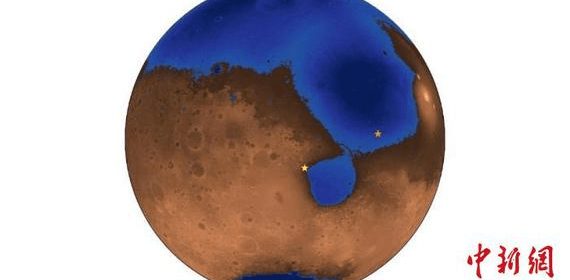
If an ocean once existed in this region, climate changes could have trapped large amounts of water in the form of subsurface ice, which holds great potential for future Mars base water resources, significantly reducing the cost of construction and maintenance.
Fang emphasized that the ancient oceanic sediments preserve records of Mars’ climatic history. Studying these sediments could help people understand how the planet transitioned from a warm, wet world to a cold, arid one. This knowledge could guide efforts to terraform Mars into a long-term sustainable human habitation, according to Fang.
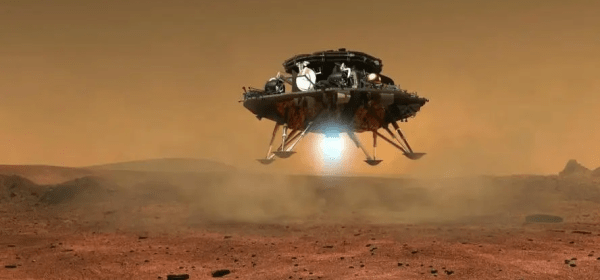
Fang mentioned that Zhurong landed in the southern part of Utopia Planitia in mid-May 2021. It is equipped with a subsurface penetrating radar to explore underground structures and potential water ice deposits.
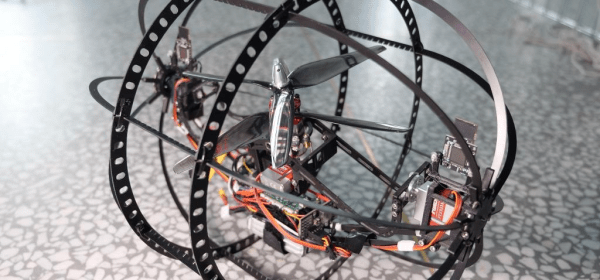
Weighing just around 300 grams — about the same as an apple — the robot can roll on the ground and take flight to pass over obstacles. It was created by a research team at the Harbin Institute of Technology (HIT). The team has developed multiple versions of the aerial/terrestrial robot, achieving an endurance time six times longer than similar-sized unmanned aerial vehicles. These robots can be used to perform tasks such as monitoring, probing, and maintenance. They come in various forms, such as two-wheeled or spherical designs. They can be adapted to different terrains, and they can also be equipped with manipulators to perform screwing or pressing actions.
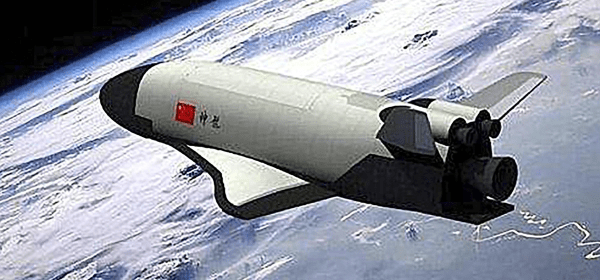
A model of the spacecraft will be displayed at the 15th China International Aviation and Aerospace Exhibition, which opens on Tuesday in Zhuhai and runs through Sunday.
Currently, China has only one model of cargo spaceship, Tianzhou, which is a product of the China Academy of Space Technology in Beijing. So far, seven Tianzhou vessels have been launched and six of them were used to transport supplies to the Tiangong space station.
Orbiting Earth at a distance of about 400 kilometres, the Chinese space station has three permanent parts — a core module and two science capsules — and is regularly connected to several visiting crew and cargo spaceships.
It has been manned by eight Chinese crews, including the incumbent Shenzhou XIX team. All of the crews’ living and work necessities need to be transported by cargo vessels.
The programme also outlines a roadmap for the development of space science in China through 2050.
In the first phase, leading up to 2027, China will focus on the space station operation, implementing the manned lunar exploration project, and the fourth phase of its lunar exploration programme as well as the planetary exploration project. Five to eight space science satellite missions will be approved during the period, according to the programme.
The international lunar research station initiated by China will be constructed during the second phase from 2028 to 2035, and approximately 15 scientific satellite missions will be carried out during this period.
In the third phase from 2036 to 2050, China will launch over 30 space science missions.
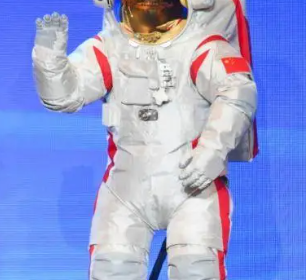
According to the CMSA, spacesuits are designed for exposure to the harsh conditions of space, including vacuum, microgravity, radiation, and extreme temperatures, allowing for greater lower body mobility of astronauts to walk, climb, and conduct scientific activities on the moon’s surface.
Research and development of the spacesuit began in 2020, inspired by traditional Chinese culture.
The red decorative bands on the arms and legs were designed to resemble flowing “Feitian” ribbons — meaning flying deity in traditional Chinese culture. Its combination with the suit symbolizes traditional Chinese philosophy of harmonizing strength and softness. And the leg bands are shaped like the exhaust flames of a rocket, conveying the dynamic energy of space exploration.
 SANGHA KOMMUNE (SSR)