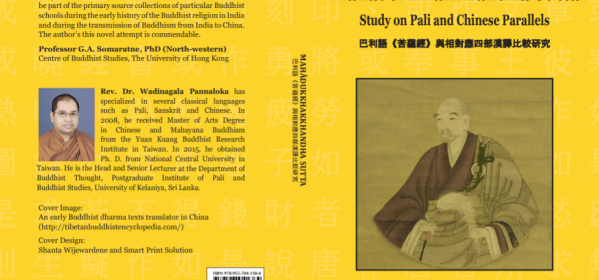
Dear Venerable Sir I have read your kindly attached book with considerable interest . As a Chinese Buddhist who has also studied (and benefited immensely from) the
Proletariat Blogging in the Heart of (UK) Predatory Capitalism! Exploring the Interface between Matter and Perception, Chinese Buddhism, Daoism, Hakka Ethnography, and All Aspects of Radical Politics, History, Psychology and Philosophy – 全世界无产者联合起来!
Dear Venerable Sir I have read your kindly attached book with considerable interest . As a Chinese Buddhist who has also studied (and benefited immensely from) the

The interior of the brain (as the ‘mind’) is infinite in its ability to imagine, but none of what it imagines is a) real, or
The Theravada School is one tradition of at least eighteen lineages that developed from the teachings of the single Buddha. Each of these schools differed

There are curious similarities between certain aspects of Buddhist and Christian teaching, this fact is beyond a doubt, but as to whether this constitutes a direct developmental ‘influence’ between the earlier Buddhism upon the latter Christianity is open to debate. Certainly

As the Mahayana Buddhist tradition adheres to the Buddha’s teaching of ‘anatman’, or ‘non-self’, this term cannot be used to refer to a permanent self, or ‘soul’. T
Dear N Thank you for your very interesting Plotinus quotation and Nagarjuna-related question. The tetralemma of the Indian Buddhist monk Nagarjuna states: 1) All exists.

