Lamprey Brain Cell Evolution

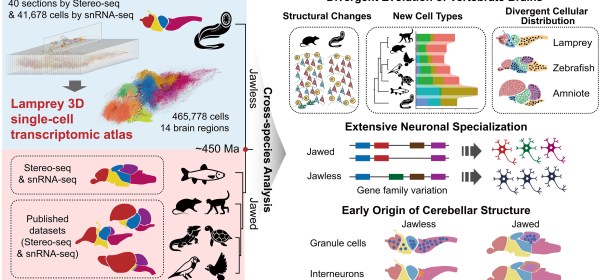
China: Scientists Reconstruct “Evolutionary History” of Vertebrate Brain! (5.11.2026)

Futurism requires the development of a) technology (which can see more), and b) improved methodology used to assess the increased and improved data-stream. During the 1850-1860s, British scientists possessed around “six” dinosaur fossils recreated in concrete to be display in the Hyde Park Crystal Palace Exhibition of 1851 (infact, these concrete models were moved to a different part of London soon after – and are still viewable in Sydenham Hill in South London – an area now known as “Crystal Palace”). The point is that no one at the time understood what these creatures were – or that they lived millions of years a part in time. Humanity had discovered these remains – but lacked the knowledge and understanding to contextualise their existence. Today, human understanding has progressed incredibly and the knowledge-base is incomparable. Futurism stresses that our understanding in the present moment is deficiient and incompleye – and that we must strive to always improve our understanding.
Human Brain Folds PRC 2026

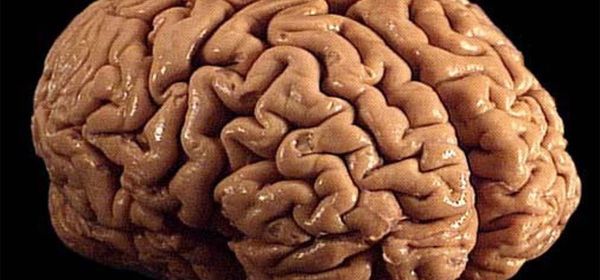
China: Scientists reveal mechanism behind evolution of brain folds regulated by ancient gene! (11.10.2026)

However, a research team led by Shi Lei, a researcher from the Kunming Institute of Zoology under the Chinese Academy of Sciences, proposed an alternative possibility: certain ancient and highly conserved genes could also play a key role in human brain evolution by reshaping their expression levels through changes in regulatory elements.

The team compared transcriptomic data from different layers of the embryonic cerebral cortex of mice, tree shrews, marmosets, macaques and humans. They found that an ancient gene called “CCNB1IP1” was already expressed in the brain of the tree shrew, a close relative of primates, long before primates emerged but at relatively low expression levels.

The team further discovered that during the following course of evolution, the expression level of this ancient gene showed a clear stepwise increase among tree shrews, marmosets, macaques and humans, reaching its highest level in the human brain.