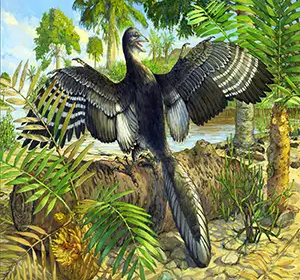
Illustration showing Archaeopteryx in life, including its tertial feathers that would have helped it fly. Credit: Michael Rothman. Click image to enlarge.

US: Ongoing Analysis of – Archaeopteryx Fossil – Continues to Proves Darwin Right! (21.3.2026)

Differences in modern birds

Modern birds evolved shorter upper arm bones and specialized tertial feathers to close this gap.

Remarkably, the Chicago specimen of Archaeopteryx shows it had long tertial feathers too – something unseen in its flightless dinosaur relatives.

“Our specimen is the first Archaeopteryx that was preserved and prepared in such a way that we can see its long tertial feathers,” she noted.

These feathers, absent in closely related non-avian dinosaurs, suggest those creatures couldn’t fly.

“That tells us… Archaeopteryx could,” O’Connor added. “This also adds to evidence that suggests dinosaurs evolved flight more than once – which I think is super exciting.”
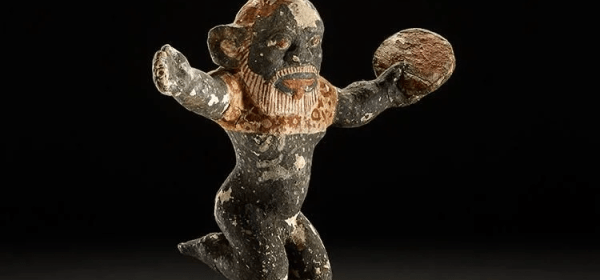
Disability in Ancient Egypt!

Disability History Month: British Museum – Eight Histories of Disabled People in Ancient Egypt! (18.12.2024)

Disabled people have always been present and active in society. Many specialists and experts around the world have started to investigate representations and lived experiences of disability and care in the past through archaeology and museum collections. The objects and remains highlighted here demonstrate some of the stories we are uncovering and hint at the discoveries that might be made in the future. We hope that these stories will demonstrate to everyone that disabled people have always existed and been part of the story of humanity, and empower disabled people to see themselves in history, and to continue making it, thousands of years into the future.

Sinophilia…

China calls.  Hormones roll.  Jet-black hair…  Pearl-white teeth.  Heart open wide.  Minds connect,  Hands entwine…  Lips embrace.  Chinese women.  Sometimes men,  Why does this happen…  Again, and again.