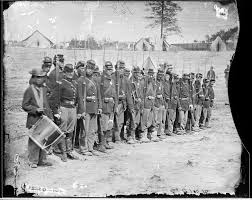
Possibly a a Photograph of the "Philadelphia Greys"

CSA: General Robert E Lee Sues for “Peace” [1863] – Pennsylvanian “Minutemen” Non-Existent! (17.3.2025)

This reflected a remarkable situation. A Confederate Army was riding rampant through the Pennsylvanian countryside – the State within which Washington DC is situated – and yet “no one” amongst the young, elderly, disabled or wounded men (considered medically “unfit” to join the Regular Army due to ill-health or age) were prepared to defend the Union. Within the city of Philadelphia, 8,000 men of the already existing “Philadelphia Greys” bravely volunteered to march to the front in defence of the Union. Due to the general lack of volunteers from the ordinary population – the city of New York sent 12,000 of its own existing Militiamen to supplement the regular Union Army. How brave these men were! Militiamen are often called “Sunday Soldiers” – as they are working men, fathers and patriarchs who live in society, work and look after their families. They come together once a week, once a month, or just a few times a year to compare notes, fire their weapons, and discuss homestead self-defence. They are not frontline soldiers. Of course, Confederate citizens showed the same extent of bravery when the time came. 
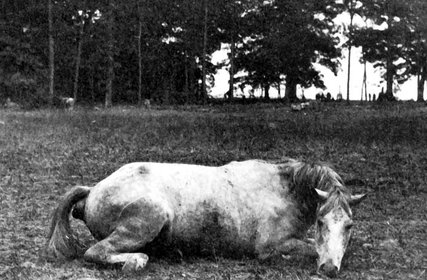
Library of Congress“Dead Horse of Confederate Colonel; both killed at Battle of Antietam,” by Alexander Gardner

CSA: Piles of Thread-Bare Confederates at Antietam [Sharpsburg] – Notes on Their Sacrifice! (31.1.2025)

The Union Army paid the farmer $1 per dead Confederate body and the farmer made $60 out of the deal. He dug a new well in a different place for the cost of $2 – making a wartime profit of $58. No one knows the names of these Confederate soldiers – and if it was not for a report being made by the Union soldiers concerned – no one would know about these men today. Of course, there was great bravery on both sides – but the spin placed on the war by the winners has skewed how the Confederacy is viewed today. These Confederate men (and boys) advanced into the Union fire with the utmost discipline and determination. They believed 100% in their cause – which was for the freedom of their individual countries (termed “States”). At the time, this war was not only about slavery – but has been made ONLY about slavery since 1865. Many believed the federalisation of the United States was a betrayal of the 1776 War of Independence – and nothing short of a great evil!

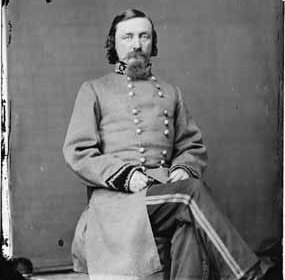
George E Pickett CSA

Confederate General – George E Pickett [1825-1875] – Married a Native American Woman! (17.12.2024)

ostensibly to fight Native American Indians. By this time, George Pickett was already a widower – his first wife having died in childbirth when he was stationed in Texas. He was stationed at Fort Bellingham when, in 1857, he married a “royal” Native American “Haida” (teenage) woman. Such a mixed-race union was forbidden under the laws of Washington Territory – with the marriage ritual probably being Native American. Although no photographs of “Morning Mist” are known to exist – she did leave a Chinese Tea Chest to her son – James Tilton Pickett. When “Morning Mist” died – George Pickett ensured his wife was the first “indigenous” woman to be buried in a Cemetery designated for “White” Christian people only. This which would have caused a considerable public outcry at the time. The grave of “Morning Mist” has been lost to time.

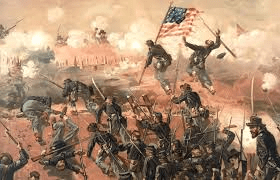
Private Thomas J Higgins - Union Flag-Bearer - Vicksburg (1863)

Email: Vicksburg – The Bravery of Private Thomas J Higgins (1831-1917) – Union Flag-Bearer! (22.10.2024)

This immense fire-power (in a confined space) made a killing field of the redoubt. Those Union attackers that managed to survive the attack across open-ground had to climb a 18-foot breastwork (including trench) before even getting to grips with the defenders – who simply stuck the muskets out of fire-holes and opened-fire at point-blank range! On top of this, Confederate “Grenadiers” lobbed cannon-balls with five-second fuses into the mass of attacking enemy troops. Needless to say, bravery has its limit, and many Union soldiers broke-off the attack and retreated back to their lines – usually minus copious numbers of their friends and colleagues. Meanwhile, Confederate casualties were minimal.

1 2