Market Overton - 17th Century Window!

Market Overton: 17th Century Window! (6.11.2025)

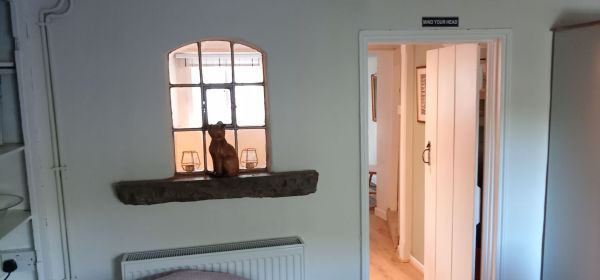
What is now the dining area – where I set-up my study space – was probably once part of the garden. Therefore, the window itself was once considered the height of building technology. In those days, draughts from blowing winds were a major issue. The frame of this window is firmly embedded in the wall-structure so that no wind can penetrate. The cement and plaster hold it robustly in place – whilst its relatively small surface area allows for strength and stability. As glass was not as strong then as it is now – the panes of glass used were far-smaller – with each held in-place by its own frame. Furthermore, and a feature I like, is the central pane that possesses a stout hinging and opening and shutting mechanism. Even today – this design still retains much of its original strength – whilst being now inside the house means it is now better preserved.

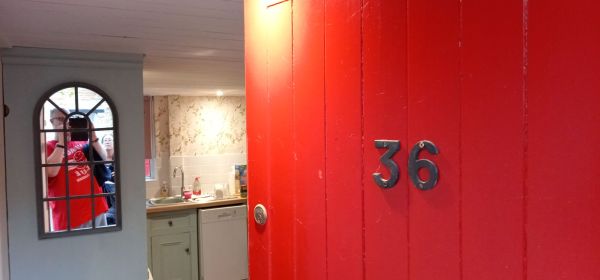
36 The Main Street - Market Overton - Rutland

Rutland: Teddy’s Cottage – Market Overton! (27.10.2025)

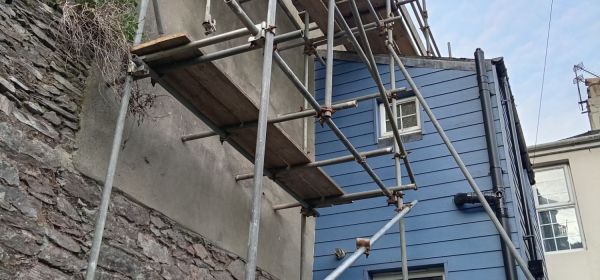
The above is extracted from the linked (historical) articled presented at the top of this article. I believe this information refers to the row of cottages – one of which – we are currently staying within for five-days. This is our current Research Headquarters for this visit (25.10.2025-30.10.2025) – where we will be travelling to and from Duddington (and the surrounding areas). In the information pack provided in the property – it states the house dates from the 17th century (1600s). It possesses two floor, two bedrooms, a downstairs living-room, dining-room, kitchen, and foyer. Much of the downstairs flooring is flagstone – with the floor levels from one room to the next being uneven (on different levels). Apparently, this has something to do with the age of the building.

Rockingham Castle - Battlements!

Rutland: Visiting Rockingham Castle! (29.7.2025)

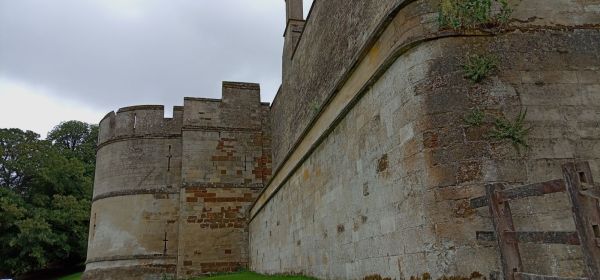
Despite visiting Duddington (in Northants) regularly since 2009, we had never seen any signs for “Rockingham” – and wondered where this place was. Furthermore, whereas King Henry VIII used to frequent “Nonsuch” (in Sutton and Cheam – where we live) – I am told that King John (1166-1216) of Magna Carta fame, used to spend his leisure time staying at Rockingham Castle – which is near Rockingham village. He used to hunt in the local woods. Apparently, Henry VIII granted the castle (the Norman version of which is currently over 950-years old) to the Watson family (it was leased to Edward Watson in 1544). Prior to this, the general area the castle is now constructed upon possessed a Roman (a coin production industry) – and then a Saxon (Lord Bovi) – presence. The locale of Rockingham (probably the nearby village) is mentioned in the 1066 Doomsday Book – with the castle proper being built between 1066-1071.

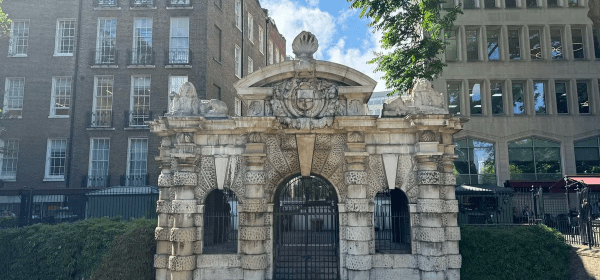
York Watergate - 1626 - Victoria Embankment!

UK: Beautiful London – the York Watergate Our Children Have Played Around! (7.7.2025)

The gate was originally the private riverside entrance to York House, a grand 17th-century mansion owned by the Duke of Buckingham. Think of it as a luxurious mooring point at the bottom of the duke’s garden.

York House itself stood on the Strand, which name literally means ‘shore of the river,’ and was considered one of the finest residences in London. At the time, much of the south side of the Strand was lined with palaces boasting direct access to the Thames.

That all changed with the construction of the Thames Embankment between 1864 and 1870, led by visionary engineer Sir Joseph Bazalgette. The massive project reclaimed land from the river and shifted the shoreline dramatically forward.

You can find a memorial honouring Sir Joseph Bazalgette just a couple of minutes away from Embankment Gardens, by the Thames. He designed the Victoria, Albert and Chelsea Embankments, reclaiming a strip of land in front of Somerset House and York Watergate.

The Watergate was almost lost during this transformation – plans were even drawn up to move it to nearby Whitehall Gardens. But in the end, it was simply abandoned where it stood, left behind as a relic of a river that had retreated.

Battersea Park: Revolutionary Flags! (27.5.2023)

Buddhism – like Socialism – belongs to humanity! Violence in the outer world can only be ended when one dominant class stops oppressing another! Peace can only be achieved if the capitalist world (in its exploitative aspect) is vanquished and the Bourgeoisie stops resisting and oppressing Socialism! If we – as the working class – stop fighting then we abandon the field to our oppressors and encourage them to inflict an even greater injustice upon us! Genuine peace will only come when the working class siezes the mean of production! As Marx once said – peace is the state achieved when there is an absence to the process of developing Socialism! These photographs were taken at the (Japanese) Buddhist London Peace Pagoda which is situated to the North of Battersea Park!

Down House: A Curious Stone Wall… (9.7.2022)

The middle-classes possessed an idyllic physical space within which their bodies existed – a situation (and set of material conditions) that often generated a corresponding sense of a ‘spacious’ interior (or expansive mind-set) that could, providing the right education and motivation was present, lead to ground-breaking theorising and progressive scientific endeavour!

1 2